

How to Order a Projection Mapping Show — The Client’s Guide
The article is written by a human. Mistakes have been edited by AI. Written from our own procurement experience. Resource links checked July 2026.
The most common enquiry we get is three lines long, has a €3,000 budget, and attaches a reference video of a show whose content alone cost around €90,000. Nobody is being unreasonable. The client simply has no way of knowing, because this industry publishes almost nothing about how the process works.
This is the missing document: how to find a contractor, what to put in the enquiry, and which commercial terms decide whether the project goes well or becomes a dispute.
Who this article is for: event agencies, municipalities, brand and venue managers commissioning a projection mapping show for the first or second time. Also useful for studios who want to send clients something instead of explaining it again.
What it solves: you have a building, a date and a budget, and no framework for turning that into a signed contract with a supplier you can trust.
What you get by the end: a vetting checklist, a brief template that gets you comparable quotes, the contract terms that actually matter, and a realistic timeline working backwards from show night.
Hello dear clients and colleagues. I am new media artist Alexander Kuiava. LIME ART GROUP has been quoting, producing and occasionally declining projection mapping projects since 2012. Everything below comes from that side of the table, including the parts that are awkward for us.
The reference video problem, first
Almost every enquiry arrives with a link. That is good — a reference tells us more than three paragraphs of description. But it causes one specific and expensive misunderstanding, so let us deal with it before anything else.
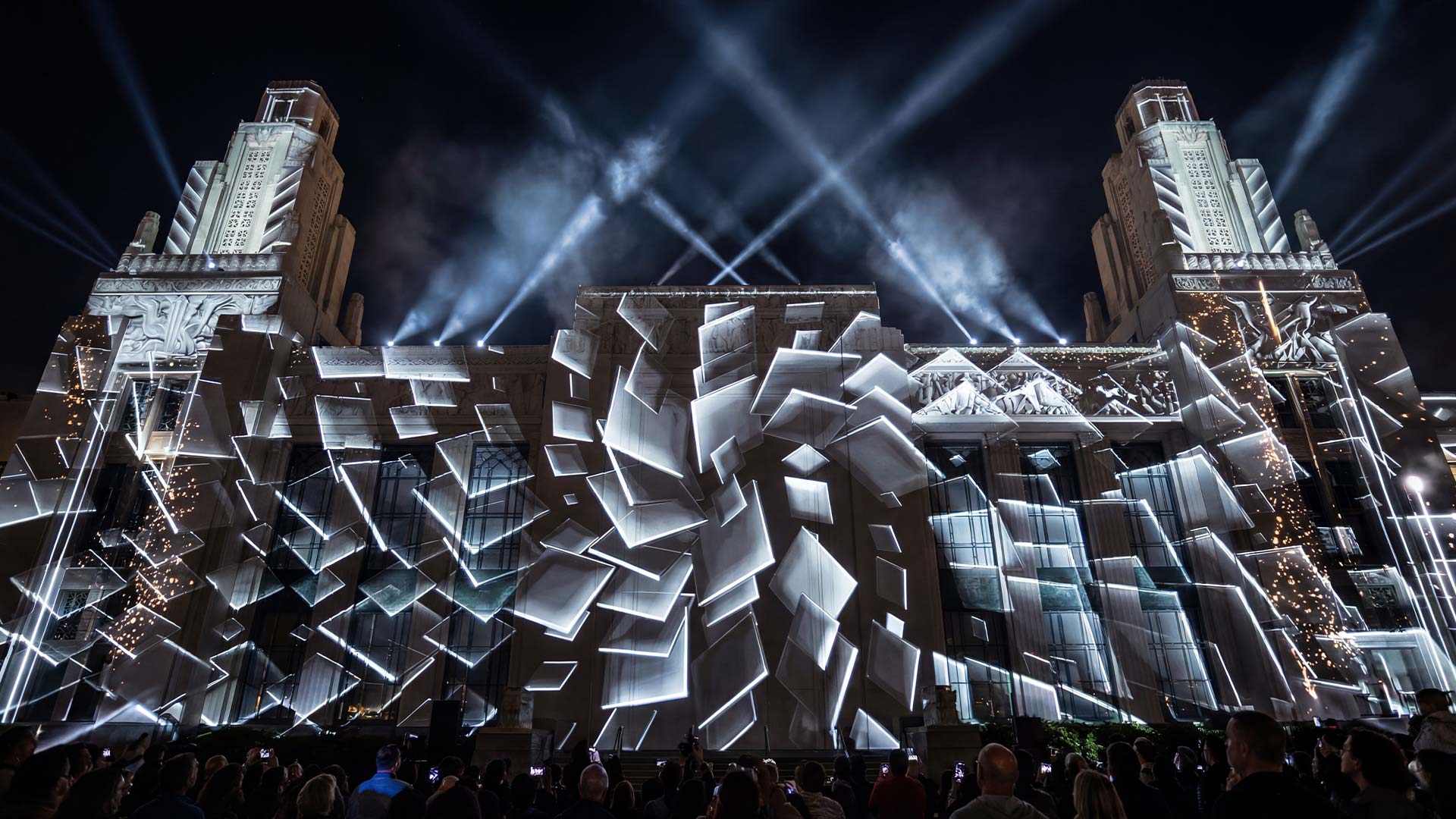
A reference video shows you the output, not the budget. The show you linked may have had a six-week animation schedule, a 3D scan of the building, eight projectors, a composed score, and a team of twelve. What you see is four minutes of footage that could theoretically have been made by anyone.
Send the reference anyway. But send it with a sentence that tells the contractor which part you actually want: “the way the facade cracks open at 1:15”, or “this palette”, or “this pace”. That sentence is worth more than the link, and it lets an honest supplier tell you which parts of it fit your budget and which do not.
If a supplier accepts your €3,000 brief with a €90,000 reference attached and says nothing, that is the first red flag of the project, not a good deal.
How to find and vet a contractor

Where to actually look in 2026
Word of mouth still produces the best matches, and in most European markets an event agency already knows someone. When it does not, these are the places worth searching, and all of them were live when we checked in July 2026:
- VJBooking — a directory of over 820 professional VJs, projection mappers and visual artists, searchable and built specifically for this purpose. The most direct route if you want an individual artist rather than a production company.
- Vimeo groups — the Le Collagiste and Mapping Projections groups remain useful for finding work by style rather than by company name.
- Video Mapping Facebook group — over 20,000 members across the wider community. Posting a brief there gets responses within hours, and you will hear from studios that do not rank on Google.
- Video Mapping Blog — a long-running aggregator of documented facade and installation work, useful for browsing by project rather than by supplier.
- Google, YouTube and Vimeo search — obvious, and still effective if you search for the type of surface rather than the word “mapping”. “Cathedral projection” and “warehouse facade projection” return better results than “video mapping company”.
Do not restrict yourself geographically by reflex. Content production is location-independent. A studio in another country can animate your facade perfectly well, and a local rental company can supply the projectors and crew. Splitting the job that way is normal and frequently cheaper than either extreme.
Five checks that remove most of the risk
One: is it a registered legal entity? You need a company you can sign a contract with, invoice properly and hold responsible. There are many capable freelancers working without registration, and if the show fails you have no recourse and no insurance. This was in the 2017 version of this article and it has not become less true.
This is not a judgement about freelancers — plenty of excellent artists work through an agency or a production company precisely to solve this. Ask who the contracting party is. If the answer is vague, that is the answer.
Two: is there a showreel, and does it match your job? A showreel tells you the studio’s dominant style in ninety seconds — motion graphics, 3D animation, VFX, abstract, narrative. It also tells you the studio’s maturity. What it does not tell you is whether they have done your kind of surface. A studio with a superb reel of stage and LED work may never have mapped a heritage facade with real depth.
Ask for two or three projects on a surface comparable to yours, and ask specifically whether their team produced the content, the technical delivery, or both.
Three: who does the technical side? Content production and technical supply are usually different companies. That is fine and normal. What is not fine is discovering it three weeks before the show.
Ask directly: do you own projectors and media servers, or do you subcontract? Who is the single point of responsibility if a projector fails on the night? A studio that subcontracts openly and names its partner is a better bet than one that is vague about it.
Four: how fast do they respond, and with what? A serious company sends a usable proposal within two to three working days — a price, an approach, and enough sketch material to approve or reject the direction. Longer than that means either genuine overload, which is fine but implies a premium, or that they have forwarded your brief to somebody else and are waiting. Large international projects are the exception: nobody moves ten 30,000-lumen projectors across a border without logistics and carnet paperwork.
Five: will they tell you no? This is the most useful signal and the least discussed. A supplier who explains that your budget does not match your reference, and proposes a version that does, is worth considerably more than one who agrees to everything. We turn down or outsource projects whose budget cannot produce the result the client is imagining, and we say so in the first reply. It is not good salesmanship and it is the reason our clients come back.
The brief that gets you a real quote
Send all of this in the first email. It costs you twenty minutes and it saves a fortnight of back-and-forth on both sides.
| # | What to send | Why it matters |
|---|---|---|
| 1 | Who you are, and who you represent | Agency, venue, municipality, brand — it changes the process and the paperwork |
| 2 | Event name, type, date and time | Determines availability, which is the binding constraint in festival season |
| 3 | City and exact address | Freight, crew travel and permits all follow from this |
| 4 | Photographs of the surface | Straight-on, at night if possible, plus one wide shot showing the square |
| 5 | Dimensions and drawings | Height and width minimum; CAD or elevation drawings are far better |
| 6 | Projection distance available | How far back a projector can physically stand — often decides feasibility |
| 7 | Ambient light conditions | And whether anything can be switched off |
| 8 | Show length and repeat pattern | One 10-minute show, or a 4-minute loop running nightly for three weeks |
| 9 | Technical scope | Do you need projectors and crew, or content only |
| 10 | Power available at the projector position | Frequently the thing everyone forgets |
| 11 | Your budget | Yes, really — see below |
| 12 | Reference material, with a sentence explaining what you like about it | The single most useful line in the email |
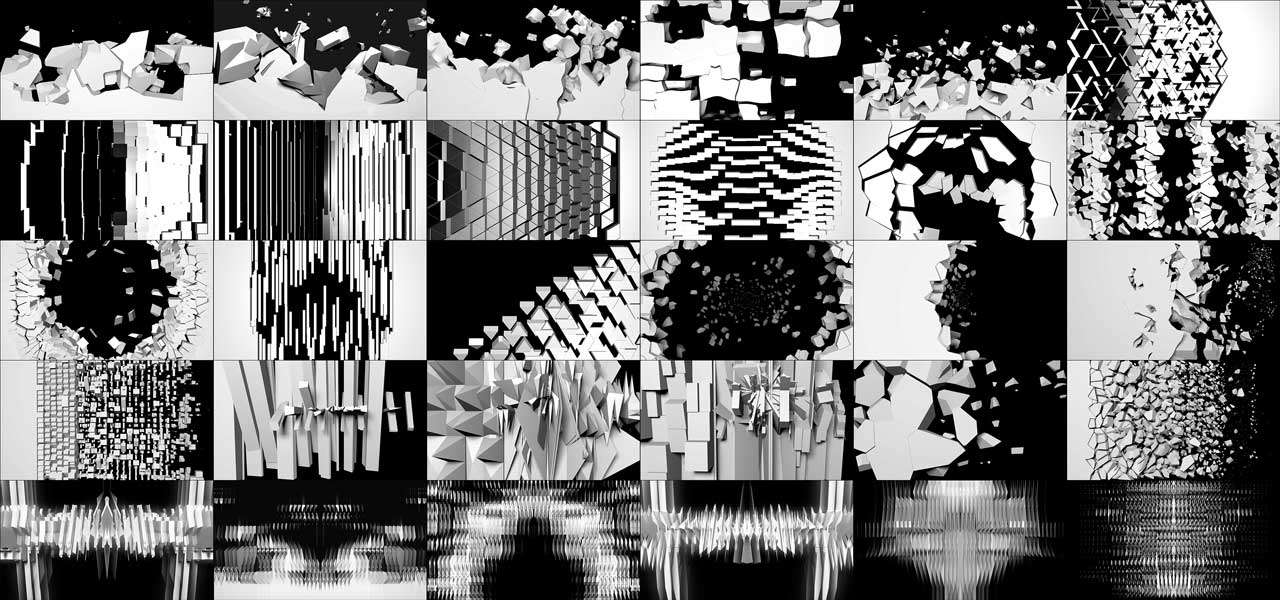
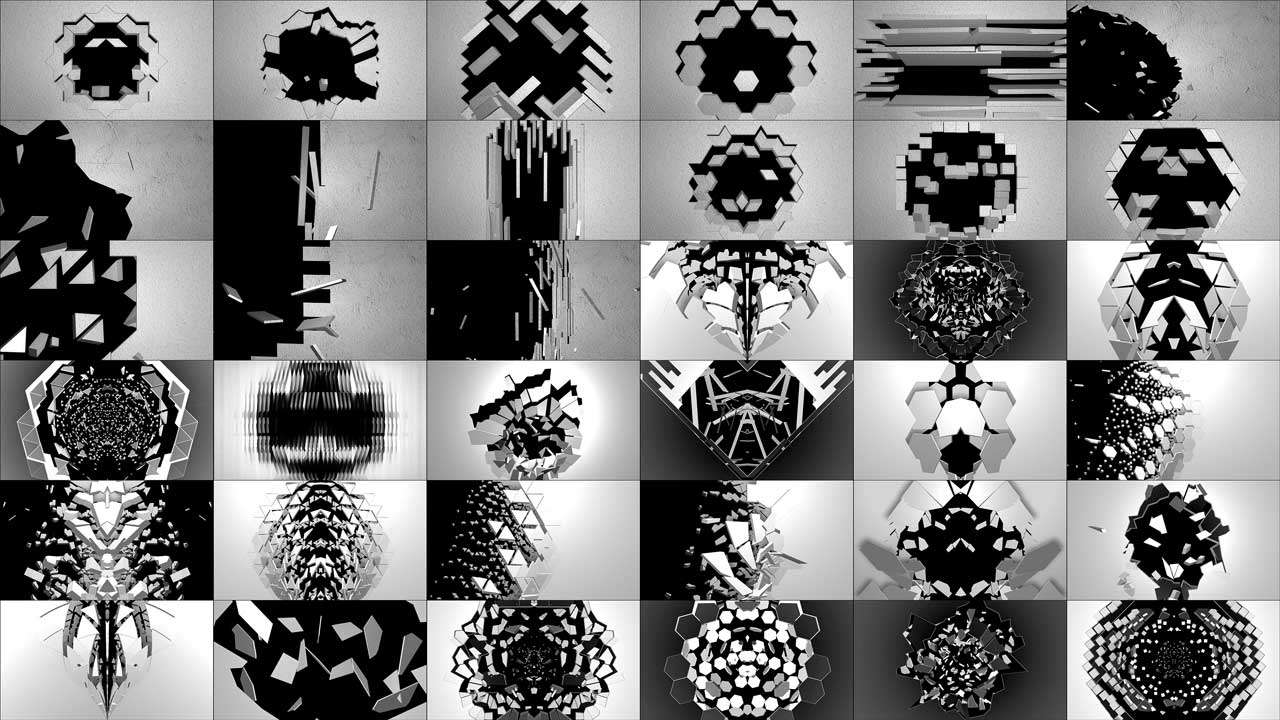
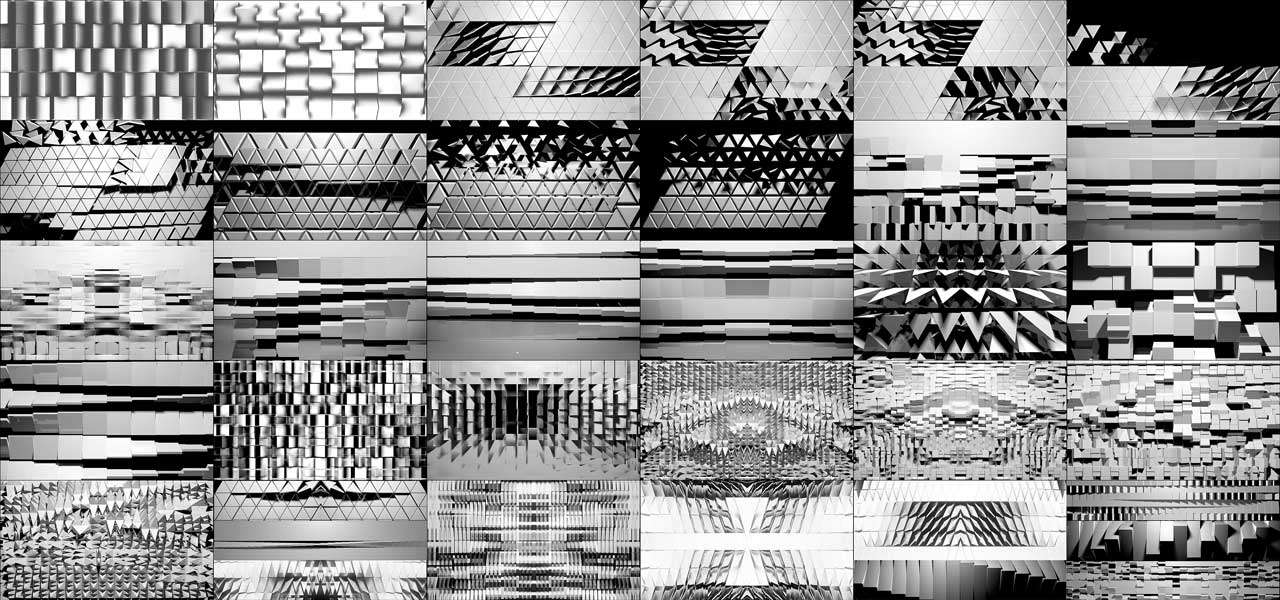
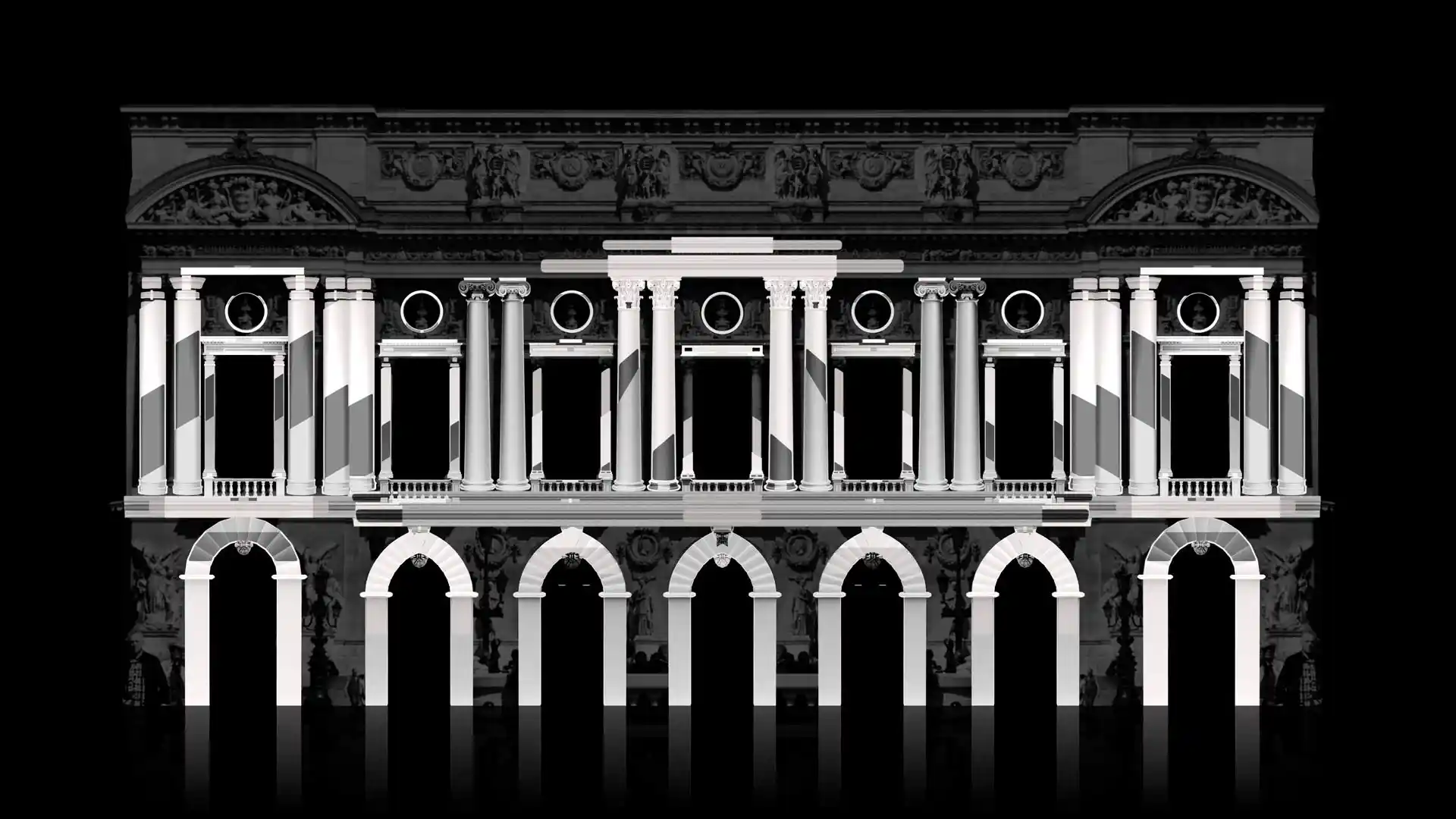
Video Mapping Loops
Licensed components that make a two-week timeline possible
-
Video Mapping Loops Pack Vol.2 – Smart Reflection
99€ -
Video Mapping Loops Pack Vol.8 – Gold Edition
129€ -
Video Mapping Loops Pack Vol.5 – Panorama
99€ -
Video Mapping Loops Pack Vol.10 – Transition
99€ -
Video Mapping Loops Pack Vol.3 – Fallen & Rise
99€ -
Video Mapping Loops Pack Vol.14 – Massive Turn
99€ -
Video Mapping Loops Pack Vol.9 – Color Maps
99€ -
Video Mapping Loops Pack Vol.6 – Wire Texture
99€ -
Video Mapping Loops Pack Vol.18 – Ultrawide Walls
129€












The four that people get wrong
Dates, plural. Give the show date and the dates for equipment delivery, installation and testing. A show on the 14th usually means rigging on the 12th and testing on the 13th, and the venue has to be available. If equipment is crossing a border, add buffer for customs clearance and carnet paperwork — this is a real and regular source of delay, not a theoretical one.
The building, properly. A frontal photograph is the minimum. Dimensions are better. A CAD file or architectural elevation is dramatically better and will speed up your quote by days, because the contractor can build an accurate model and calculate coverage instead of estimating from a phone photo. If the building is municipal or heritage, the drawings usually exist — ask.
Also state the surface material and colour. A white render facade and a dark stone one with the same dimensions need different projector counts and therefore different budgets.
The format, not just the duration. “Ten minutes” is not a brief. A single ten-minute show after which the audience moves on to something else is a completely different production from a four-minute piece looping every twenty minutes for seven consecutive evenings. The second needs weatherproof housing, unattended playback, a service plan and probably a different insurance arrangement.
The budget. We know why clients withhold it. The fear is that the price will expand to fill it.
Here is the honest counter-argument. Projection mapping has no fixed price — the same building can carry a €5,000 show or a €300,000 show, and both are legitimate. Without a number, the contractor guesses, and guesses wrong in one of two directions: too high and you dismiss them, or too low and you get a proposal that cannot deliver what you are imagining. Giving a range costs you nothing and gets you a proposal aimed at the show you can actually have.
If you genuinely cannot disclose it, give a ceiling: “we need to stay under X.” That is enough.
We wrote the full breakdown of what things cost by scale in our guide to projection mapping show pricing — read it before you set the number, so the number is realistic.
What you should get back
An itemised proposal, not a single figure. It should separate:
- Content: run time, custom or licensed, number of revision rounds included
- Projectors: model, brightness, count, number of billable days
- Media server and mapping software
- Crew: how many people, how many days, day rate
- Rigging, power and signal distribution
- Travel, accommodation and freight
- Permits and insurance
- Contingency
If any of those lines is missing, ask. The ones that most often hide later are freight, accommodation, facade usage fees on heritage buildings, and weather contingency.
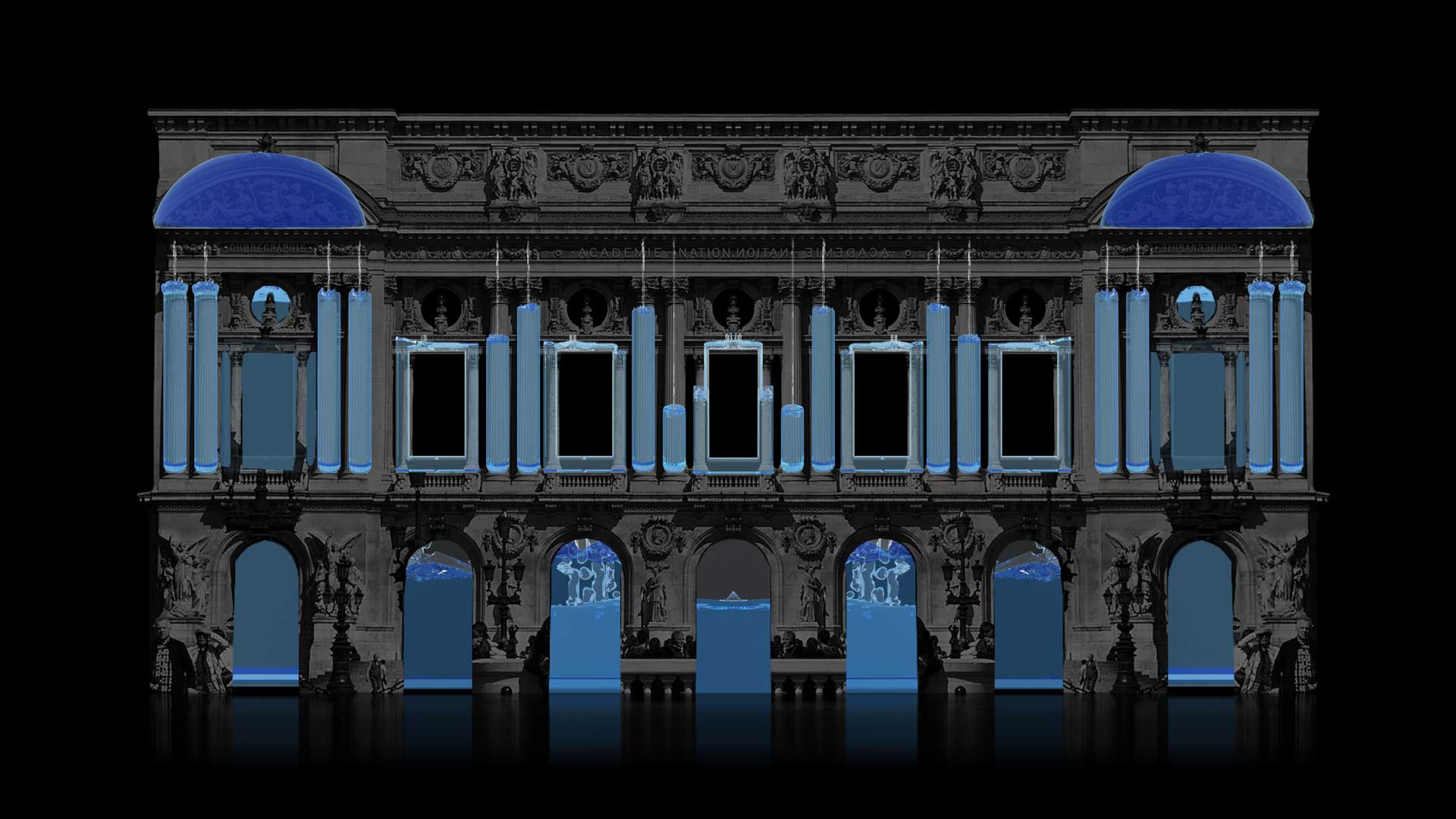
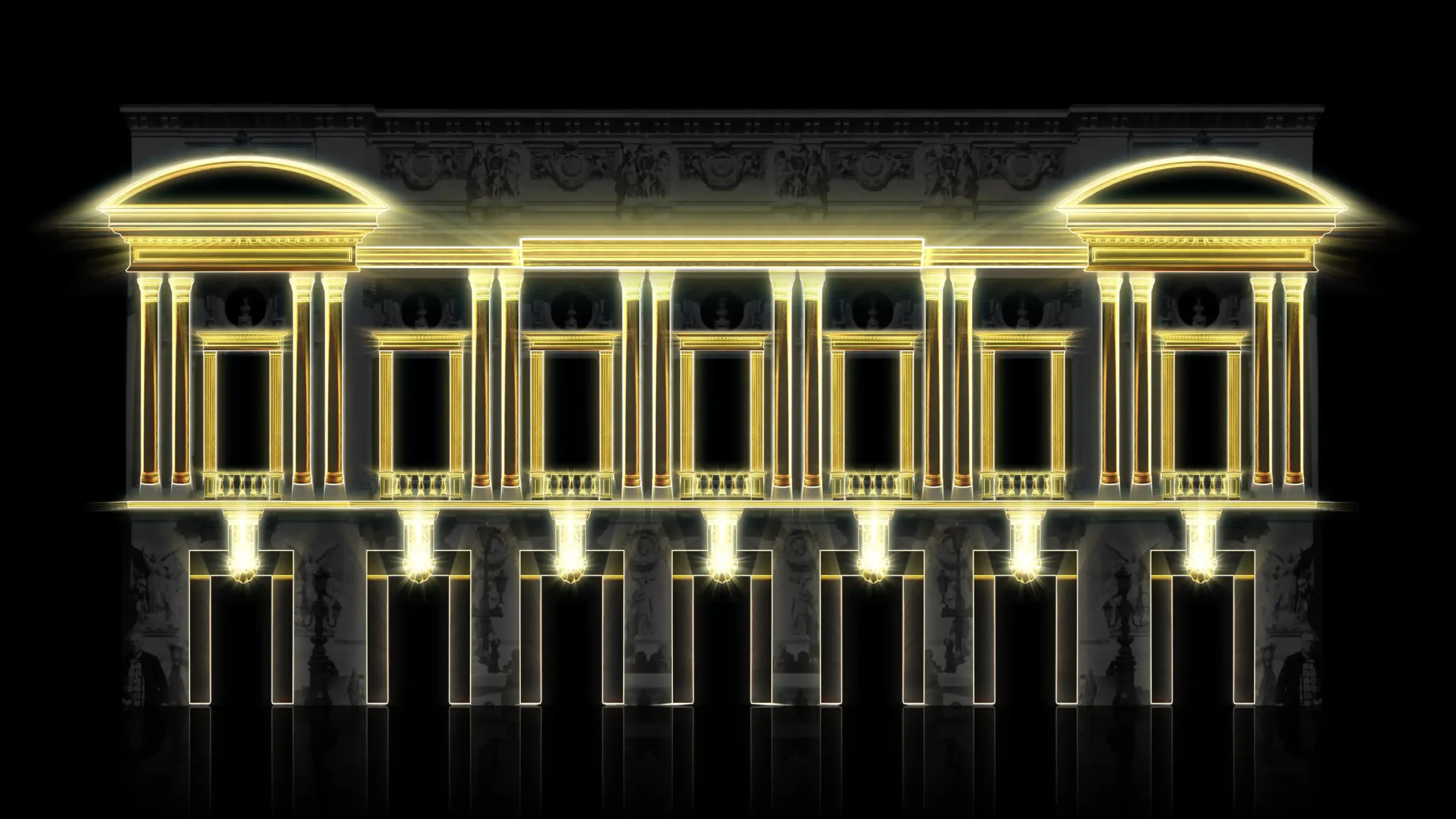
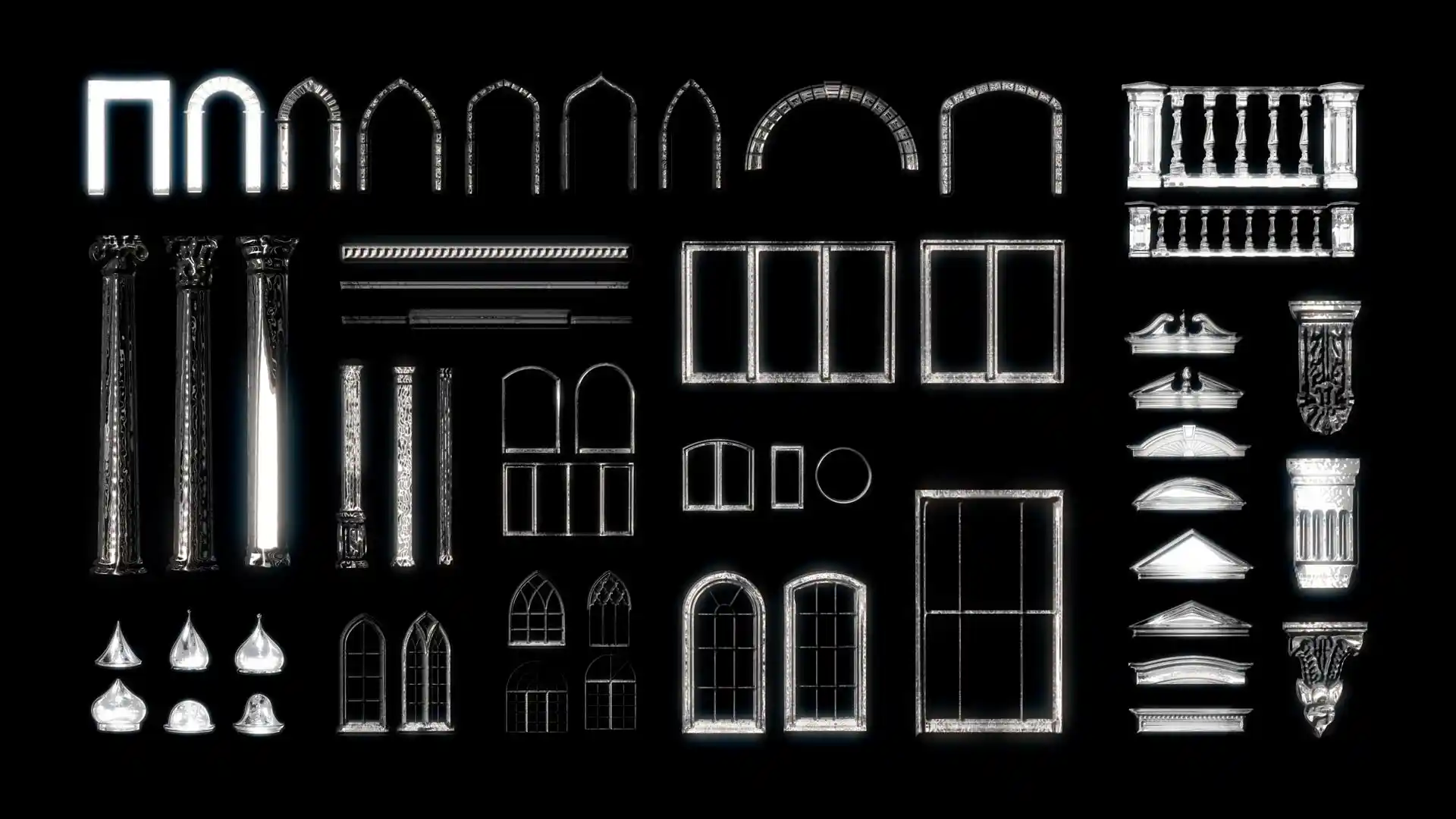
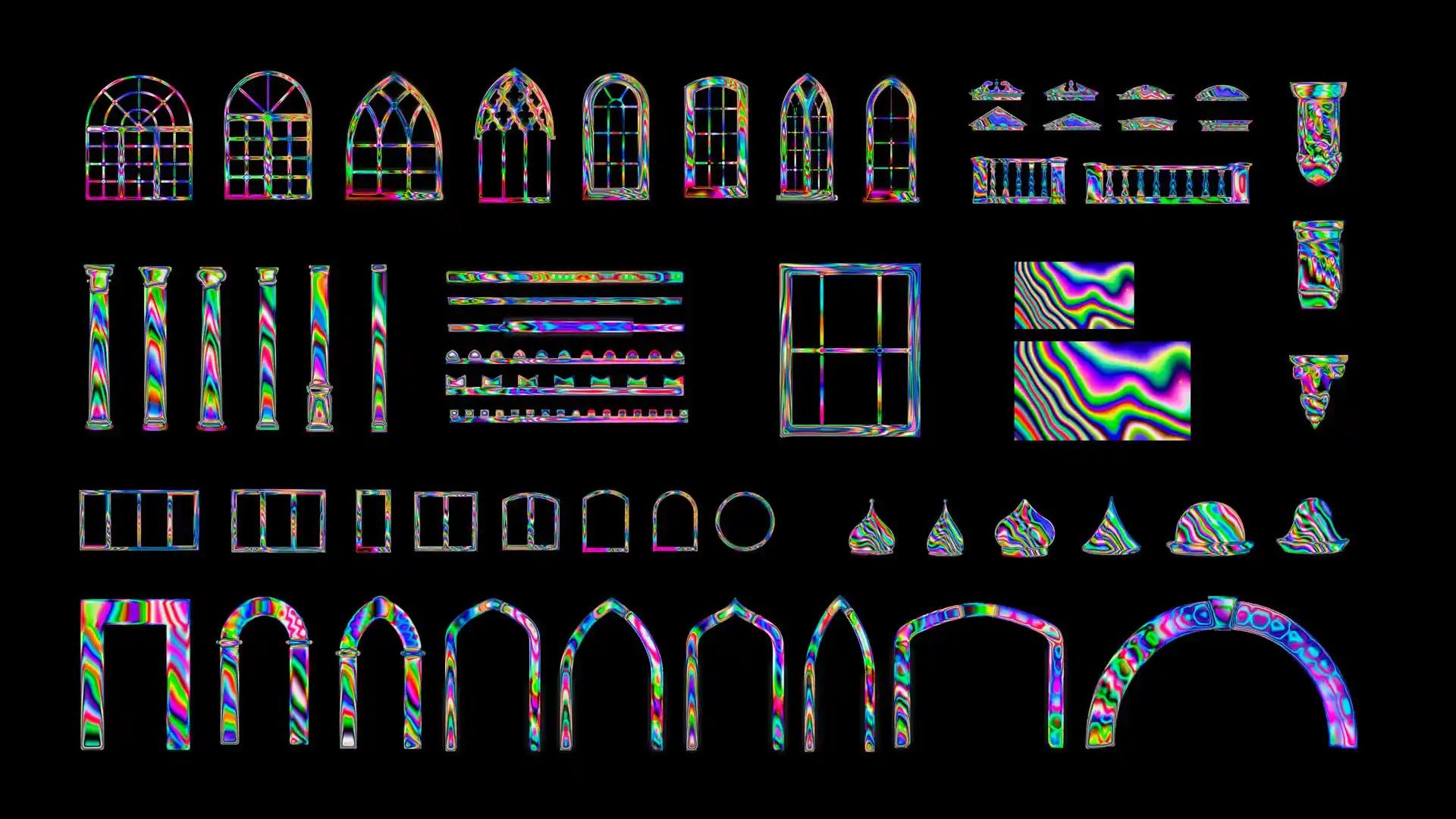
Video Mapping Toolkits
Animated architectural elements, royalty-free for commercial shows
-
Sale!
Video Mapping Toolkit Vol.1 – Green Nature
Original price was: 189€.129€Current price is: 129€. -
Sale!
Video Mapping Toolkit Vol.2 – Call Poseidon
Original price was: 189€.89€Current price is: 89€. -
Sale!
Video Mapping Toolkit Vol.3 – Facade
Original price was: 149€.99€Current price is: 99€. -
Sale!
Video Mapping Toolkit Vol.5 – Light Ray
Original price was: 149€.99€Current price is: 99€. -
Sale!
Video Mapping Toolkit Vol.10 – Stone Reflect
Original price was: 149€.99€Current price is: 99€. -
Sale!
Video Mapping Toolkit Vol.4 – Liquid Displace
Original price was: 149€.99€Current price is: 99€. -
Sale!
Video Mapping Toolkit Vol.8 – Visual LSD
Original price was: 149€.99€Current price is: 99€. -
Sale!
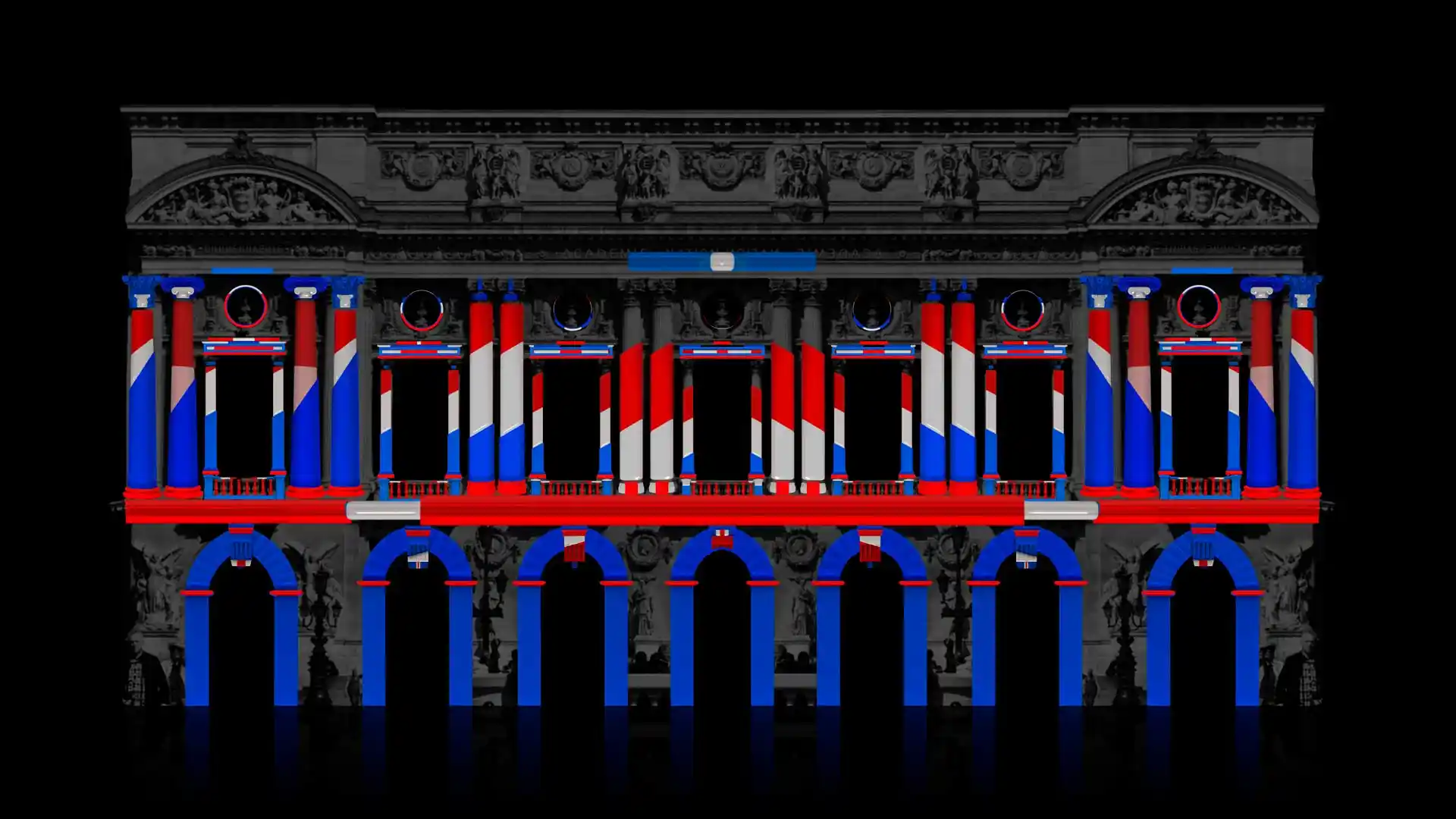
Video Mapping Toolkit Vol.7 – Colorful France
Original price was: 149€.79€Current price is: 79€. -
Sale!
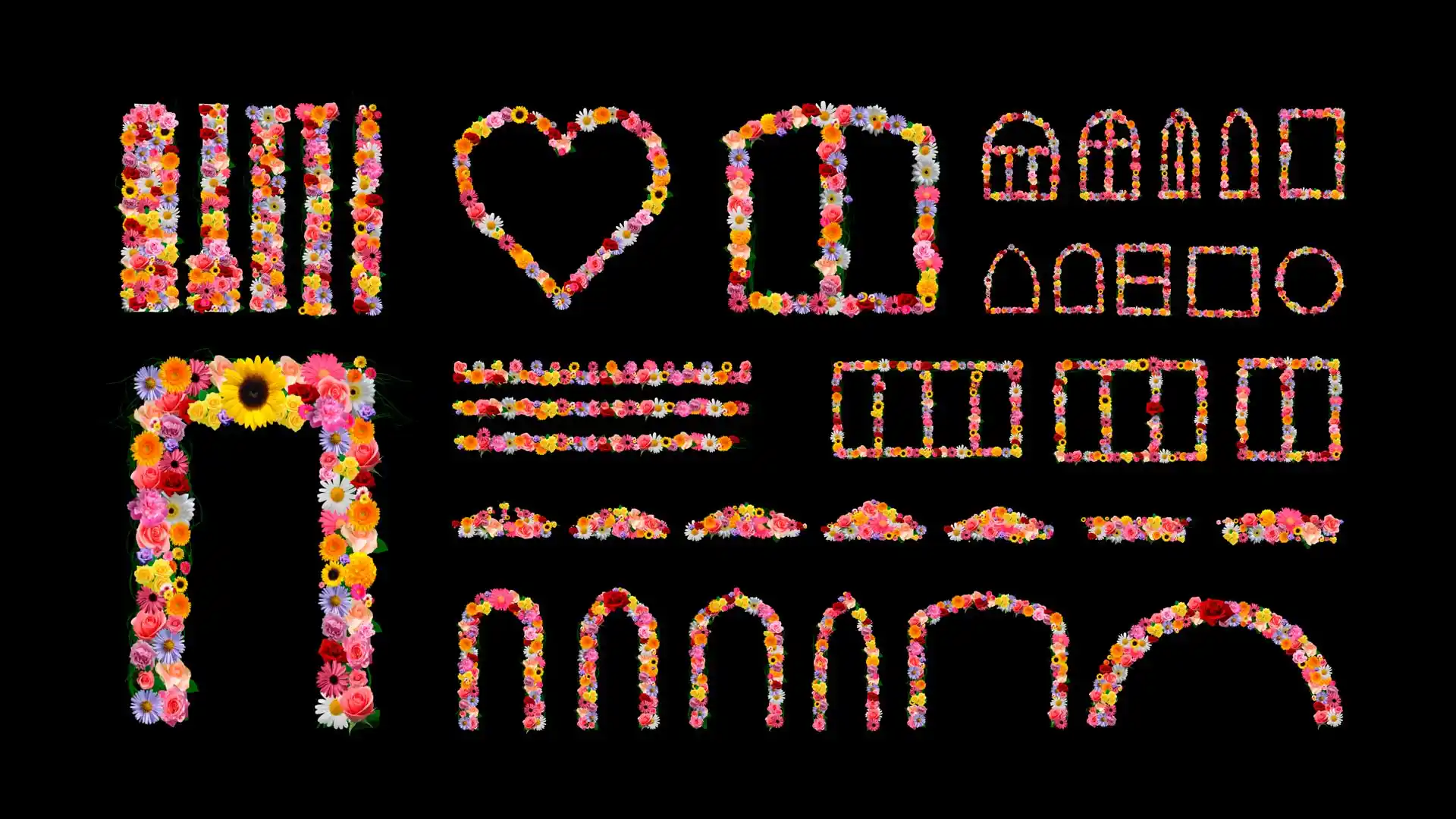
Video Mapping Toolkit Vol.14 – Flower Boom
Original price was: 149€.99€Current price is: 99€.










The commercial terms nobody discusses until it is too late
This section did not exist in the original version of this article, and in hindsight that was the biggest gap. Most projects that go wrong go wrong here, not in the creative work.
Payment structure
The industry norm is a deposit on signature, a milestone payment on content approval, and the balance before or shortly after the show. Something in the region of 30–50% up front is standard for content production, because the studio is paying animators from day one and the entire cost is incurred before you see the result.
Be suspicious of a supplier who asks for nothing up front. It usually means they are not paying anyone until you pay them, which means the schedule is not real.
Agree the payment trigger precisely. “On approval of the content” needs a definition of approval and a deadline for giving it — otherwise a client who goes quiet for two weeks silently moves the delivery date.
The video preview, and what it should cost
Clients frequently want a video preview: a rendered simulation of the show on a 3D model of the building, before committing.
This is reasonable and we recommend it on any substantial project. But understand what you are asking for. Producing a convincing preview requires the 3D model, the animation and the render — which is most of the actual production work. A preview thrown together in an afternoon looks bad, satisfies nobody, and frequently loses the project for a supplier who would have done excellent work.
Our long-standing recommendation, and our own practice: budget roughly 10–12% of the project value for a one-minute preview, and pay it as a separate commission at the point of order. You get a real preview made properly, the studio is not funding speculative work, and if you then proceed the preview material feeds directly into the final show.
One caveat that applies to every preview ever made: a monitor is not a building at night. Contrast, ambient light, surface texture, viewing angle and scale all change the result. A preview tells you the concept, the timing and the style. It does not tell you exactly what the audience will see. Anyone who promises otherwise is overselling.
Who owns the content afterwards
Settle this in writing before production starts, because it is the most common late-stage argument.
Three normal arrangements exist, at three different prices:
Licence for the event. The studio keeps ownership; you have the right to use the content for the specified show. Cheapest, and appropriate for most one-off events.
Exclusive licence. You get exclusive use, the studio cannot resell or reuse the content, but the studio retains copyright. Middle price.
Full buyout. You own the work outright. Most expensive, often by a factor of two or more, because the studio loses all residual value.
Separately: agree who may publish the documentation video and with what credit. Studios need the footage for their reel and clients sometimes have brand or confidentiality restrictions. This is trivial to resolve in advance and genuinely unpleasant to resolve afterwards.
Note that licensed stock components — video mapping loops, toolkits, textures, music — are usually royalty-free for commercial performance but are not exclusive to you. If exclusivity matters, say so up front, because it changes what the studio can use and therefore the price.
Weather, cancellation and force majeure
Outdoor projection in Europe between October and March will meet rain. Decide in advance:
At what point is the show cancelled, who decides, and by when. “Show director’s call by 16:00 on the day” is a workable clause.
Who pays if it rains. The content is already produced and the crew already travelled — those costs exist whether or not the show runs. The usual arrangement is that content and mobilisation are paid regardless, with a reduced rate or a rescheduled date for the performance itself.
Whether there is a rain date, and whether the equipment is available on it.
Wind limits. Rigged projectors and truss have wind ratings. Somebody has to own the decision to derig, and it should be named in the contract.
Permits, insurance and who is responsible
Permits. Projecting onto a building requires the owner’s permission, and in many cities a public event or street-use permit as well. Heritage buildings frequently charge a separate facade usage fee. Establish early whether you or the contractor is obtaining these — this is the single most common assumption gap we see, with each side believing the other is handling it.
Public liability insurance. The contractor should have it. Ask for the certificate, not a verbal assurance.
Equipment insurance. Rented projectors are worth tens of thousands of euro and stand outdoors overnight. Establish who insures them and whether overnight security is included or a separate line.
A named responsible person on site. One person, on both sides, with a phone number, who can make decisions on the night. Projects with three people in charge have nobody in charge.
The timeline, working backwards
Availability, not production time, is usually the binding constraint. Projectors and crew in December are booked in September.
| When | What happens |
|---|---|
| T minus 12–16 weeks | Brief out, suppliers shortlisted, site visit or full photo survey |
| T minus 10–12 weeks | Proposals compared, supplier selected, contract signed, deposit paid |
| T minus 8–10 weeks | Preview commissioned and approved; equipment and crew booked; permits applied for |
| T minus 4–8 weeks | Content production; one or two review rounds |
| T minus 2–3 weeks | Content locked and exported; technical plan finalised; freight booked |
| T minus 2–3 days | Equipment on site, rigging, alignment |
| T minus 1 day | Full technical rehearsal in darkness at show brightness |
| Show night | Named person on site on both sides |
Compressed version. With licensed content adapted to the building rather than animated from scratch, and local equipment, the whole thing is achievable in two to three weeks. That is a genuine option and we do it regularly — it changes the creative approach, not the quality of the evening.
What actually causes delay: waiting for building drawings, waiting for permits, and waiting for the client to approve the content. Two of those three are on your side of the table.
The one-page brief you can send today
Copy this, fill it in, send it to three suppliers. You will get comparable quotes back within a week.
Event: name, type, date, start time, number of performances
Location: city, full address, indoor or outdoor
Surface: building or object, dimensions, material and colour, photographs attached, drawings attached if available
Distance: how far back a projector can stand
Light: what is on nearby, and what can be switched off
Show: length in minutes, single show or looping, total running time per evening
Scope needed: content only / content and technical / technical only
Power: what is available at the projection position
Budget: a figure or a ceiling
Reference: link, plus one sentence on what specifically you like about it
Contact: one named person, phone and email
That is the whole thing. Twelve lines that replace two weeks of email.
Frequently asked questions about ordering a projection mapping show
How far in advance should I book a projection mapping show?
Three to four months is comfortable for a custom production on a facade. Six weeks is tight but possible. With licensed content and local equipment, two to three weeks is achievable. In festival season, equipment and crew availability is the constraint rather than production time.
Should I tell the contractor my budget?
Yes, or at least a ceiling. Projection mapping has no fixed price — the same building can carry a €5,000 show or a €300,000 one. Without a number the supplier guesses, and a wrong guess wastes a fortnight for both of you. Giving a range gets you a proposal for the show you can actually have.
What documents should I send with the enquiry?
Frontal photographs of the surface, dimensions, and ideally CAD files or an architectural elevation. Add a wide shot showing ambient light, the available projection distance, and a note on surface material and colour. Drawings will speed up your quote by days.
Do I need to pay for a video preview?
On any substantial project, yes, and you should want to. A convincing preview requires the 3D model, the animation and the render — most of the real production work. We recommend budgeting 10–12% of the project value for a one-minute preview commissioned separately at the point of order. A free preview made in an afternoon helps nobody.
Who owns the content after the show?
Whatever the contract says, so agree it before production. Three normal options: a licence for the event, an exclusive licence, or a full buyout, at increasing prices. Also agree separately who may publish documentation footage and with what credit.
What happens if it rains?
Whatever the contract says. Content and mobilisation costs exist regardless and are normally paid; the performance fee is usually reduced or moved to a rain date. Agree the cancellation decision point, who makes it, and the wind limits for derigging before you sign.
Who gets the permits, me or the contractor?
Establish this explicitly — it is the most common assumption gap in the whole process, with each side believing the other is doing it. You will typically need the building owner’s permission plus a municipal event or street-use permit, and heritage buildings often charge a separate facade usage fee.
Can I hire a foreign studio for the content and a local company for the equipment?
Yes, and it is often the most sensible arrangement. Content production is location-independent; projectors, crew and logistics are not. Just make sure one named person owns the technical delivery, and that the content is delivered in a format and resolution the local technical supplier can actually play.
Sources
Directories and community resources were checked in July 2026. Everything else in this article is our own procurement and production practice.
Where to find contractors
- VJBooking — directory of over 820 visual artists and projection mappers, vjbooking.com
- Video Mapping Blog — project aggregator, videomapping.blog
- Vimeo groups — Le Collagiste and Mapping Projections
- Video Mapping Facebook group — facebook.com/groups/videomapping
Related reading on this site
- What a projection mapping show costs, by scale
- How to make 3D video mapping projection, full production guide
- Best projectors for video mapping, architectural and interior
The vetting criteria, the brief template, the preview policy and the contract clauses are drawn from our own experience quoting and delivering projects since 2012, including the projects we declined.
Send us the twelve lines
If you have a building, a date and a number, send those three things and we will tell you honestly whether they fit together. If they do not, we will tell you what to change — usually the ambient light, the size of the canvas, or whether the content is custom or licensed — instead of quoting you for a show you cannot afford.
If we are not the right studio for your project, we will say that too, and where relevant point you at someone who is. That has cost us work and gained us more.
And if you would rather produce it yourself, the video mapping loops and toolkits are the components, and our complete production guide is the method.
Write to us with the brief above. Two to three working days for a proposal, as it should be.
Latest Feature VJ Loops
Hand-picked visuals by our New Media Artists
-
Deep Serenas – Immersive Visuals Vol.2
149€ -
Sale!
VJ Loops Pack Vol.73 – Mirror Ballet
Original price was: 129€.99€Current price is: 99€. -
VJ Loops Pack Vol.18 – Abstract Background Textures
89€ -
VJ Loops Pack Vol.19 – Lovely Red
79€ -
VJ Loops Pack Vol.11 – Really Madonna
89€ -
Sale!
Interior Patterns – Immersive Visuals Vol.1
Original price was: 249€.199€Current price is: 199€. -
VJ Loops Pack Vol.85 – Gnosis Lightning
99€ -
VJ Visuals Starter Pack
99€ -
Sale!

 Select options This product has multiple variants. The options may be chosen on the product page
Immersive Projection Business Guide
Original price was: 19€.12€Current price is: 12€.










Best wishes from Vienna,
Thanks for your attention, faithfully yours,
Alexander Kuiava – Founder & CEO LIME ART GROUP
https://alexanderkuiava.com/
