
Types of Projection and 3D Video Mapping — The Complete Guide
The article is written by a human. Mistakes have been edited by AI. Last revised July 2026.
The old version of this article listed four types of mapping. That was accurate in the sense that four categories cover most commercial work, and misleading in the sense that it left out the two directions that have grown fastest since — projecting onto living landscape, and building rooms that swallow the audience completely.
Who this article is for: producers, VJs and event companies deciding what kind of mapping show a brief actually calls for, and content buyers who need to know which format their footage has to suit. Not a how-to on aligning projectors.
What it solves: most lists name types without explaining what changes between them — projector count, audience distance, content resolution, and the specific thing that goes wrong in each.
What you get by the end: every format of projection mapping in current use, sorted three ways — by surface, by purpose, by how the show is built — with the practical constraint that defines each one.
Hello dear VJs and clients of LIME ART GROUP. I am new media artist Alexander Kuiava. Since 2012 our studio has produced over 100 VJ Loops Packs including dedicated libraries for mapping, fulldome and immersive work, so we have had to build content for every format below.
The constraint that defines every type
Projection is impossible without an object to project onto. The light a projector emits has to land on something before anyone sees an image. A picture fixed in mid-air would be a hologram, and that technology does not exist yet, whatever the marketing says.
Everything follows from that single fact. The type of mapping you are doing is decided by the object, not by the software or the content. A car and a cathedral need different projector counts, different audience distances, different content resolutions and different render approaches, because they are different objects.
So the useful way to sort mapping is by what you are pointing at.

Architectural video mapping
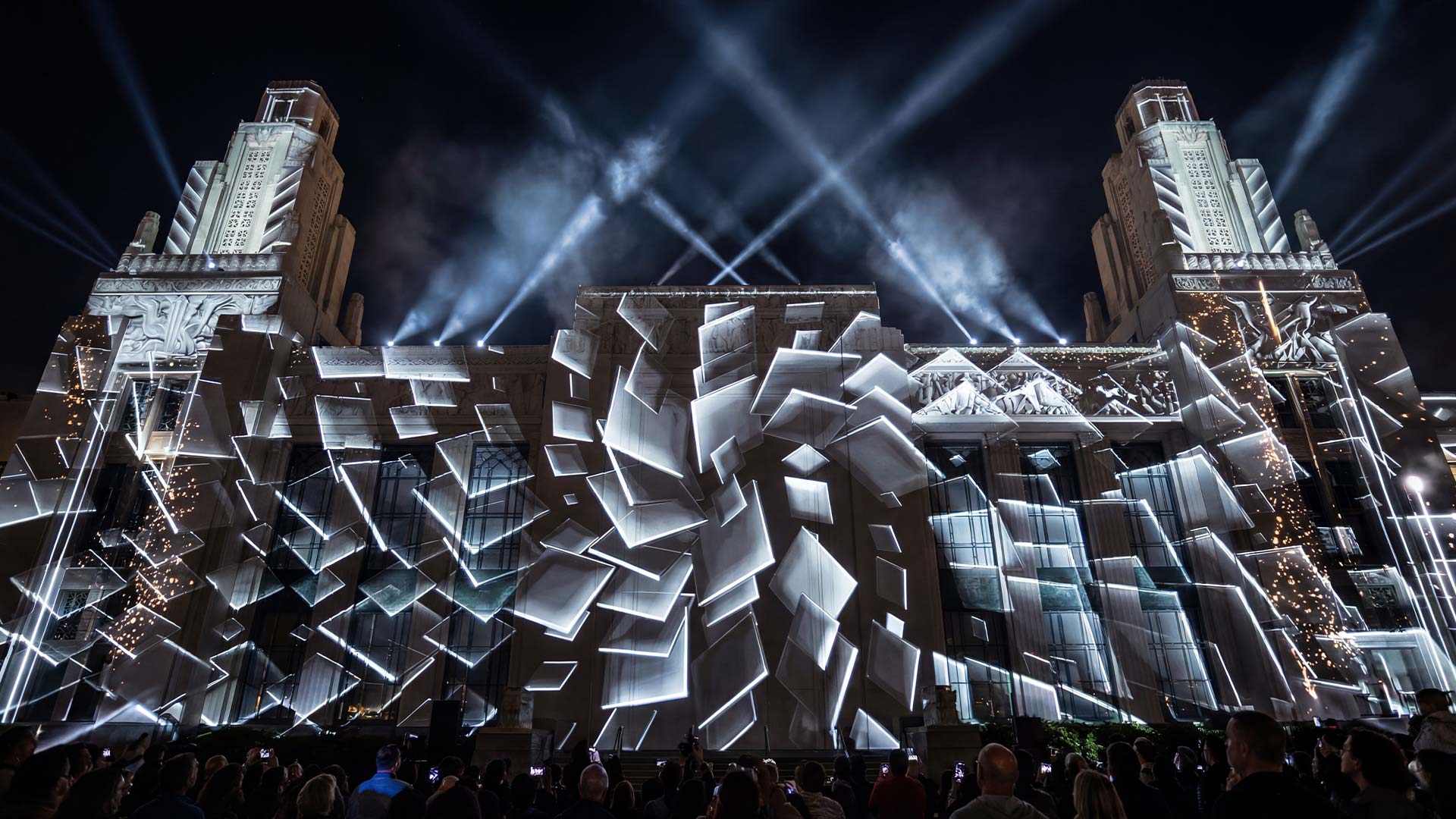
Projection onto building facades — the format most people picture when they hear “video mapping”, and the one that made the technique famous. What makes a facade different from a screen is that it already has structure. Columns, arches, pilasters, balustrades, windows, cornices. The amateur mistake is treating the wall as a rectangle and projecting a video onto it. The craft is in using the architecture: highlighting those elements, giving them motion, and then breaking the geometry so the building appears to fold, crack, extrude or dissolve.
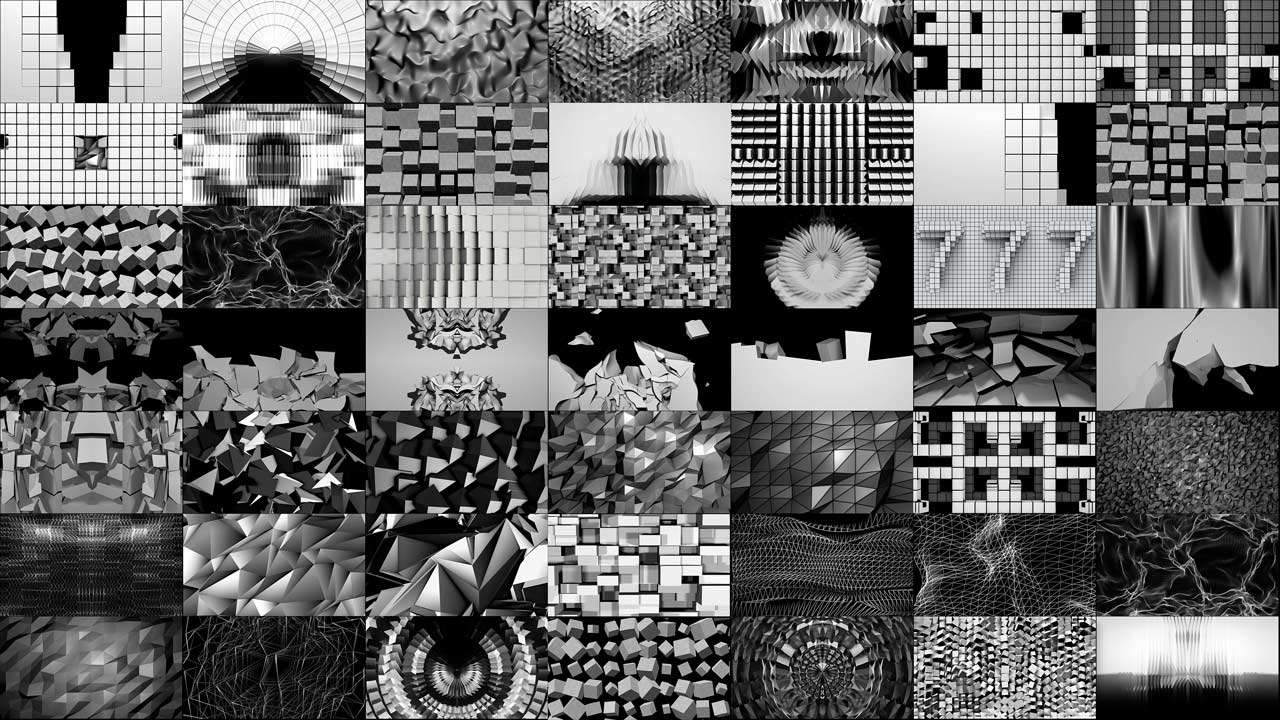
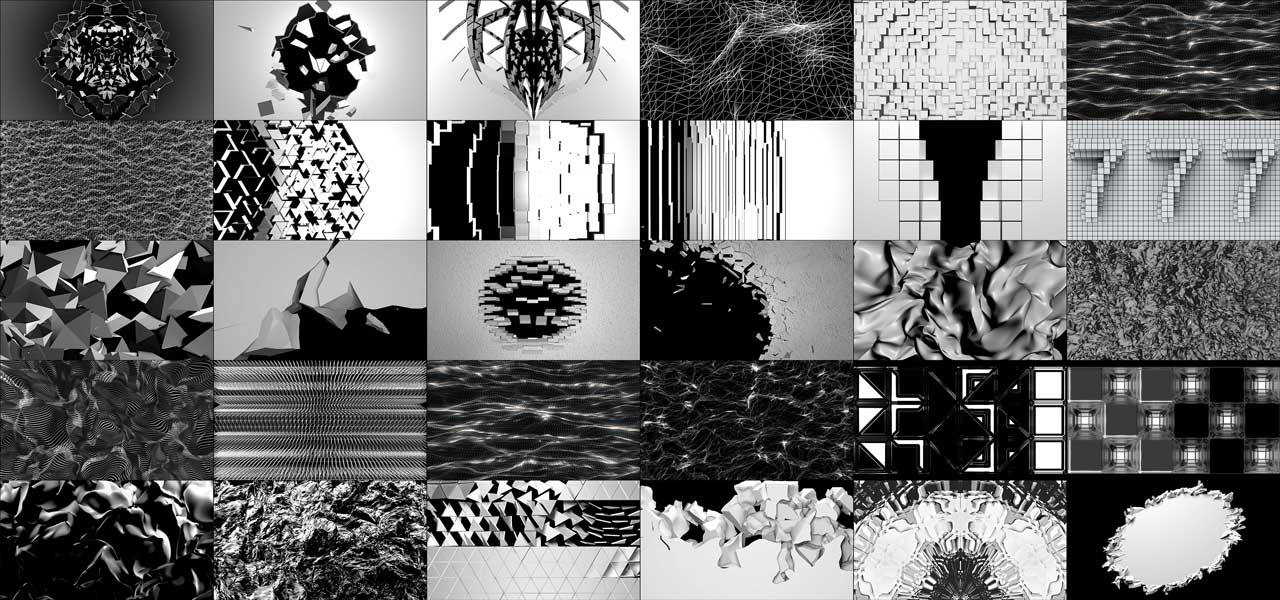
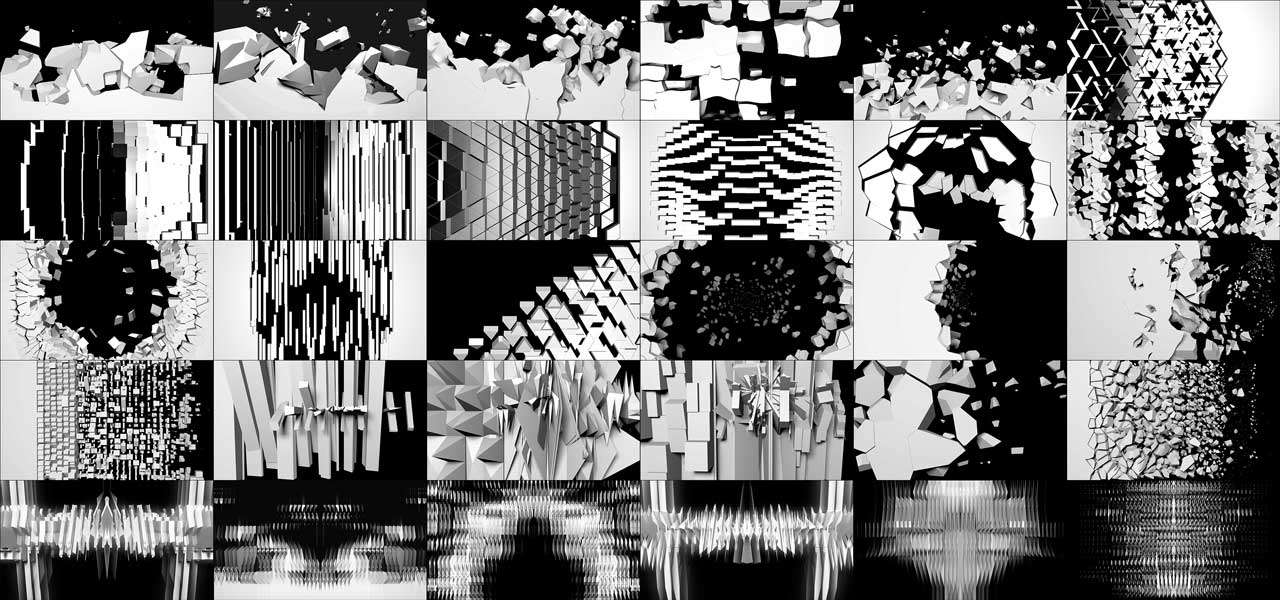
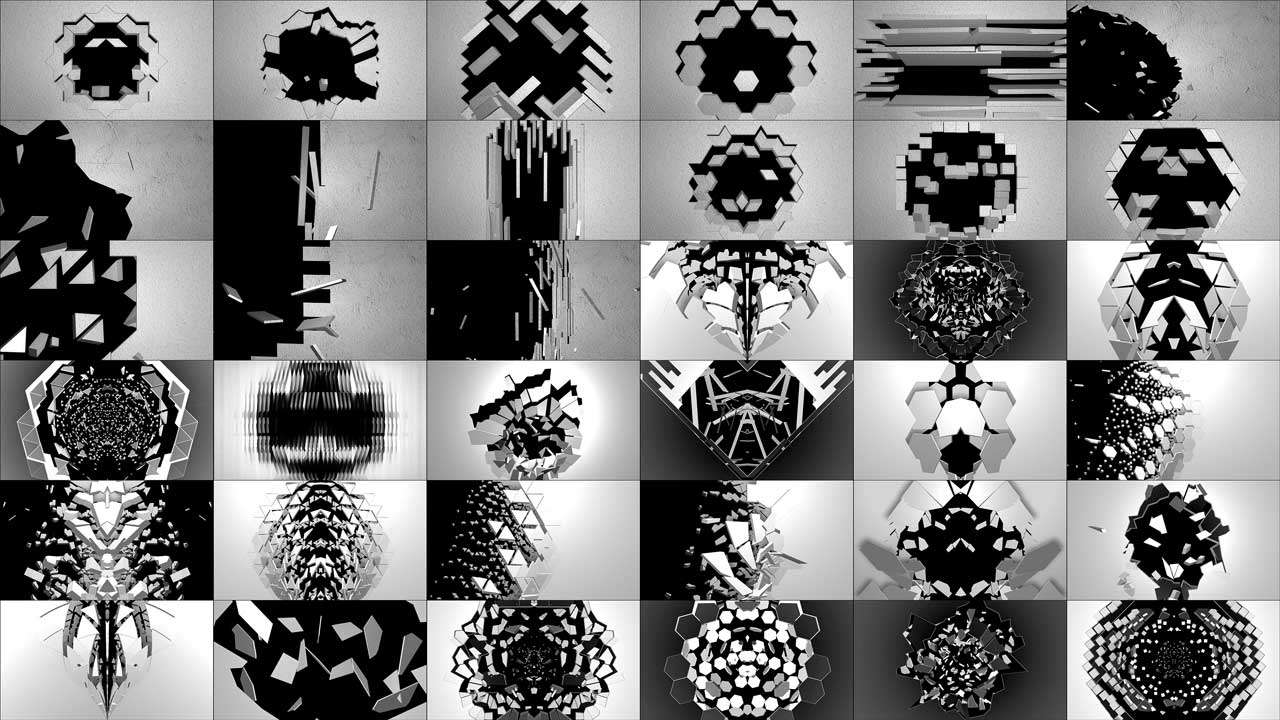
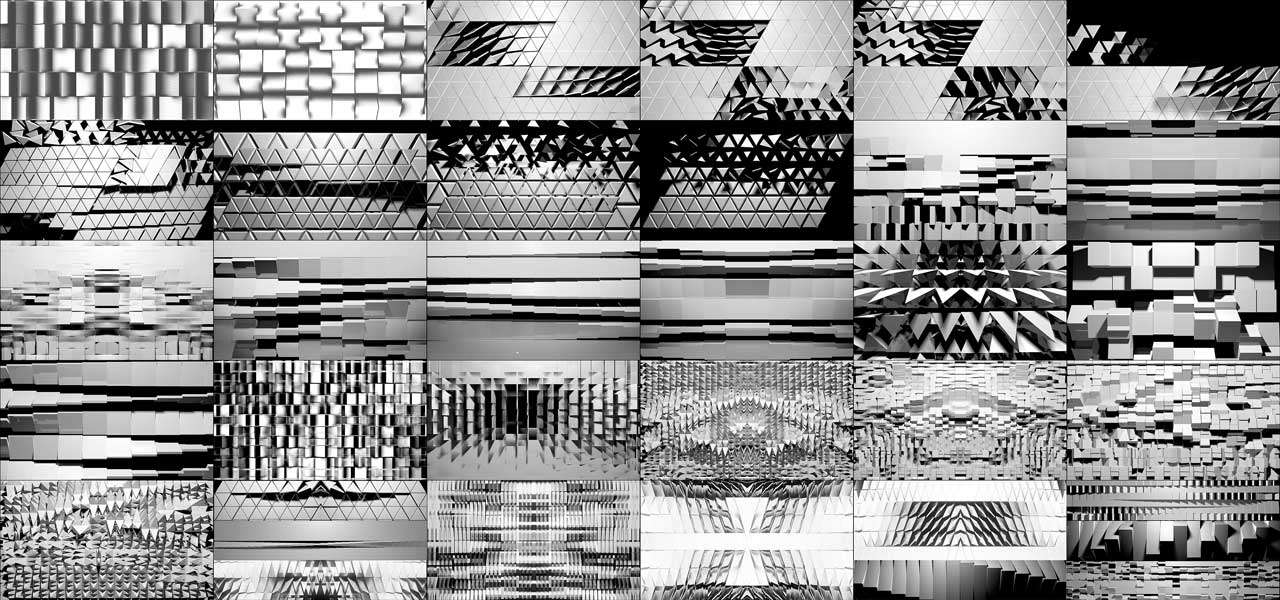
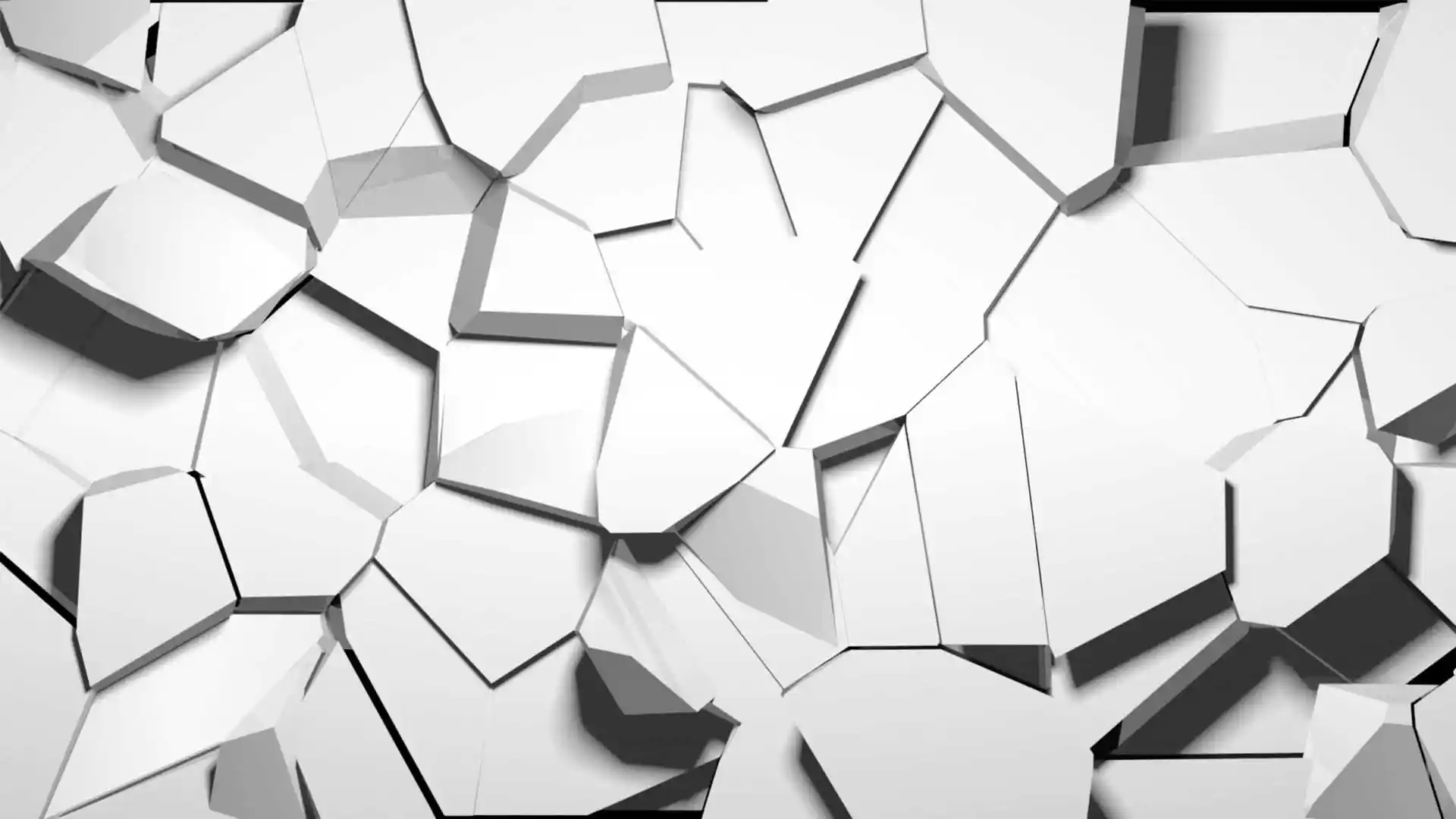
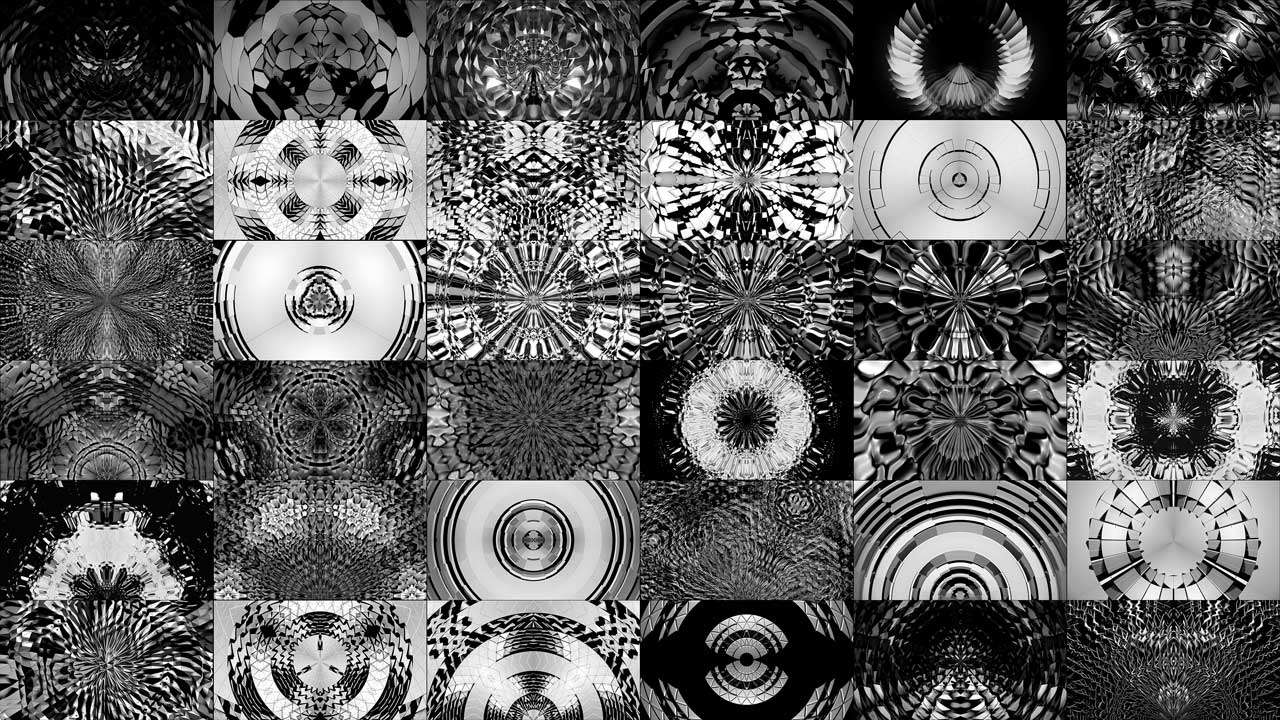
Two content types do the work. Monochrome mapping loops change the perceived geometry — extrusions, breaks, displacements — because a greyscale animation used as a displacement or mask makes flat stone read as if it has depth. Toolkit elements are animated architectural components rendered with an alpha channel: an arch that fills with fire, a column wrapped in growing branches, a window that shatters. You place them on the matching feature of the real building.
The practical constraints. Facades are large, so you need brightness before you need resolution — a sharp image nobody can see is worthless. Ambient light is the enemy, which is why these shows happen after dark and why city lighting sometimes has to be switched off for the duration. Audiences stand far back, so fine detail is wasted.
What almost nobody does, and should. Architectural mapping is used overwhelmingly as a one-off event show for a holiday or a launch. Permanent architectural projection — a facade that has a different face every season — remains rare, and it is the format with the most obvious unexploited commercial potential.
Object 3D Mapping
The projection surface is an object rather than a building. Cars, aircraft, yacht sails, mannequins, statues, sculptures, stage sets built from wood, cardboard, metal, plastic or fabric — and the human body. Cubes and boxes are the most common object of all, because they are cheap, they have clean edges, and stacked white boxes are the standard way to learn and to demo the technique. Car launches are the most common commercial use. Our own studio contributed one variant to this category: projection mapping onto a wedding cake. It works as a show moment during the reception and as a permanent installation for the whole event, right up until the cake is cut.
The practical constraints, and they are the opposite of architectural. The surface is small and the audience is close — sometimes a metre away. Every pixel is visible, so resolution matters more than brightness. Alignment tolerance is brutal: a two-centimetre error on a building is invisible, and on a car bonnet it ruins the effect. Objects also move, get bumped, and get leaned on, so anything with a live audience nearby needs a plan for re-alignment.
Video Mapping Loops
Monochrome loops built as masks and displacement sources
-
Video Mapping Loops Pack Vol.2 – Smart Reflection
99€ -
Video Mapping Loops Pack Vol.8 – Gold Edition
129€ -
Video Mapping Loops Pack Vol.5 – Panorama
99€ -
Video Mapping Loops Pack Vol.10 – Transition
99€ -
Video Mapping Loops Pack Vol.3 – Fallen & Rise
99€ -
Video Mapping Loops Pack Vol.14 – Massive Turn
99€ -
Video Mapping Loops Pack Vol.9 – Color Maps
99€ -
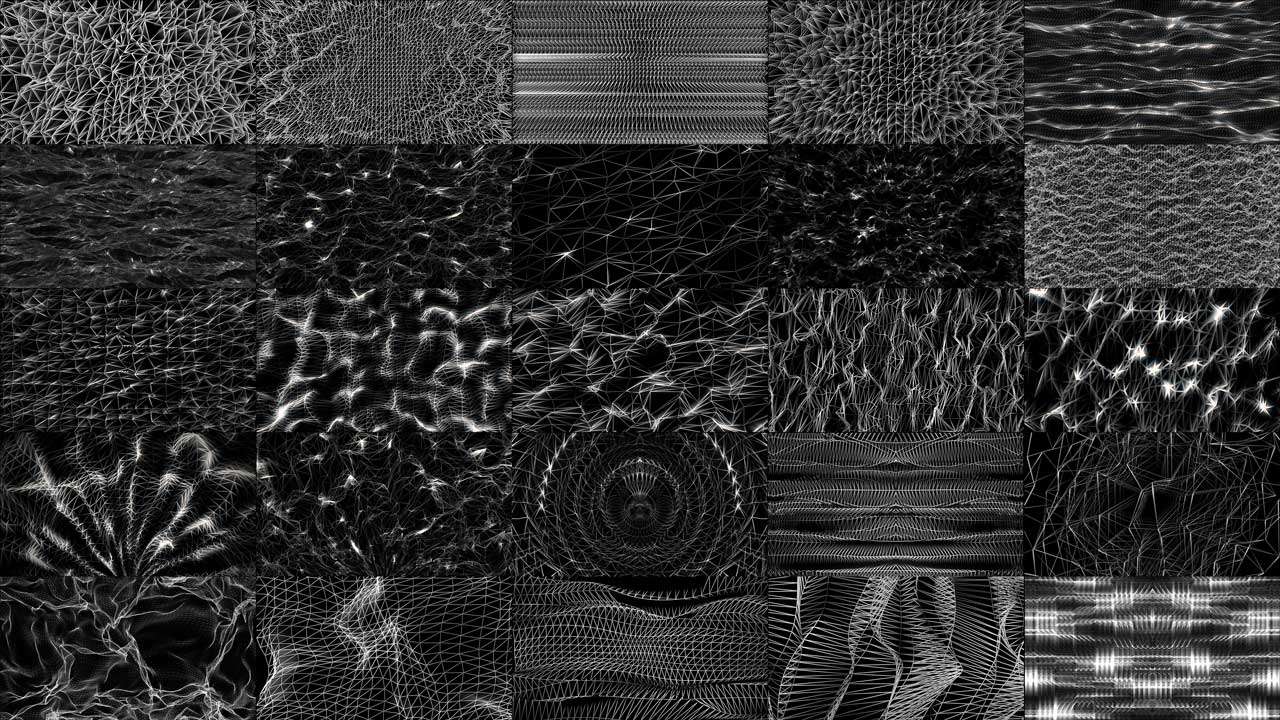
Video Mapping Loops Pack Vol.6 – Wire Texture
99€ -
Video Mapping Loops Pack Vol.18 – Ultrawide Walls
129€









Interior projection mapping
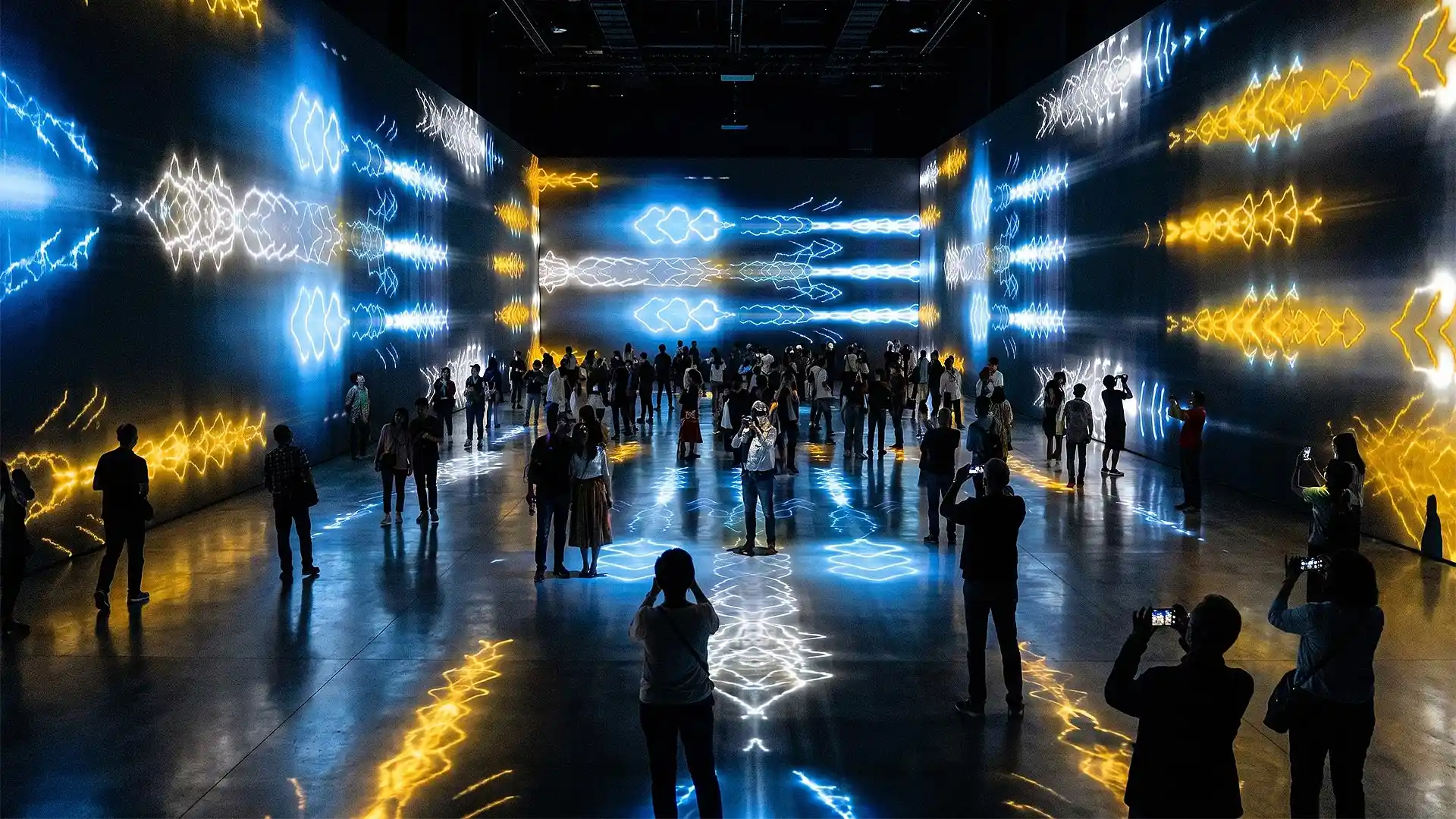
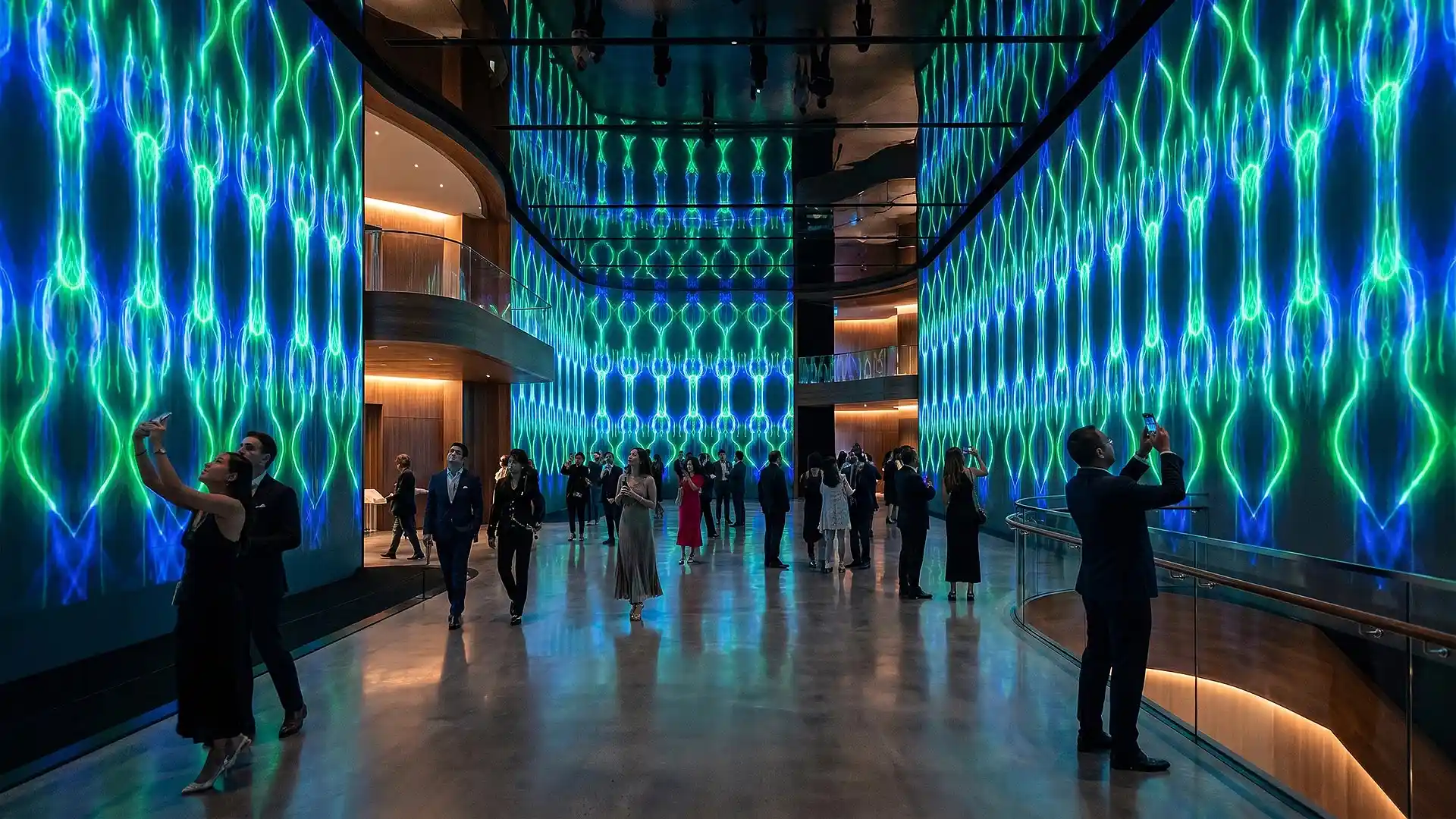
Projection that treats a room as the canvas. Popular in clubs, restaurants, event halls, exhibition centres and galleries. There is a threshold worth being strict about, because the word gets used loosely. It is interior mapping if you are using at least three projectors and covering at least 50–60% of the interior surface as one designed composition — not scattered patches of projection on different walls, but a combined map with defined zones and objects. Below that you have decorative projection, which is fine, but it is not the same discipline.
The resolutions are unusual. Interiors and panoramic setups routinely need ultrawide formats — 5760 × 1080 is three Full HD frames side by side, and content has to be authored at that shape rather than cropped into it. There is a quality of light here that is genuinely different from LED. Projection reflects off a surface rather than emitting toward you, so it reads softer and warmer. Anyone who uses a projector instead of a television at home already knows this. With the right content, an interior mapped with projection reads as expensive and comfortable in a way a wall of LED never does.
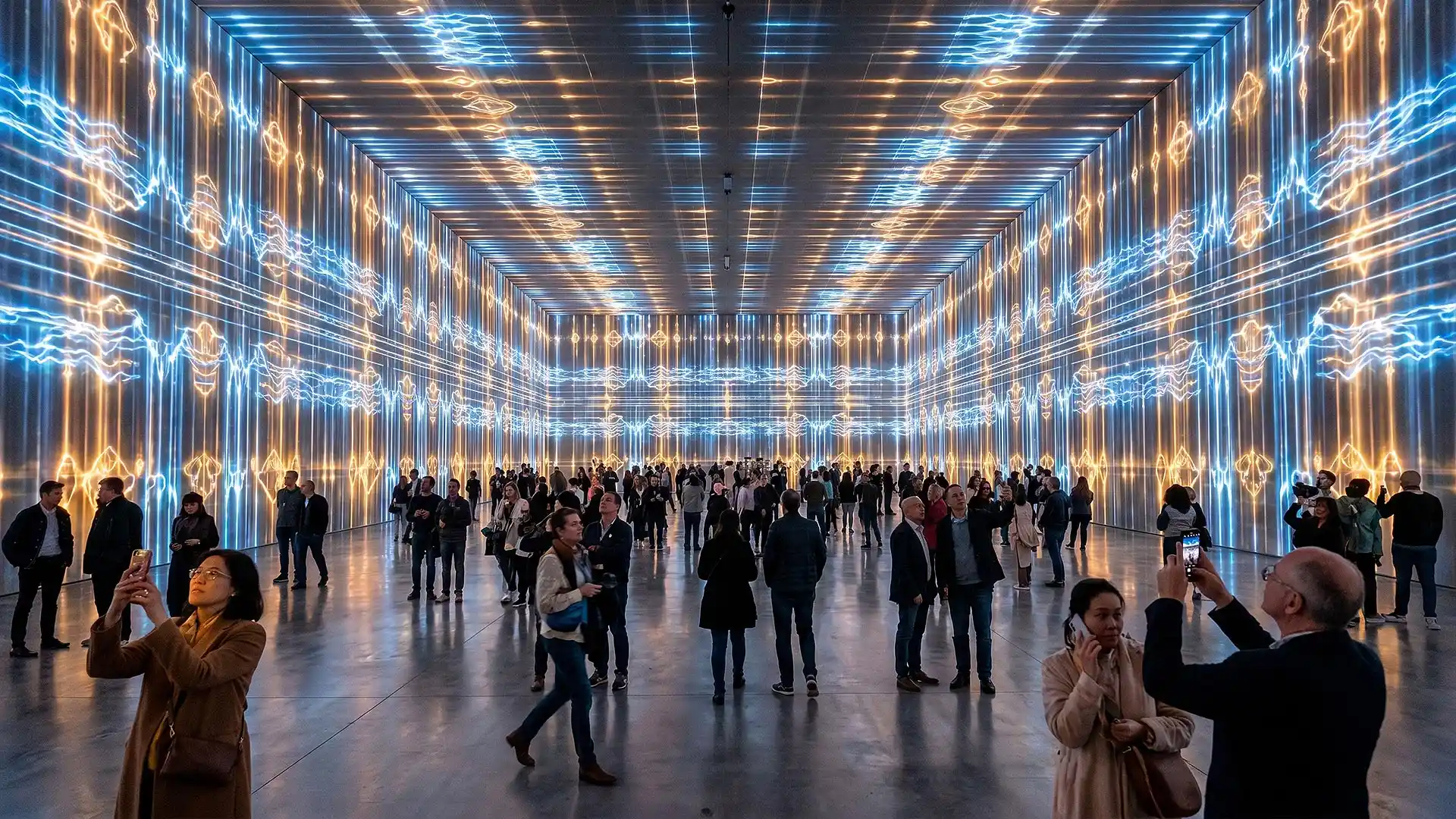
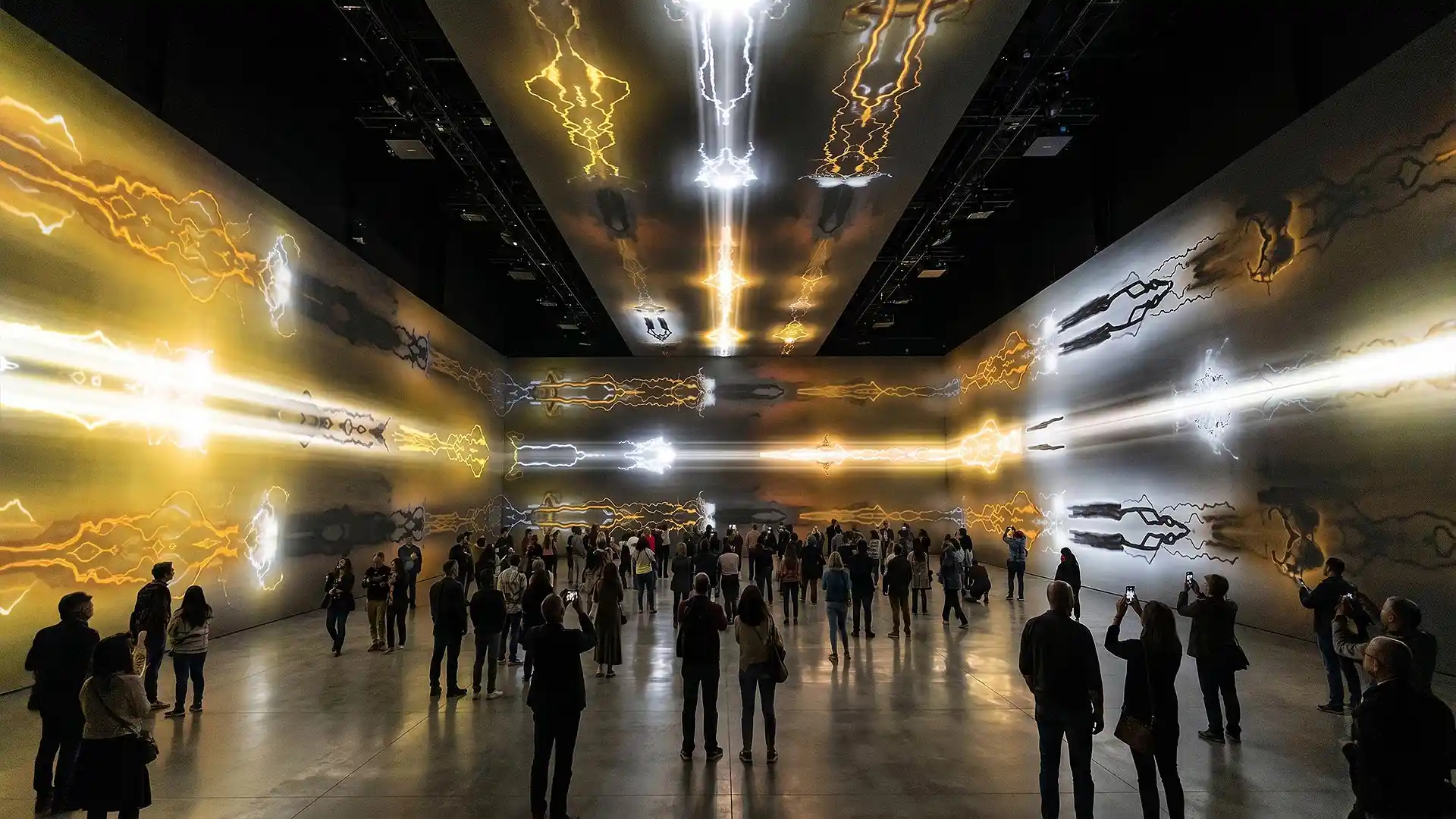
Immersive video projection
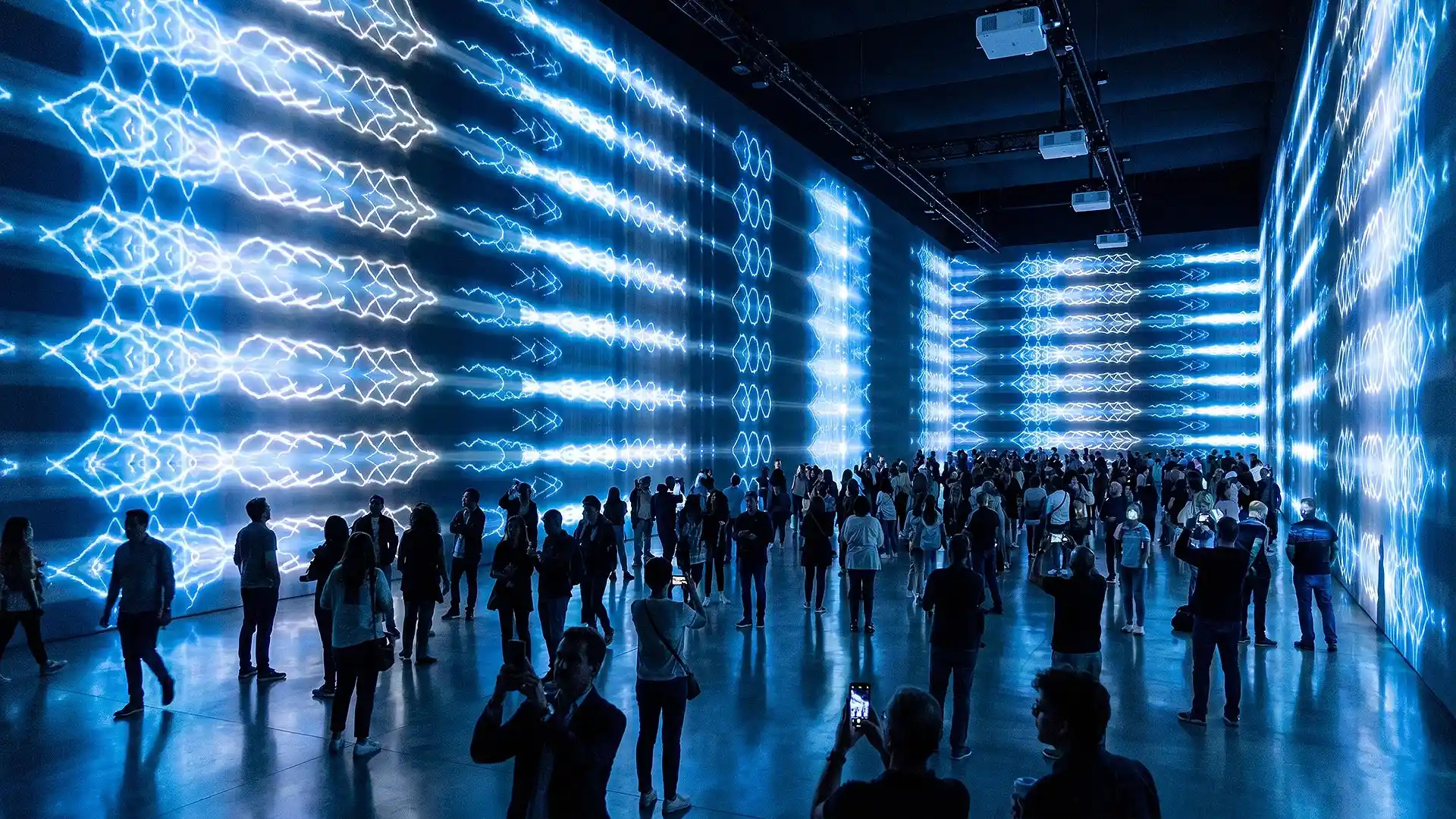
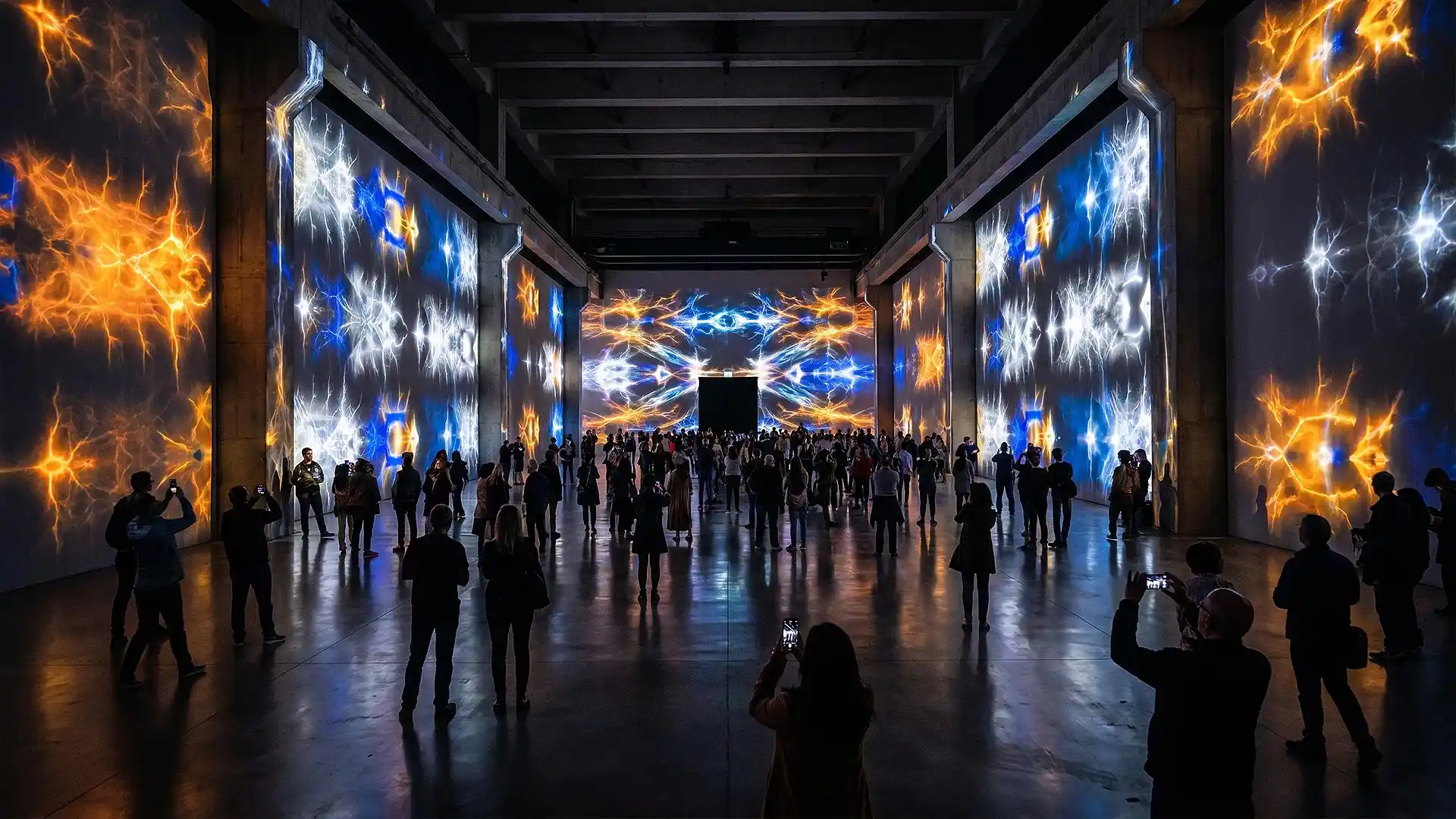
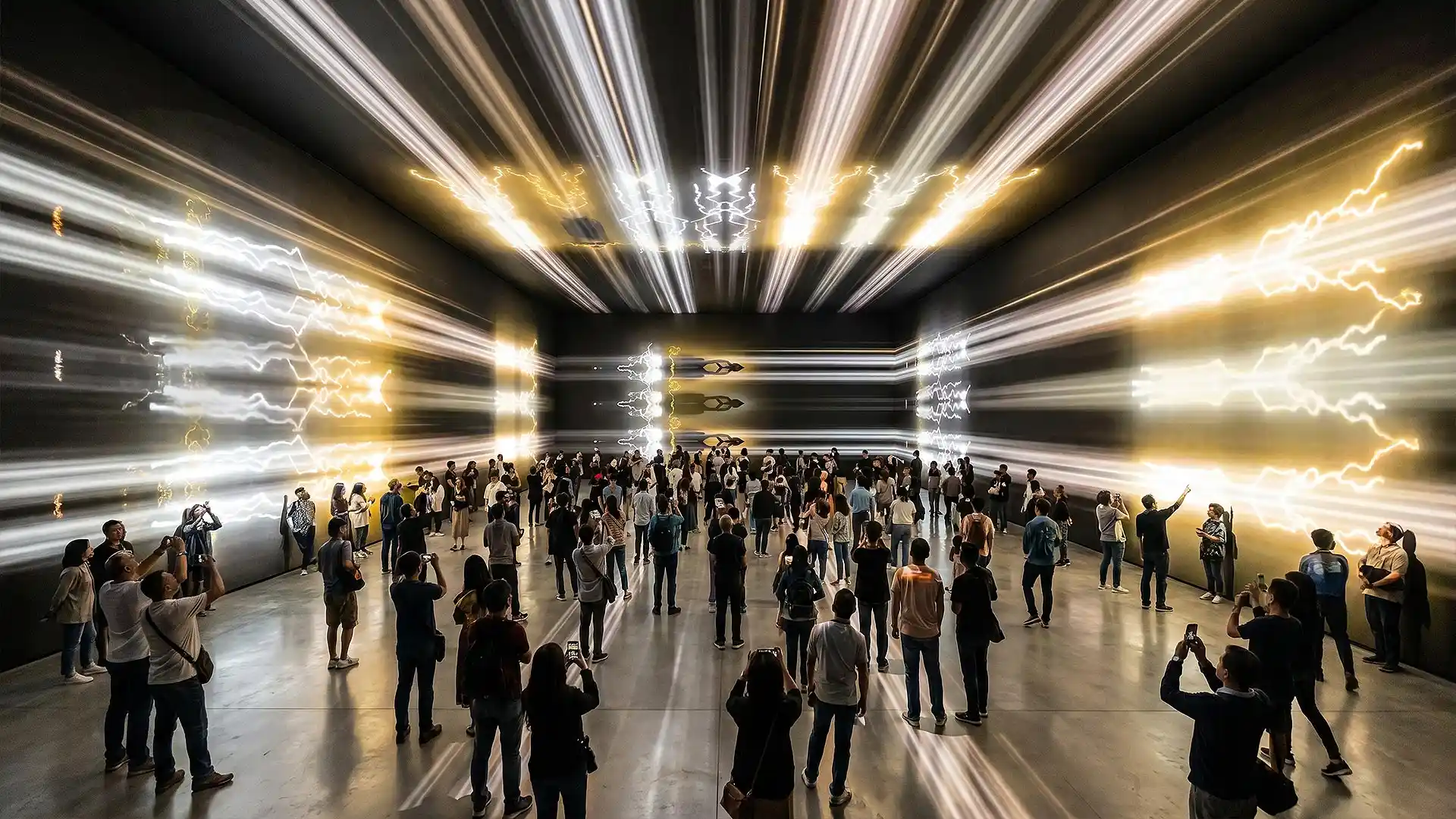
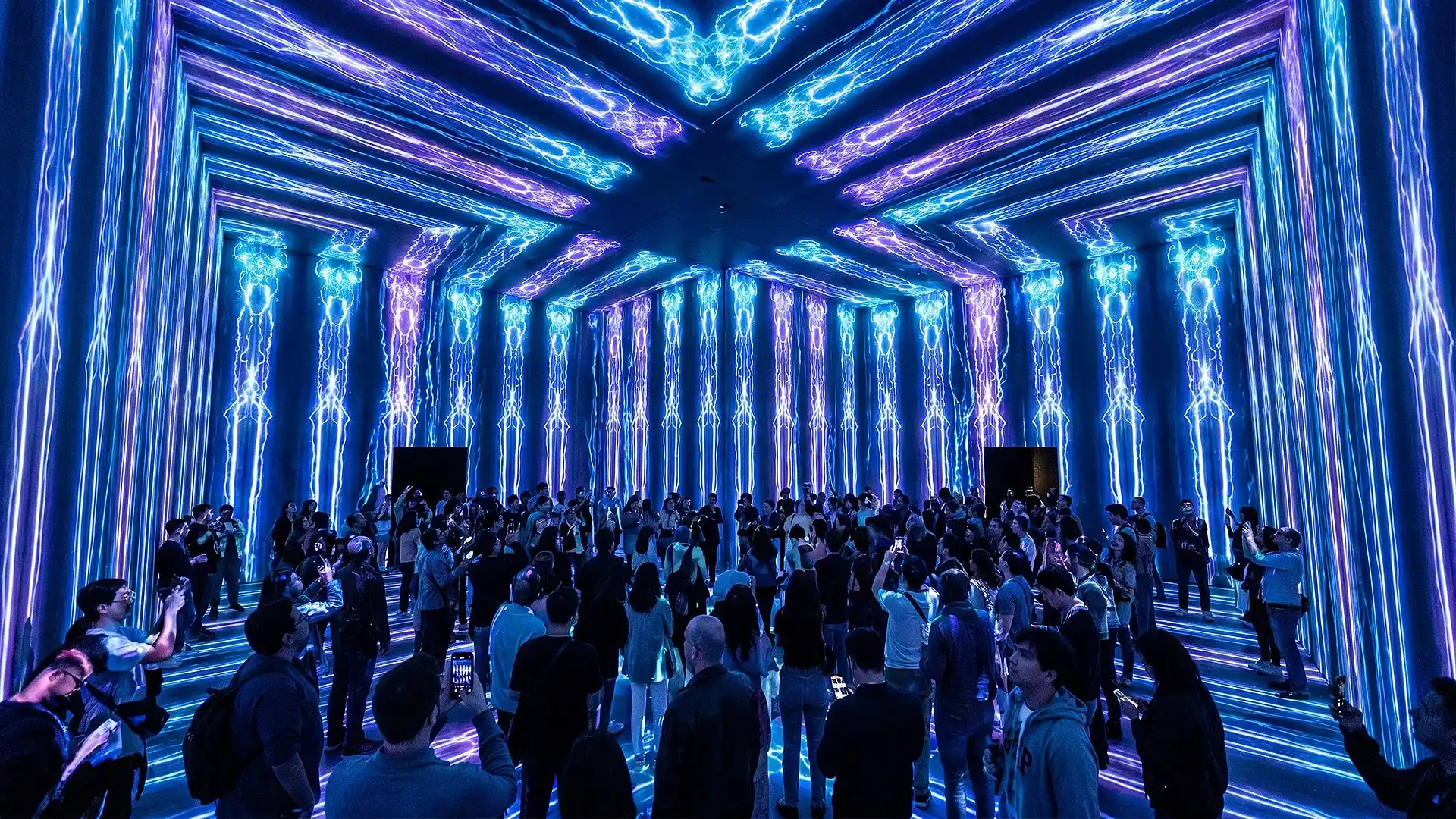
When the coverage reaches 100% — walls, floor, sometimes ceiling — interior mapping becomes something else. The audience is not looking at a projection. They are standing inside it. This is the category that has grown fastest, and the numbers are worth knowing because they explain why every city now seems to be getting one.
teamLab Borderless opened in Tokyo in summer 2018 as a museum dedicated to a single collective’s work. In its first year it drew 2.3 million visitors — more than the Van Gogh Museum in Amsterdam over the same period. The Atelier des Lumières opened in Paris the same year; one location reportedly cost €12 million to build and received 1.2 million visitors in its first ten months. Its 2026 production, a Renaissance programme built around Leonardo, Raphael and Michelangelo, combines projection with 3D models, digital twins, smoke effects and lasers — which tells you where the format is going: projection is becoming one layer in a multi-sensory production rather than the whole show.
The honest counterweight. These venues are not automatic money. Hall des Lumières in New York, the city’s first permanent immersive art centre, has publicly pivoted toward hosting other activations. A room full of projectors is a fixed cost that needs continuous programming and continuous marketing, and the novelty of “walk inside a painting” has a shelf life. Treat the format as a business with content obligations, not as an installation you build once.
What actually changes for content. There is no frame — no edges to compose against, and the audience chooses where to look. There are seams, because adjacent projectors overlap and blend, so content with a strong single focal point fights the architecture. Floor projection introduces shadows, because people stand in the beam; content designed for floors uses broad shapes and ambient movement rather than detail. And visitors walk through projector light, so anything requiring an unbroken image will be broken constantly.
Immersive Visuals
Frameless and ultrawide content for rooms and immersive spaces
-
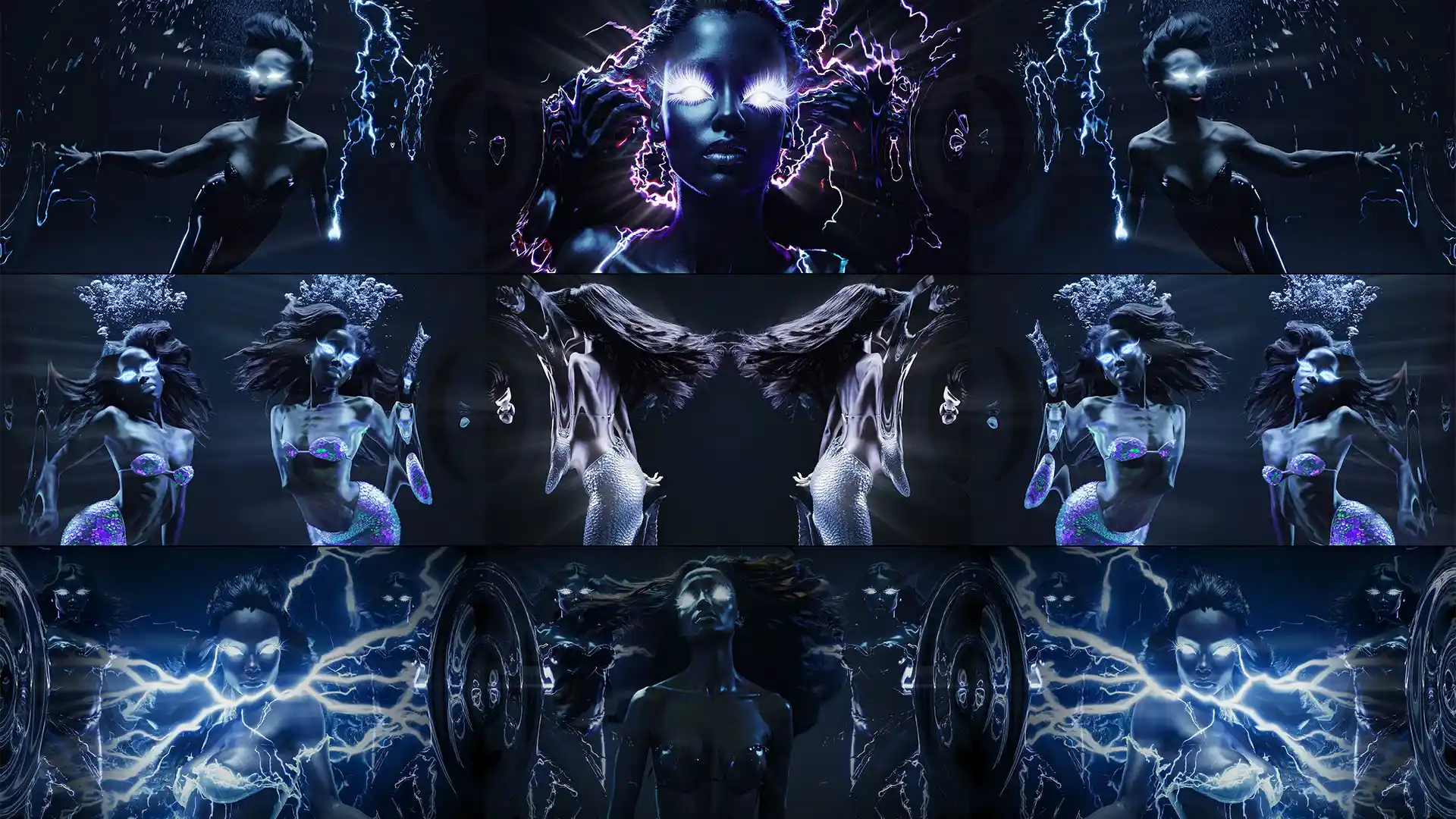
Deep Serenas – Immersive Visuals Vol.2
149€ -
Sale!
Interior Patterns – Immersive Visuals Vol.1
Original price was: 249€.199€Current price is: 199€. -
Sale!

 Select options This product has multiple variants. The options may be chosen on the product page
Immersive Projection Business Guide
Original price was: 19€.12€Current price is: 12€.



Fulldome mapping
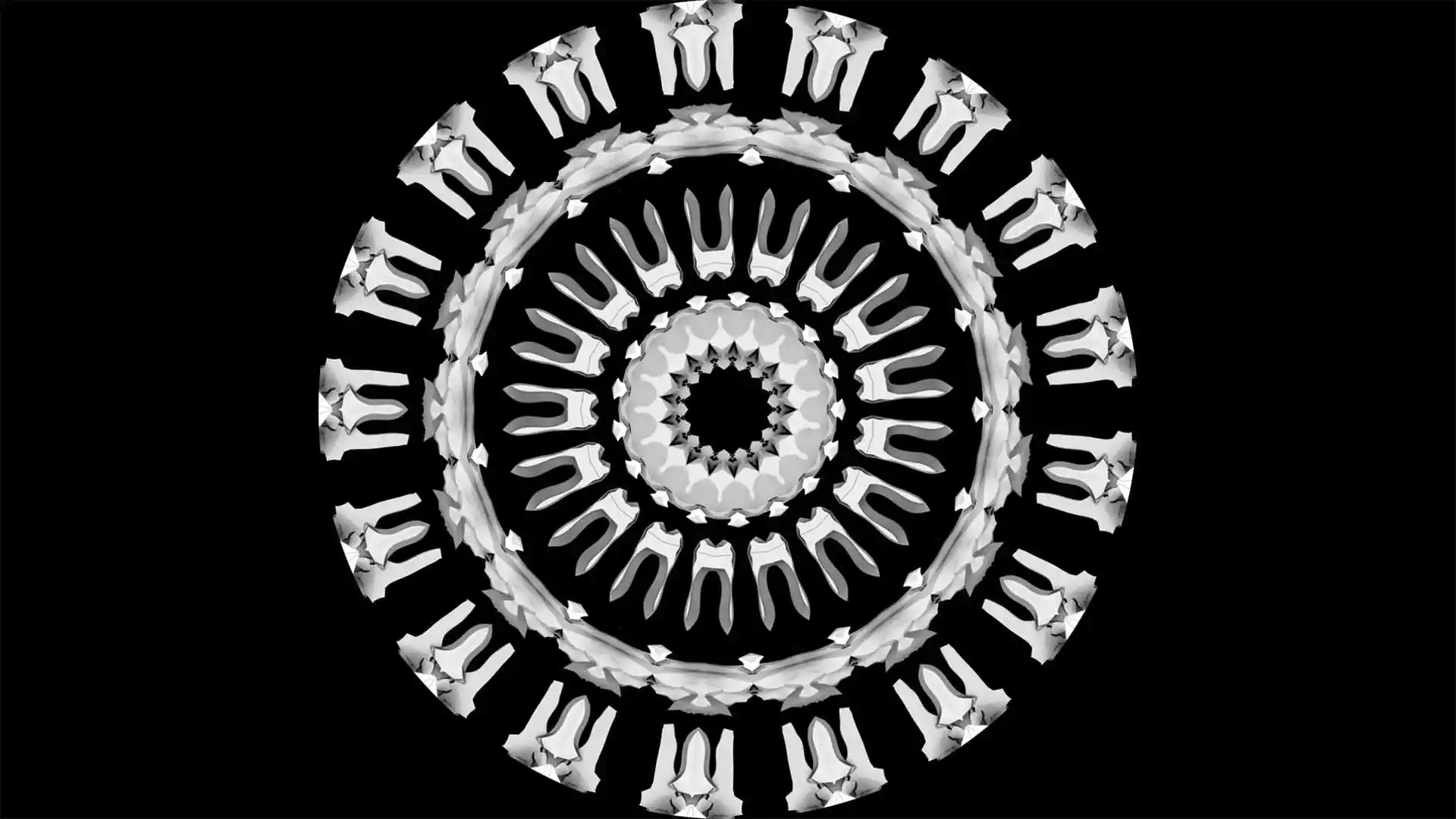
Projection onto the inside of a dome — planetariums, mobile dome tents, immersive domes. Four or more projectors, sometimes with an additional projection on the floor, in which case it becomes immersive as well as fulldome.
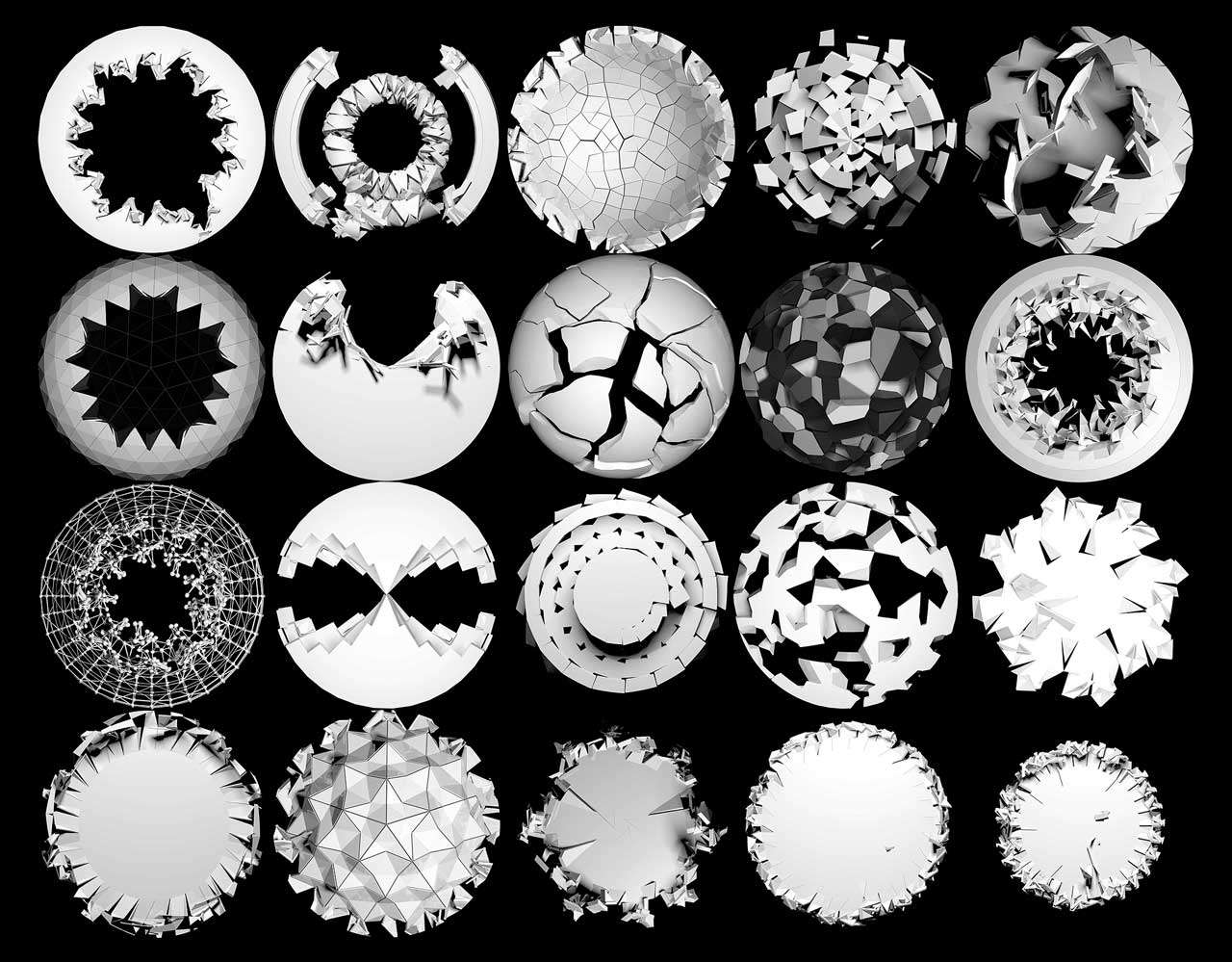
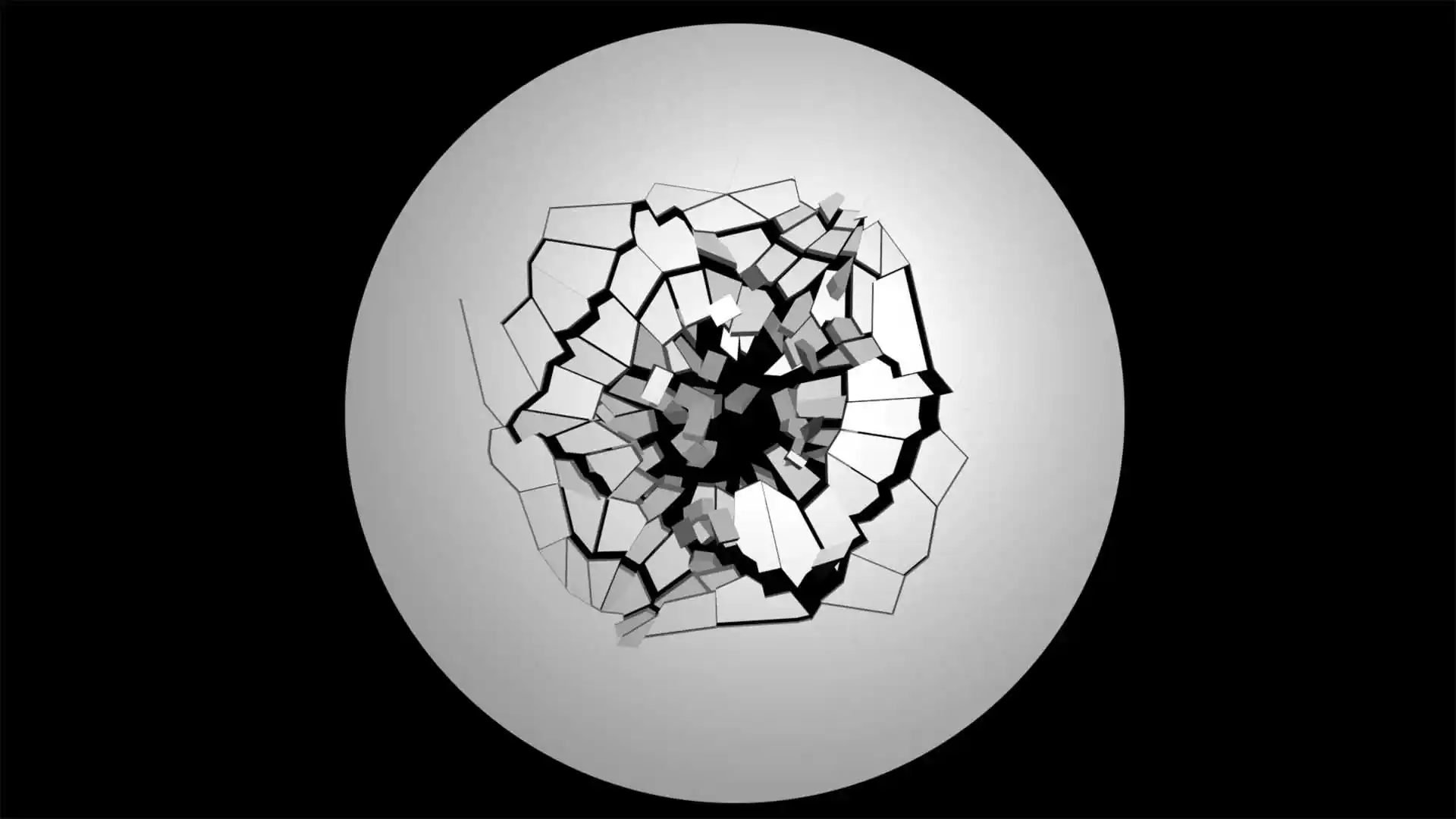
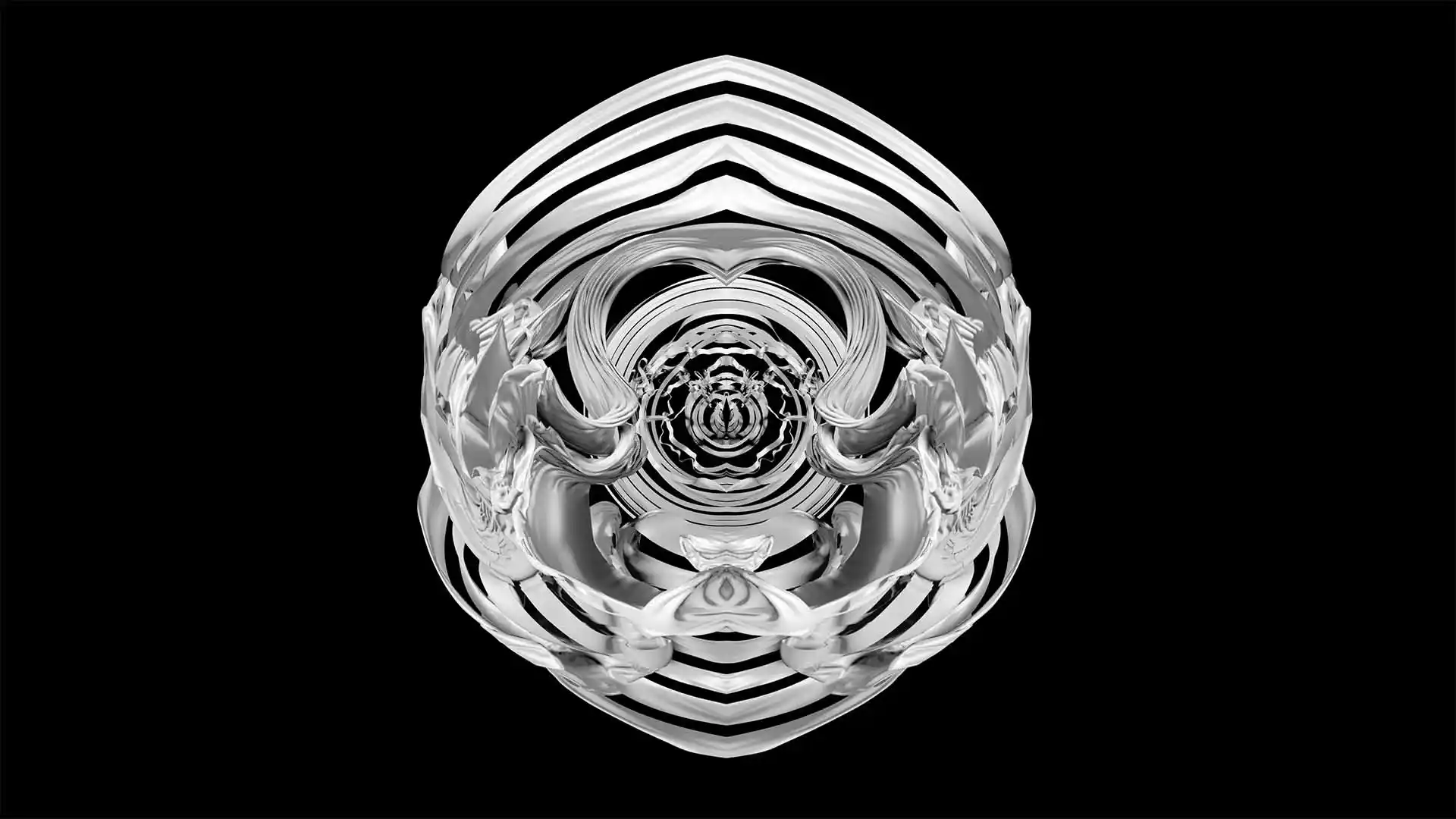
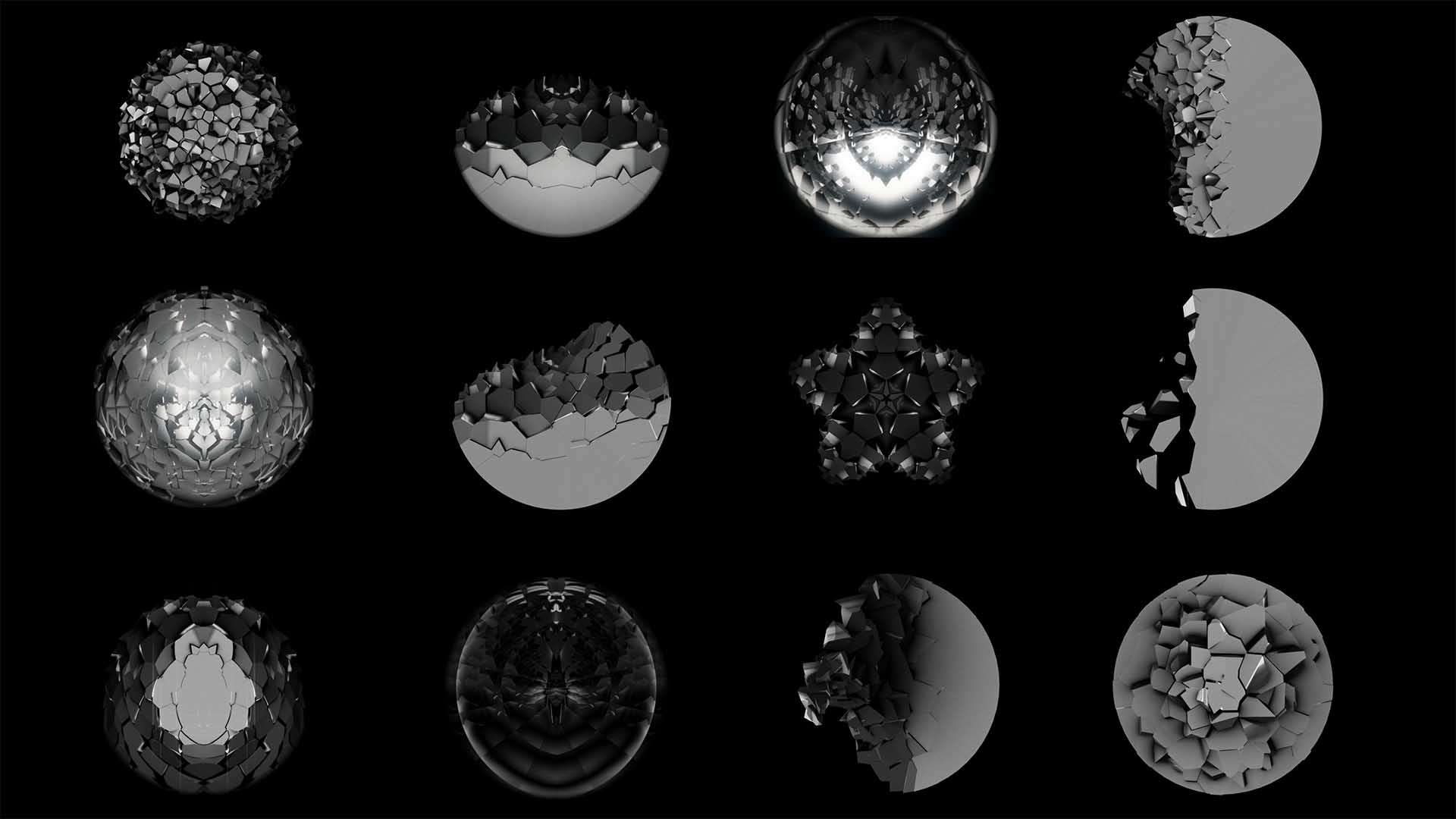
This is the most technically demanding format on the list. The content is a square domemaster with a circular fisheye image inside it, and 4K is the practical minimum with 8K preferable on larger domes. Warping, edge blending and colour matching across the curve are not optional extras — they are the job. It is also the most expensive to enter, between the projectors, the calibration software and the geodesic structure itself.
Fulldome Visuals
4K & 8K Video Footage for Planetariums
-
Video Mapping Loops Pack Vol.19 – Moon Dome
99€ -
Video Mapping Loops Vol.20 – Fulldome Open Shell 4K
129€ -
Video Mapping Loops Pack Vol.17 – Radial Displace
99€ -
Video Mapping Loops Pack Vol.23 – Top Explosion
99€ -
Video Mapping Loops Pack Vol.22 – Cloth Fulldome
99€ -
VJ Loops Pack Vol.15 – Color Dome 4K
69€ -
Video Mapping Loops Pack Vol.24 – Fulldome Rock Maps
99€







Landscape and nature video mapping
Projection onto natural objects — trees, forests, mountains, hills, rocks, snow. The least documented format and, in my opinion, the most underrated.
Trees behave unlike any other surface. A tree crown is not a plane, it is thousands of leaves at different depths. When you project onto broad-leaved trees like maple or chestnut, the light lands at different distances and generates layered shadows, and the image acquires genuine volume rather than simulated volume. Project a close-up of a human face into a chestnut crown and the face becomes three-dimensional and textured, because the tree is doing the displacement work that you would otherwise have to render. That is a rare thing in this industry: a surface that improves your content for free.
Rock and mountain projection works differently — it is scale rather than texture. Illuminated cliffs and ski slopes are spectacular in winter, when snow raises the reflectivity of the whole scene. The trade-off is power: rock faces are far away and dark, so they demand brighter and more expensive projectors than architecture of a comparable visual size.
The format is well established in practice even if it is rarely written about. Electric Forest in Michigan maps trees and paths across a festival site. Klip Collective’s Time Loop at Crystal Bridges Museum of American Art placed six installations through the museum’s North Forest. The Bioluminescent Forest project by photographer Tarek Mawad and animator Friedrich van Schoor projected animation onto woodland to imitate the glow of bioluminescent organisms. Cincinnati Nature Center runs Light in the Forest as an annual commissioned event. And at Edinburgh’s Manipulate Festival, Forest Lab was delivered from an e-bike carrying projection gear and a solar panel — which is the most honest illustration of what this format demands.
The constraints are unlike any indoor format, and they are the reason few people attempt it.
- There is no power. Generators, batteries or long cable runs, all of which have to be silent enough not to ruin the experience.
- Weather ends shows. Rain on a projector lens is a cancelled evening. Everything needs enclosure and everything needs a contingency date.
- The surface moves. Wind moves branches, so precise mapping onto a specific limb will drift. Content that assumes exact registration will fail; content built from organic, forgiving shapes will not.
- Condensation and insects. Lenses fog in temperature swings, and bright light in a forest attracts a considerable amount of flying life directly into the beam.
- Ecology and permission. Bright light at night affects nocturnal wildlife and nesting birds. Protected areas may restrict lighting seasons entirely. Ask before you plan.
- Darkness is the one advantage. Rural sites have almost no ambient light, so you can achieve with modest projectors what would need far more power in a lit city.
Adjacent forms that are not really mapping
Three common projection formats get filed under mapping and should not be. In each case you are projecting one image onto one surface — there is no geometry to map.
Holographic projection on transparent film. The effect behind the Tupac Shakur appearance and countless DJ shows. Three components make it work: a transparent film screen, content animated on a black or alpha background, and a projector striking the film at roughly 30–45 degrees. Because projectors cannot emit black, the black background disappears and only the subject appears to float. The illusion holds from the front and collapses the moment you walk to the side and see a flat plane. It is a pseudo-hologram, and the industry knows it.
Water screens and water walls. Projection onto a sheet of water thrown up by a fountain. The moving water and foam give the image texture, and at night from a distance the fountain itself disappears, so the visuals seem to dance on air.
Smoke and haze projection. The same principle again — a temporary, moving, semi-transparent surface. Beautiful and completely unmappable.
These are projection art. Calling them mapping muddles a term that is otherwise useful.
What actually changes between the types
The reason to classify at all is that these numbers drive the budget.
| Format | Projectors | Audience distance | Content shape | Hardest part |
|---|---|---|---|---|
| Architectural | 2–20+ | Far | Facade elevation, elements with alpha | Brightness, ambient light |
| Object | 1–4 | Very close | High detail, small canvas | Alignment tolerance |
| Interior | 3+ | Inside the space | Ultrawide, e.g. 5760 × 1080 | Blending across walls |
| Immersive | 6–30+ | Surrounded | Frameless, floor-safe | Shadows, seams, programming |
| Fulldome | 4–6+ | Below, looking up | Square domemaster, 4K–8K | Warping and calibration |
| Landscape | 1–10 | Variable | Organic, forgiving shapes | Power, weather, moving surface |
Types by purpose and by how the show is built
The same surface can serve completely different briefs, and the brief changes the content more than the surface does.
By field of application
Advertising. Brands use mapping to launch products, cars and collections. Almost always temporary. Permanent advertising projection is rarer than it should be — Vienna’s Museum Quarter runs a Christmas projection installation at the Leopold Museum each year, and in Kyiv a confectionery factory facade carries a seasonal show, but these remain exceptions rather than a category.
Decorative. Visual design for weddings, bars, restaurants and event halls. The commercial logic is strong and underappreciated: it is far cheaper to change a digital image for a themed night than to rebuild a club’s physical decor. If several buildings on one street adopted permanent projection, you would arguably have a new branch of urban design.
Entertainment. Festivals, concerts, opening ceremonies. Most mapping is entertaining to some degree — this category is about work whose only job is to make people applaud.
Educational. Museums and galleries, where projection revives paintings, reconstructs lost architecture or explains something that a label cannot. This is where immersive venues and traditional institutions are converging, and where the content standard is highest because the audience stays longest.
By how the show is built
Standard, pre-programmed mapping. Everything is designed, animated and sequenced in advance: 3D graphics, content, script, timing. It runs identically each time. This is how you deliver a client’s story precisely, and shows range from a two-minute spectacle to a feature-length projected film.
Interactive mapping. The projection responds to people — movement, sound, touch, sensors. The plot matters less than the mechanism: wave a hand, something happens. It is technically harder, it fails more publicly, and it holds attention far longer, which is why museums keep commissioning it.
One more axis: temporary or permanent
Rarely discussed and financially decisive. A one-off show is a production: rented projectors, a crew, a night. A permanent installation is a product: owned hardware, unattended operation for years, scheduled content updates, and a maintenance budget. Most of this industry sells productions. The money in the next decade is in products, and the skills are not the same.
Frequently asked questions about Projection Mapping Types
What are the main types of projection mapping?
Sorted by surface there are six: architectural mapping onto building facades, object mapping onto cars, sculptures, sets and small items, interior mapping across a room, immersive mapping covering a space completely including the floor, fulldome mapping inside a dome, and landscape mapping onto trees, rocks and natural terrain. Holographic film projection, water screens and smoke projection are usually grouped with mapping but are technically single-surface projection.
What is the difference between interior and immersive mapping?
Coverage. Interior mapping uses at least three projectors across roughly 50–60% of a space as one designed composition. Immersive mapping covers effectively the whole space including floor and sometimes ceiling, so the audience stands inside the image rather than looking at it. Immersive demands frameless content, tolerance for seams, and floor visuals designed around the shadows of people walking through the beam.
Can you project onto trees?
Yes, and trees are one of the best surfaces available. A crown of broad leaves sits at many different depths, so the projected light creates layered shadows and the image gains real volume rather than simulated depth. Maple and chestnut work particularly well. The difficulties are practical rather than visual: no mains power, weather, wind moving the branches so precise registration drifts, condensation on lenses, insects drawn to the beam, and ecological restrictions on lighting near wildlife.
Is holographic projection real mapping?
No. A transparent film screen with content on a black background, lit by a projector at roughly 30–45 degrees, is one image on one flat surface — there is no geometry to map. It also only reads as three-dimensional from the front; step to the side and you see a flat plane. It is an effective illusion and widely used, but pseudo-holographic rather than holographic, and projection rather than mapping.
What resolution does each type of mapping need?
It depends on audience distance more than on surface size. Architectural work prioritises brightness over resolution because viewers stand far back. Object mapping needs high resolution because people stand close. Interior and panoramic work often needs ultrawide formats such as 5760 × 1080. Fulldome needs square domemasters, 4K minimum and 8K on larger domes.
Which type of projection mapping is cheapest to start with?
Object mapping on cubes or boxes. One projector, a small surface, a free or inexpensive mapping application and content you can make yourself. It teaches alignment, masking and content preparation without the cost of a facade or the logistics of a landscape site.
What is the difference between a mapping show and a permanent installation?
A show is a production — rented equipment, a crew and a single night, with everything supervised. A permanent installation is a product that runs unattended for years, which means owned hardware, automatic startup, scheduled restarts, remote monitoring and a content update plan. Most of the industry is set up to sell shows, and the operational skills for installations are quite different.
Sources
Figures on immersive venues come from published reporting and from the venues’ own materials, checked in July 2026.
Referenced venues and projects
- teamLab Borderless, Tokyo
- Atelier des Lumières, Paris
- Hall des Lumières, New York
- Electric Forest Festival, Michigan
- Time Loop by Klip Collective, Crystal Bridges Museum of American Art
- Bioluminescent Forest by Tarek Mawad and Friedrich van Schoor
- Light in the Forest, Cincinnati Nature Center
- Forest Lab, Manipulate Festival, Edinburgh
- Leopold Museum Christmas projection, Museum Quarter, Vienna
Reporting consulted
- The Art Newspaper — on immersive institutions and visitor figures
- ARTnews — on the immersive art industry and the Hall des Lumières pivot
- blooloop — on location-based digital art
- AVIXA Xchange — on festival projection installations
Classification, technical constraints and production observations are drawn from our own work since 2012 and from the author’s earlier writing on projection mapping formats.
Content is still king
Every format above needs different footage, and the single most expensive mistake in this industry is buying content designed for one type and using it on another. Widescreen clips stretched onto a dome look wrong and everyone in the room can tell. Detailed content on a facade is invisible from the crowd. Content with a single strong focal point falls apart across an immersive room with seams. A busy composition on a tree crown turns to mush because the leaves are already doing the texturing. Since 2012 we have produced over 100 VJ Loops Packs, delivered in both Mov ProRes and Mov DXV, in resolutions from Full HD to 8K, shipped from three separate locations.
For facades, the monochrome video mapping loops work as masks and displacement sources rather than as finished pictures, and the video mapping toolkits give you animated arches, columns, windows and cornices with an alpha channel to place directly onto real features. For rooms and immersive spaces, the immersive visuals category is built frameless and ultrawide. For domes, the fulldome visuals are rendered as true square domemasters rather than reformatted widescreen. If we have missed a format, tell us and we will add it — this list is meant to stay alive.
-
Sale!
Green Screen Video Footage Bundle Vol.1 – 5in1
Original price was: 499€.299€Current price is: 299€. -
Sale!
OCCULT VJ Loops Bundle Vol.7
Original price was: 499€.249€Current price is: 249€. -
Sale!
GLITCH VJ Loops Bundle Vol.4
Original price was: 499€.249€Current price is: 249€. -
Sale!
HDD Video Mapping Projection Kit – All Visuals for Projection Mapping
Original price was: 16,999€.3,999€Current price is: 3,999€. -
Sale!
STAGE VJ Loops Bundle Vol.2
Original price was: 499€.249€Current price is: 249€. -
Sale!
Video Mapping Loops Bundle Vol.1
Original price was: 1,000€.549€Current price is: 549€.







Best wishes from Vienna,
Thanks for your attention, faithfully yours,
Alexander Kuiava – Founder & CEO LIME ART GROUP
https://alexanderkuiava.com/
