
Rich VJs in 2026: What the Fourth Industrial Revolution Means for Media Artists
The article is written by a human. Mistakes have been edited by AI. Figures from IMF, World Economic Forum and industry surveys published 2025–2026, checked August 2026.
I wrote the first version of this article in February 2022, during the pandemic. It made one prediction and gave one piece of advice. The prediction was that the market would split into online and offline, and that offline would become the premium segment. That was right. The average concert ticket in 2025 cost $144 — 45% above 2019 levels. Premium tickets for major tours now routinely pass $500 and VIP packages pass $1,000. Global live music revenue is projected above $35 billion in 2026. People pay more than ever to be in a room with other people.
The advice was: “Wait for this moment, stay afloat.”
That part has not aged well. Waiting is a strategy for an episode — something that starts, is endured, and ends. The IMF titled its April 2026 World Economic Outlook Global Economy in the Shadow of War and its July update Global Economy in Crosscurrents of War and Technology. Growth is projected at 3.1% for 2026, revised down from 3.4%. Klaus Schwab noted in 2016 that global growth had been stuck at 3 to 3.5% against 5% before 2008. A decade later it is still stuck. This is not a crisis to survive. It is the operating environment.
Who this article is for: VJs, motion designers and media artists deciding what to build over the next five years.
What it solves: most writing on this subject is either “AI will replace you” or “creativity is human, relax”. Neither states which tasks, at which income level, on what evidence.
What you get by the end: three of Schwab’s structural claims checked against 2026 data, a testable line between work that automates and work that does not, and seven recommendations derived from both.
Hello dear VJs, artists and clients of LIME ART GROUP. I am new media artist Alexander Kuiava. I have run this business through 2008, 2020 and everything since, and the advice below is what I would give myself in 2022.
Specialist Surfaces
Immersive, fulldome and holographic content – the formats a general model cannot produce
-
VJ Loops Pack Vol.17 – Main Element
99€ -
Video Mapping Loops Pack Vol.19 – Moon Dome
99€ -
Video Mapping Loops Vol.20 – Fulldome Open Shell 4K
129€ -
Video Mapping Loops Pack Vol.17 – Radial Displace
99€ -
VJ Loops Pack Vol.3 – PolyMask
29€ -
VJ Loops Pack Vol.59 – Rave Ape Gorilla
89€ -
Sale!

 Select options This product has multiple variants. The options may be chosen on the product page
Immersive Projection Business Guide
Original price was: 19€.12€Current price is: 12€. -
Video Mapping Loops Pack Vol.23 – Top Explosion
99€















What Schwab predicted, and what the 2026 numbers say
The Fourth Industrial Revolution is not a book about gadgets. Three of its structural claims matter for anyone selling creative work, and all three can now be checked against data rather than argued about.
Claim one: the middle of the labour market collapses
Schwab’s argument, drawing on the Oxford study by Frey and Osborne that put 47% of US jobs in the automation risk zone: employment grows at the high end, where cognitive and creative judgement is required, and at the low end, where physical presence is required. It disappears in the middle, where the work is routine, repeatable and specifiable.
The 2026 data lands exactly on that shape. More than 118,000 film, television and animation jobs in the United States are expected to be disrupted by AI video tools, and the roles named as most vulnerable are VFX artists, animators, sound editors and concept artists earning between $60,000 and $108,000 a year.
That is not the bottom of the industry and it is not the top. It is the middle, and it is where most working professionals actually are.
At the same time, the World Economic Forum’s Future of Jobs Report 2025 projects 170 million jobs created and 92 million displaced by 2030 — a net gain of 78 million, with 22% of all jobs disrupted — and lists creative thinking among the top skills for 2030, alongside analytical thinking, resilience and flexibility.
Both statements are true simultaneously, and the apparent contradiction is the single most important thing in this article. Creative thinking is rising in value while creative production is being automated. They are not the same activity, and most people sell the second one.

Claim two: value concentrates through the platform effect
Schwab’s illustration is still the clearest one available. In 1990, Detroit’s three largest companies had a combined market capitalisation of $36 billion, revenue of $250 billion and 1.2 million employees. In 2014, Silicon Valley’s three largest had a capitalisation of $1.09 trillion, revenue of $247 billion — essentially the same revenue — and 137,000 employees.
Same output. Ten times fewer people.
The mechanism is that marginal cost in a digital business tends toward zero, so a unit of value gets created by fewer hands. In our corner of the economy that shows up as freelance volume: writing and translation job volume down roughly 30% year on year, graphic design down 17%, with 26% of illustrators reporting they have already lost work to generative AI.
Claim three: talentism replaces capitalism
Schwab’s term. The argument is that human capital has become more decisive than financial capital, because capital is abundant and the ability to produce something genuinely new is not.
The 2026 check: WEF found that skills gaps are the number one barrier to business transformation, named by 63% of employers, and that 39% of the key skills required in the job market will change by 2030.
This is the optimistic claim in the book and it survives contact with the data — but only in the narrow, unromantic sense that scarce judgement commands a price. It does not mean everyone with talent gets paid. It means the thing being paid for has moved.
The line that actually matters: production versus judgement
Forget job titles. The dividing line runs through tasks, and it is testable.
If the deliverable can be completely specified in a brief, it can be generated. If it requires being in the room, holding responsibility, or making a call that nobody wrote down in advance, it cannot.
Applied to this industry:
| Already automatable | Not automatable |
|---|---|
| Rendering a clip that has been fully described | Deciding what the show should feel like |
| A background loop from a text prompt | Cutting on the drop in front of two thousand people |
| A first-pass storyboard or moodboard | The meeting where the concept survives contact with the client |
| Routine keying, cleanup, versioning, resizing | Being accountable when the media server dies at 01:40 |
| A variation on an existing visual style | Authorship you can license, warrant and indemnify |
| Translating a reference into a similar output | Choosing which reference is the wrong one |
The uncomfortable half of that table is the left column, because routine production is what most working artists actually invoice for. Minutes of animation. Clip counts. Revisions. Deliverables that were fully described before work started.
Nothing on the right side is mystical. It is all specific, all learnable, and all currently underpriced by the people who can do it.
The number that should worry you more than AI
Here is the finding that reframes the whole conversation.
86% of creative professionals already use AI tools in their work. Only 10% think its effect on the industry is positive; 58% call it mixed and 28% call it negative.
Set aside the sentiment. Look at the adoption figure. Nearly everyone has the tools.
Meanwhile, 47% of self-employed creatives earn under £30,000 a year, against a UK median full-time salary of £39,039. And separately, freelancers who use AI earn 34% more per hour.
All three of those are true at once, and together they say something precise: adoption is not advantage. Any capability that arrives as a subscription arrives for your competitors in the same quarter. The 34% premium goes to people who changed what they sell, not to people who changed which software renders it.
If you adopt every tool and keep selling minutes of animation, you have made your own product cheaper to produce and given the saving to the client.
Seven recommendations
Each one is derived from a structural claim above, not from optimism.
1. Move up the brief, not down the price
The response to compressed production value is not to work faster for less. It is to sell the part of the job that sits before production: concept, direction, show design, the decision about what the room should feel like at 01:00.
Concretely: stop quoting per minute of content. Quote for concept development, art direction, and on-site delivery as named line items, with content production as one line among several. The same job, priced by what is scarce in it rather than by what is abundant.
If you want the numbers on what those roles actually pay across markets, we published our own survey data in how much you can earn creating VJ shows.
2. Own the surfaces nobody can prompt
General-purpose models produce rectangles of consumer video. They have no concept of a fisheye dome canvas, a 15360-pixel ultra-wide immersive plate, a holographic fan’s circular disc, an alpha channel, or a mask built for a specific architectural element.
That gap is not closing quickly, because the training data does not exist at scale and the buyers are too few to attract the effort. Every specialist format is a moat, and it is the rare kind of moat that gets wider as general capability improves — because as commodity rectangles approach free, the value concentrates in what cannot be produced that way.
In practical terms that means working in immersive visuals, fulldome, holographic, alpha channel and video mapping toolkits rather than in general-purpose motion backgrounds. It is also the reason to learn the surface constraints properly rather than approximately.
3. Be a fox, not a hedgehog
This is Schwab’s phrase, from his section on contextual intelligence: in a period of rapid convergence, intellectual and social agility beats a narrow fixed focus.
For this industry it means something concrete. One person who can build content, map a surface, run a media server and hold a client conversation is worth more in 2026 than a deep specialist in any single one of those — because the middle of every specialism is precisely where automation lands first. Breadth is not dilettantism here. It is where the non-specifiable work lives.
Our video courses exist for that reason: they cover the whole chain from content to projection rather than one link of it.
4. Build the one thing that cannot be copied in a quarter
Tools replicate instantly. Style replicates in months. A body of work with your name attached, produced over years, in public, does not.
Schwab’s argument is that in a world where nothing is permanent, trust becomes the most significant attribute. That has stopped being philosophical and become commercial: clients with legal exposure now ask who made a thing and whether you can warrant it. Named authorship, provenance and the ability to indemnify are purchasing criteria, not vanity.
The tactical version is in how a VJ becomes more successful and earns more, and the licensing argument is in the future of VJ loops.
5. Price in volatility, not in recovery
This is the recommendation that replaces “wait it out”.
The IMF describes a structural shift in global finance: geopolitical fragmentation replacing the post-Cold War era of open capital flows, with rising trade barriers, sanctions and regional blocs reshaping how money moves across borders. That is not a forecast about one conflict. It is a description of how payment, travel and contracting now work.
What it means operationally:
- Get paid in stages, with a deposit. Not because clients are dishonest, because circumstances change faster than invoices clear.
- Hold more than one currency and keep at least two working payment rails. Rails fail regionally and without warning.
- Keep clients in more than one region. A client base concentrated in one country is a bet that one country stays calm.
- Keep contracts short and renewable rather than long and rigid.
- Assume travel can become impossible and have a remote delivery version of every service you sell.
None of that requires predicting anything. It requires not needing a prediction to be right.
6. Turn one-off work into recurring assets
The mechanism that concentrated value in platforms — marginal cost falling toward zero — works at any scale, including yours.
A show is sold once. A content library, a template set, a course, a preset pack or a licensed asset is sold repeatedly at almost no additional cost per sale. Most working artists are exposed to that mechanism as a competitor and have never used it as a producer.
This does not mean abandoning client work. It means that every project should leave behind something reusable: a toolkit, a system, a documented method, a set of assets you own. Over five years that residue becomes an income floor that does not depend on being booked this month.
Reusable Assets
Toolkits, bundles and libraries – produced once, licensed many times
-
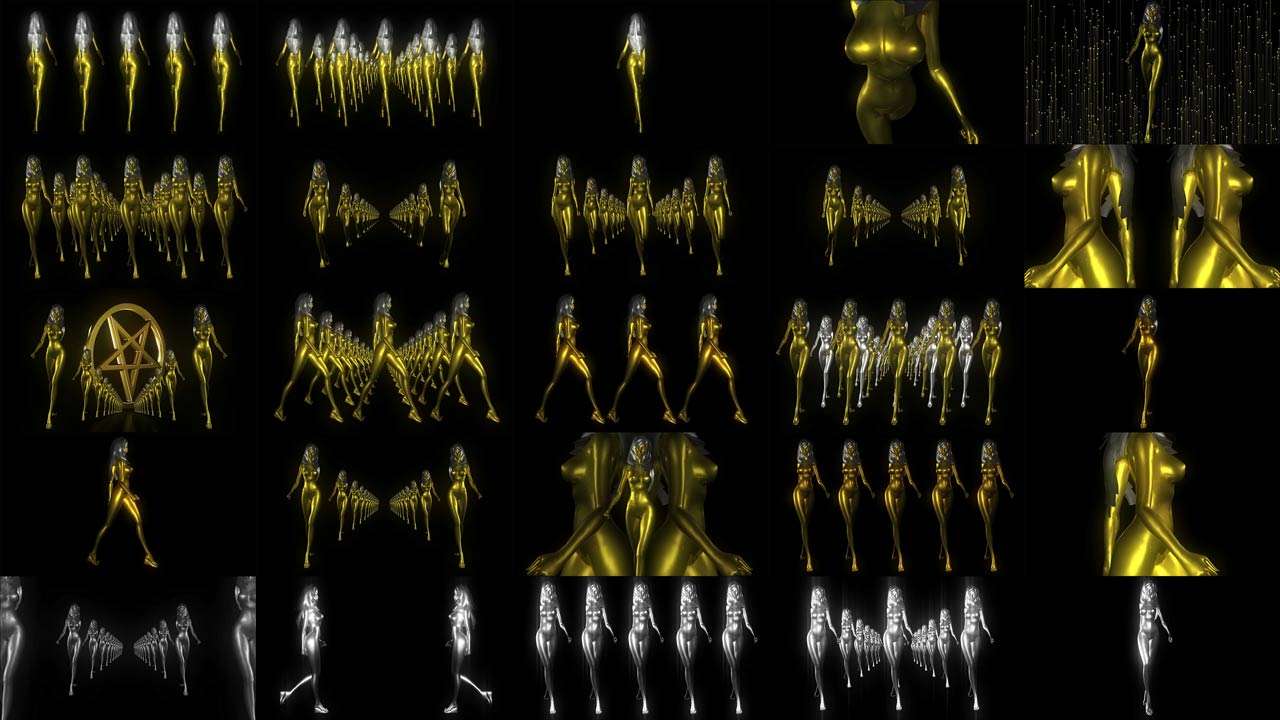
VJ Loops Pack Vol.41 – Goldfrau
79€ -
Sale!
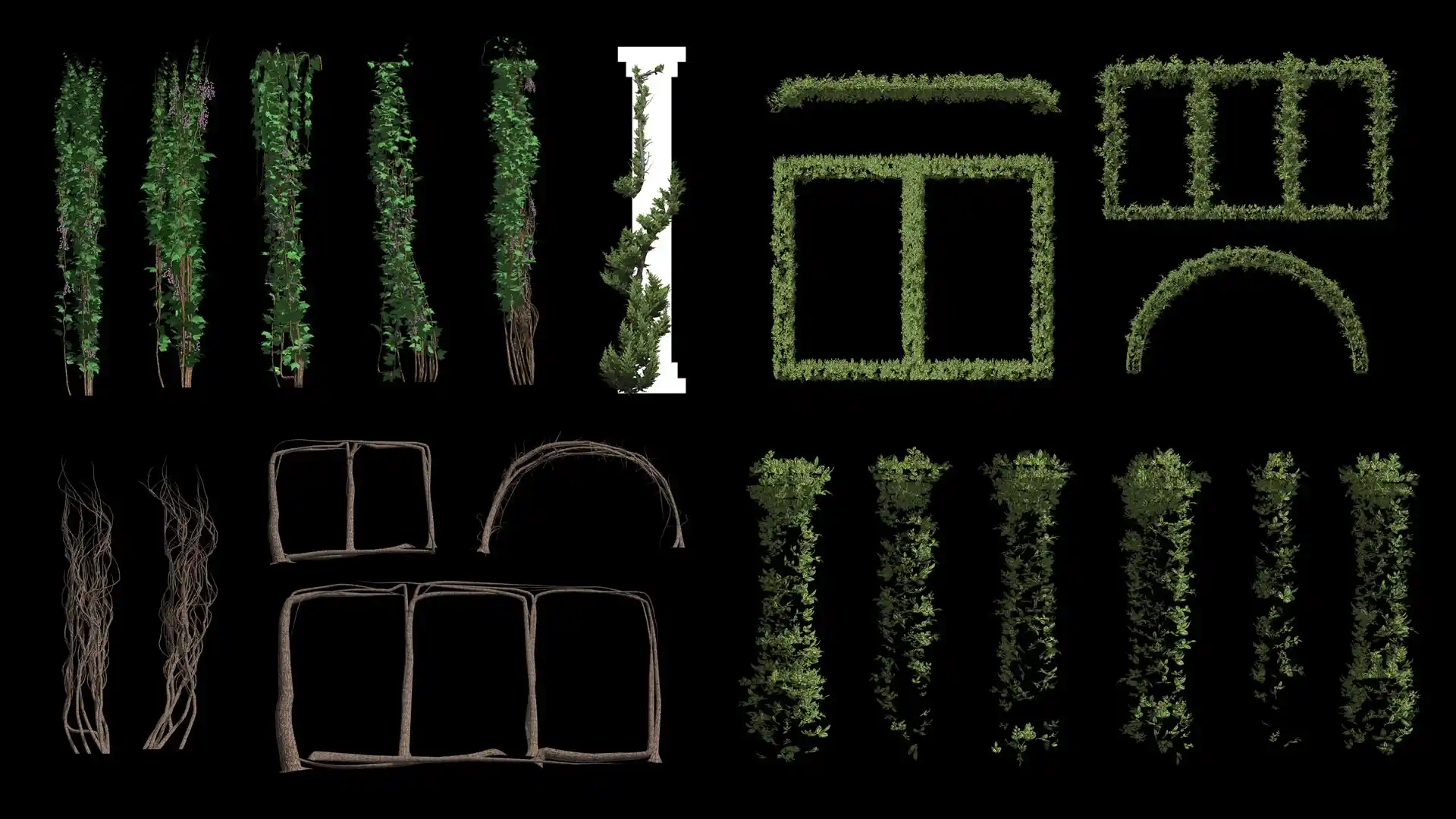
Video Mapping Toolkit Vol.1 – Green Nature
Original price was: 189€.129€Current price is: 129€. -
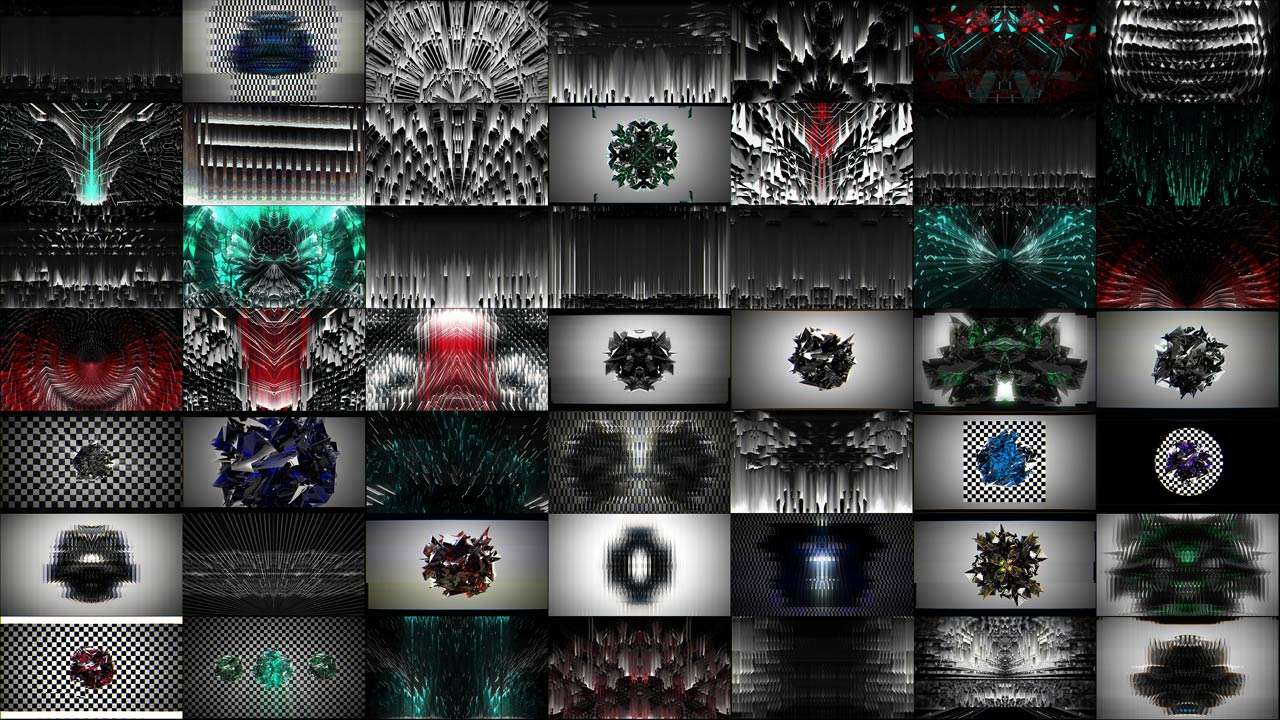
VJ Loops Pack Vol.29 – Glitch Backgrounds
89€ -
Sale!
Video Mapping Toolkit Vol.2 – Call Poseidon
Original price was: 189€.89€Current price is: 89€. -
Sale!
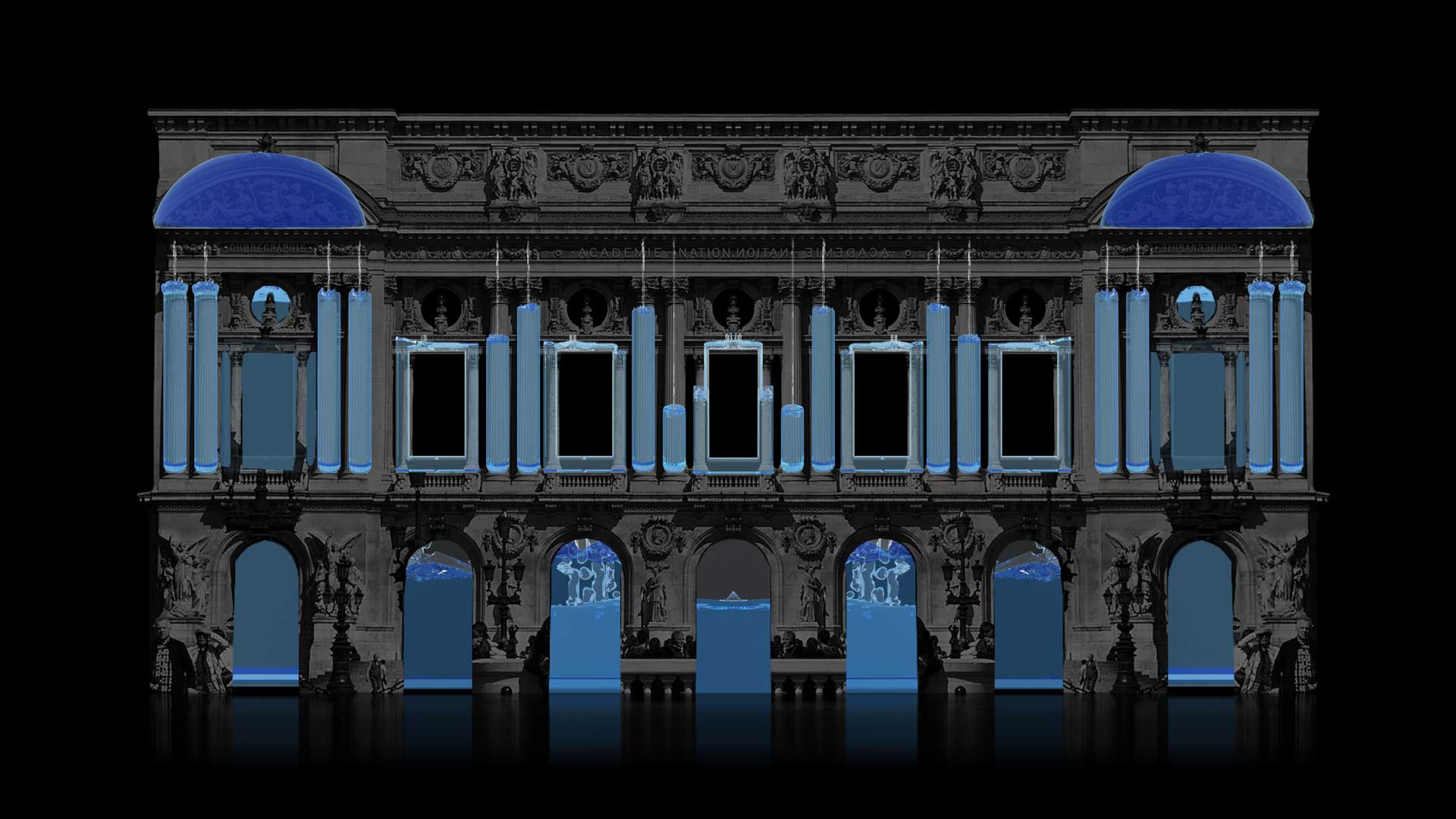
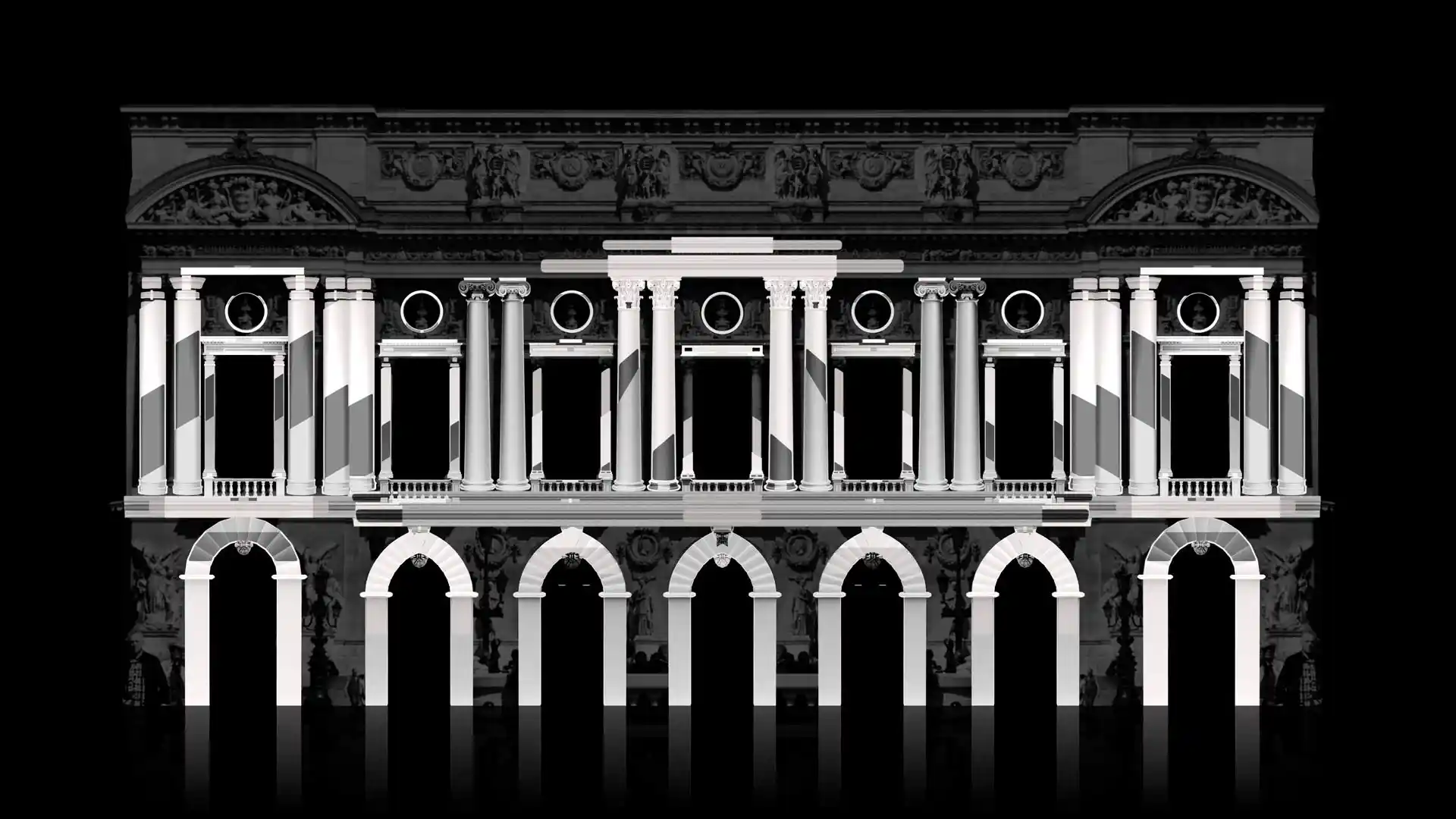
Video Mapping Toolkit Vol.3 – Facade
Original price was: 149€.99€Current price is: 99€. -
Sale!
Video Mapping Toolkit Vol.5 – Light Ray
Original price was: 149€.99€Current price is: 99€. -
Sale!
Video Mapping Loops Bundle Vol.1
Original price was: 1,000€.549€Current price is: 549€. -
Sale!
Video Mapping Toolkit Vol.10 – Stone Reflect
Original price was: 149€.99€Current price is: 99€. -
VJ Loops Pack Vol.17 – Main Element
99€










7. Protect attention as a production input
Schwab quotes Herbert Simon’s 1971 observation that a wealth of information creates a poverty of attention, and cites research finding empathy among students fell 40% over twenty years alongside the rise of always-on connectivity.
This is not wellness advice. In this job, sustained attention is the production capacity. The work that survives automation is exactly the work that requires holding a complex idea intact for hours — and that is the first capability lost to a fragmented working day.
Concretely: block uninterrupted production time and defend it like a booked gig, batch communication rather than sampling it continuously, and treat deep work as billable capacity rather than as what happens between messages.
What “rich” means now
The 2022 article used the word to mean a market opening up — more clients, fewer travel costs, work from anywhere.
That market did open, and then it filled. Everyone can now reach every client, which means reach is no longer scarce and no longer valuable on its own.
So the word has to mean something else. In an economy where production is cheap and judgement is not, rich means holding something that does not arrive with a subscription: a body of work, a set of surfaces you understand better than anyone available at short notice, clients across more than one region, assets that sell while you sleep, and the professional standing to be trusted with a decision rather than a task.
None of that is acquired by waiting.
The checklist for this quarter
- Re-quote your next proposal by line item — concept, direction, production, on-site — instead of by minutes of content.
- Pick one specialist surface — dome, ultra-wide immersive, holographic, mapping — and get genuinely good at its constraints.
- Audit your task list against the two-column test. Anything fully specifiable in a brief is at risk. Count how much of your income sits there.
- Add one adjacent skill rather than deepening the one you have.
- Publish under your own name, consistently, so that authorship is verifiable.
- Fix your payment structure: deposit, staged invoicing, two currencies, two rails.
- Diversify clients across at least two regions, and build a remote-delivery version of every service.
- Extract one reusable asset from your next project and keep it.
- Block production time in the calendar and treat it as booked.
Frequently asked questions
Will AI replace VJs and media artists?
It is replacing specifiable production tasks, not the whole role. The dividing line is whether a deliverable can be fully described in a brief. Rendering a described clip can be generated; deciding what a show should feel like, performing it live and being accountable when it fails cannot. Industry data shows the most vulnerable roles are middle-income production jobs — VFX artists, animators, sound editors and concept artists in the $60,000 to $108,000 band — which is where most working professionals sit.
What does the Fourth Industrial Revolution mean for creative freelancers?
Three things concretely. Employment polarises, so routine production roles in the middle disappear while judgement-based work and physical-presence work grow. Value concentrates, because digital marginal cost tends to zero and fewer people produce the same output. And human capital becomes the scarce factor rather than financial capital — the World Economic Forum found skills gaps to be the top barrier to business transformation for 63% of employers.
Is offline still more valuable than online for live visuals?
Yes, and more so than in 2022. Average concert ticket prices reached $144 in 2025, 45% above 2019, with premium tickets for major tours passing $500 and VIP packages passing $1,000. Global live music revenue is projected above $35 billion in 2026. Physical presence has become the premium good precisely because digital access became universal.
Should I use AI tools in my creative work?
Almost everyone already does — 86% of creative professionals report using them. That is exactly why the tools alone are not an advantage: any capability arriving by subscription arrives for your competitors in the same quarter. Freelancers using AI do earn about 34% more per hour, but that premium goes to people who changed what they sell, not to those who only changed what renders it.
How do I protect my income from automation?
Move up the brief rather than down the price. Sell concept, direction and on-site delivery as named items rather than quoting per minute of content. Specialise in formats general models cannot address — dome, ultra-wide immersive, holographic, alpha, mapping geometry. Add breadth rather than depth, because the middle of every specialism automates first. And convert project work into reusable assets that sell more than once.
What is talentism?
Schwab’s term for the shift in which human capital matters more to a business than financial capital, because capital is abundant and the ability to produce something genuinely new is not. It is sometimes described as the new capitalism. The practical reading is narrow: it does not mean talent is automatically rewarded, only that the thing being paid for has moved from executing a specification to producing the specification.
How should freelancers handle geopolitical and currency risk?
Structurally rather than predictively. Take deposits and invoice in stages, hold more than one currency, maintain at least two working payment rails, keep clients in more than one region, keep contracts short and renewable, and build a remote-delivery version of every service. The IMF describes geopolitical fragmentation replacing open capital flows as a structural shift rather than a temporary disruption, which means the answer is arrangements that do not require a forecast to be correct.
Is it still worth becoming a VJ in 2026?
Yes, with a different entry strategy than in 2019. Do not build a business on producing generic content, because that is the part being compressed. Build it on live performance, specialist surfaces, show design and client-facing judgement — the parts that require presence and accountability. The World Economic Forum lists creative thinking among the top skills for 2030 even while creative production automates, and that gap is where the work is.
Sources
International Monetary Fund, World Economic Outlook, April 2026, Global Economy in the Shadow of War, and the July 2026 update, Global Economy in Crosscurrents of War and Technology — global growth projected at 3.1 percent for 2026 and 3.2 percent for 2027, revised down from 3.4 percent; geopolitical fragmentation replacing the post-Cold War era of open capital flows, with trade barriers, sanctions and regional blocs reshaping cross-border finance.
World Economic Forum, Future of Jobs Report 2025 — 170 million jobs created and 92 million displaced by 2030 for a net gain of 78 million, equal to 22 percent of jobs disrupted; 39 percent of key skills expected to change by 2030; skills gaps named as the leading barrier to business transformation by 63 percent of employers; creative thinking listed among the top skills for 2030 alongside analytical thinking, resilience, flexibility and agility.
Klaus Schwab, The Fourth Industrial Revolution — the polarisation of employment drawing on the Frey and Osborne estimate of 47 percent of US jobs in the automation risk zone; the Detroit 1990 and Silicon Valley 2014 comparison of market capitalisation, revenue and headcount; talentism as the successor to capitalism; contextual intelligence and the fox-versus-hedgehog framing; trust as the decisive attribute; and Herbert Simon’s 1971 observation on information and attention.
Creative industry surveys, 2026 — 47 percent of self-employed creatives earning under 30,000 pounds against a UK median full-time salary of 39,039 pounds; 86 percent of creative professionals using AI tools while 10 percent consider its industry effect positive, 58 percent mixed and 28 percent negative; 26 percent of illustrators reporting lost work to generative AI; freelance job volume down approximately 30 percent year on year in writing and translation and 17 percent in graphic design.
Upwork Future Workforce Index 2026 — freelancers using AI earning approximately 34 percent more per hour.
Entertainment industry reporting, 2026 — more than 118,000 US film, television and animation jobs expected to be disrupted by AI video tools, with VFX artists, animators, sound editors and concept artists earning 60,000 to 108,000 dollars named among the most vulnerable roles.
Live music industry data, 2026 — global live music revenue projected above 35 billion dollars; average ticket price of 144 dollars in 2025, 45 percent above 2019; premium tickets for major tours regularly exceeding 500 dollars and VIP packages exceeding 1,000 dollars.
What to do next
If you take one thing from this, take the two-column test. Go through everything you invoiced for last year and mark each line as either fully specifiable in a brief or not. The proportion in the first column is your actual exposure, and it is usually higher than people expect.
Then pick a single specialist surface and get properly good at it, because that is the fastest available move from the left column to the right one.
The 2022 article told you to wait for the market to come back. The market did not come back; it changed shape. The categories below are organised by surface rather than by style, which is the shape it changed into.
Latest Feature VJ Loops
Hand-picked visuals by our New Media Artists
-
Sale!
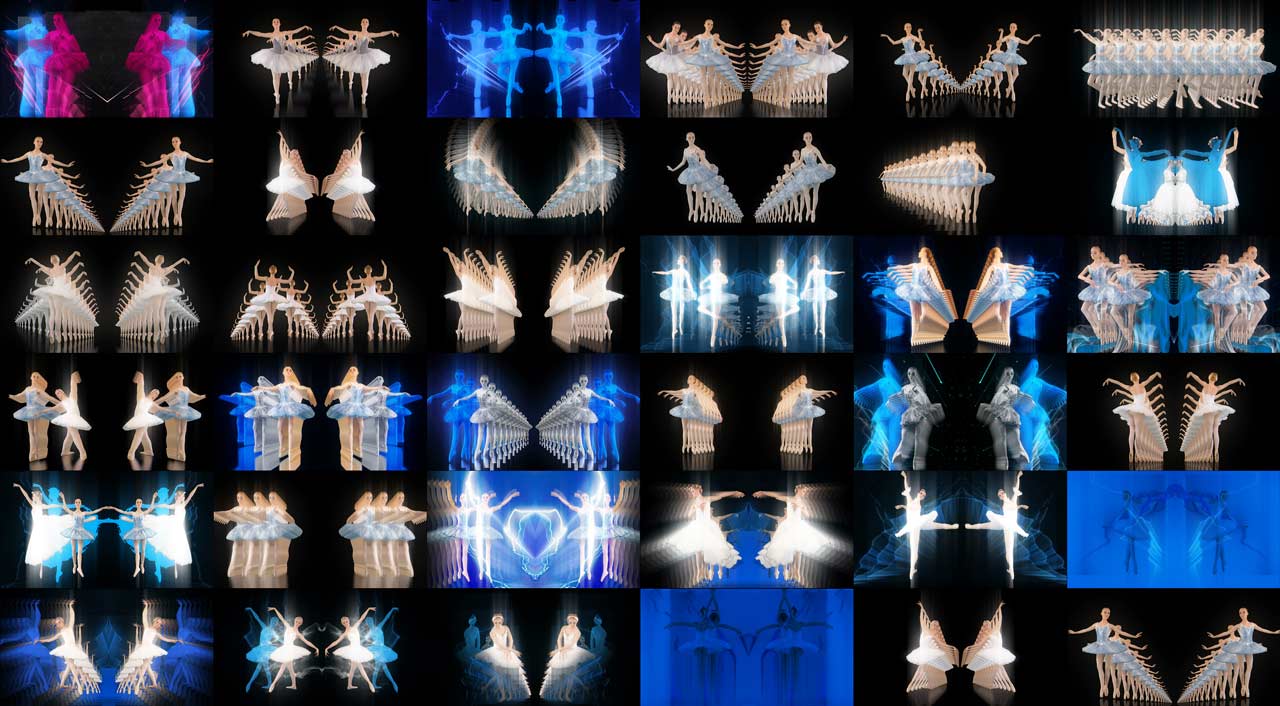
VJ Loops Pack Vol.73 – Mirror Ballet
Original price was: 129€.99€Current price is: 99€. -
VJ Loops Pack Vol.18 – Abstract Background Textures
89€ -
VJ Loops Pack Vol.19 – Lovely Red
79€ -
VJ Loops Pack Vol.11 – Really Madonna
89€ -
Sale!
Interior Patterns – Immersive Visuals Vol.1
Original price was: 249€.149€Current price is: 149€. -
VJ Loops Pack Vol.85 – Gnosis Lightning
99€ -
VJ Visuals Starter Pack
99€ -
Sale!
Select options This product has multiple variants. The options may be chosen on the product page
Immersive Projection Business Guide
Original price was: 19€.12€Current price is: 12€. -
VJ Loops Pack Vol.83 – Vivid Wheat
99€












Best wishes from Vienna,
Thanks for your attention, faithfully yours,
Alexander Kuiava – Founder & CEO LIME ART GROUP
https://alexanderkuiava.com/
