
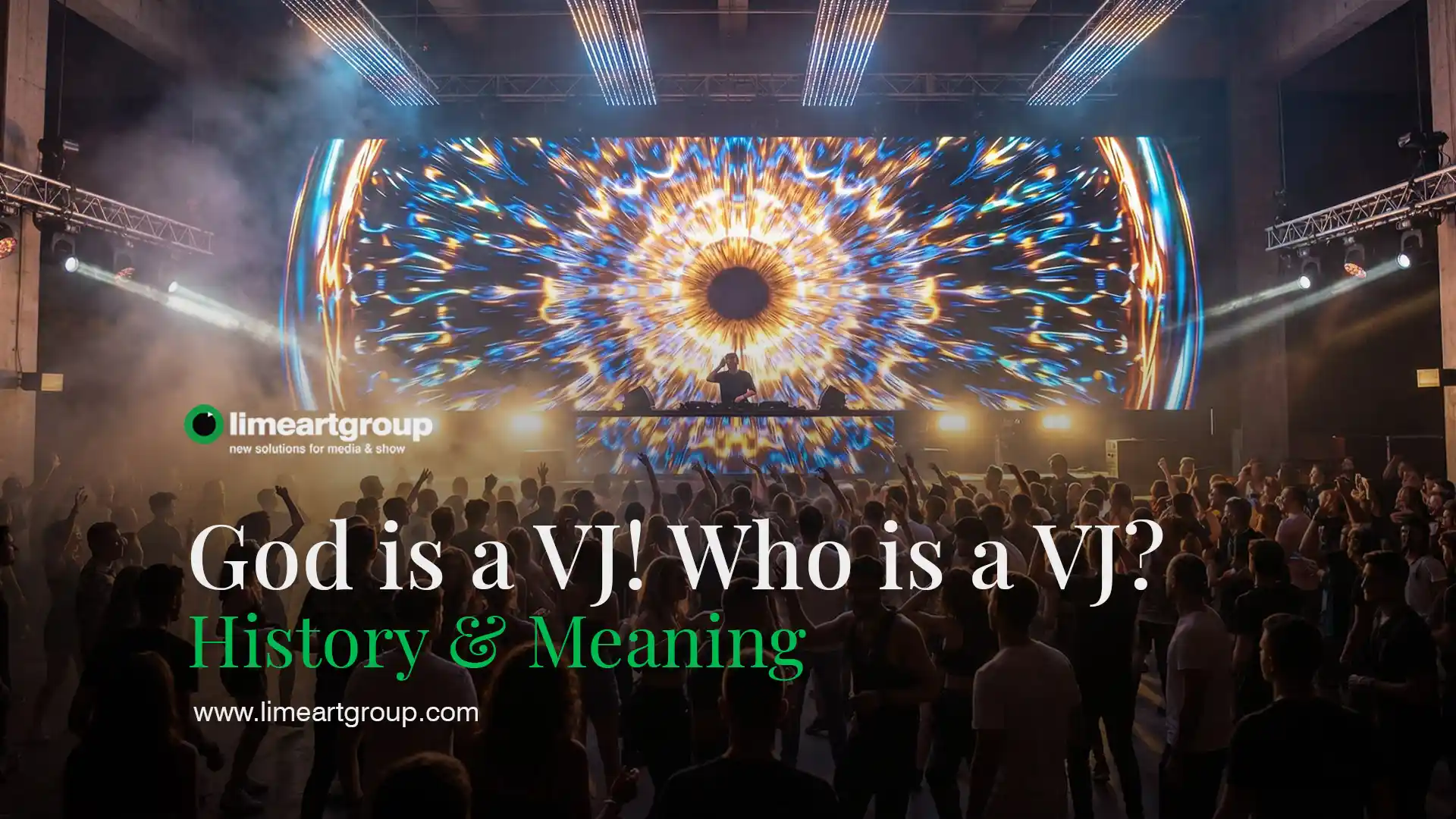
God Is a VJ? Who Is a VJ, Really
The article is written by a human. Mistakes have been edited by AI. First published 2016. Rewritten and extended in October 2026.
If the DJ is a god and the dance floor is the world, then the VJ is the one who brings the light — and is never mentioned in the programme. That is the joke this article has been telling since 2016. It is still funny and it is still true, so I have kept it. What I have added is the part the original was missing: where VJs actually come from, what the job has split into by 2026, and what to read if you want the history properly rather than as a metaphor.
Who this article is for: VJs who are tired of being described as “the guy with the visuals”, and anyone in the industry who wants the lineage behind a job title that most people think MTV invented.
What it solves: nobody agrees what a VJ is, the word has been used for at least four unrelated jobs, and the confusion costs working artists both credit and money.
What you get by the end: a real historical lineage from the eighteenth century onward, an honest map of the four jobs currently sharing one word, what AI actually changed, and a reading list.
Hello dear VJs and clients of LIME ART GROUP. I am new media artist Alexander Kuiava. I performed as a VJ for years before I stopped and moved to producing content and shows. This piece is the one I write from the artist’s side rather than the studio’s.
On the metaphor, before we start
The DJ-as-god comparison is old and it works because of what a dance floor does to people: shared time, shared rhythm, collective attention pointed at one figure.
Where the metaphor puts the VJ is more interesting. The light-bringer. The one who makes the illusion, who is technically responsible for what everyone in the room is looking at, and who is standing in the dark behind a laptop while somebody else takes the applause.
I will leave the theology there, because the essay does not need it and because the original 2016 version made a claim about Islamic belief that was simply wrong — it is stated explicitly in the Qur’an that God neither sleeps nor slumbers. I have removed it. Metaphors about light are fair game. Inventing somebody’s doctrine to make a joke land is not, and I would rather correct it publicly than quietly delete it.
What remains is the useful half of the comparison: the VJ makes the visible world of the event and is credited for it least.

Where VJs actually come from
Most people believe the job began with MTV in 1981. MTV borrowed the word. The practice is roughly three hundred years older.
The eighteenth century: instruments that played light
In the 1720s the French Jesuit mathematician Louis-Bertrand Castel proposed the clavecin oculaire — an ocular harpsichord, an instrument that would produce colour the way a keyboard produces sound. He built versions of it in the following decades. It did not work well. The idea that colour could be performed in time, like music, never went away.
That idea has a name — colour organs — and people kept building them for two hundred years.

1919: the first real live visual instrument
The Danish-American artist Thomas Wilfred built the Clavilux in 1919: a keyboard-operated instrument that projected moving coloured light onto a screen. He gave public recitals with it. He named the art form Lumia and argued that light was a medium in its own right, not an accompaniment to something else.
Wilfred is the first person in this lineage who is unmistakably doing the job: performing composed, abstract, moving light in front of an audience, live, on an instrument he designed. If you want a patron saint for VJing, it is not an MTV presenter. It is Thomas Wilfred.
Around the same period, Mary Hallock-Greenewalt developed her own colour-light instrument and held patents on the electrical components she invented to control it — including work on the rheostat that made smooth dimming possible. Her contribution is routinely left out of the story.
The 1920s onward: visual music on film
When film became available, the same impulse moved into it. Viking Eggeling, Hans Richter and Walter Ruttmann made abstract films in the early 1920s built on rhythm and visual composition rather than narrative. Oskar Fischinger spent decades synchronising abstract animation to music with a precision nobody had achieved before. Mary Ellen Bute did the same in America from the 1930s, and worked with oscilloscopes to generate imagery electronically.
John Whitney — later with his brother James — moved this into machinery, building analogue computing devices from surplus military hardware to generate motion graphics in the 1950s and 60s. This is the direct ancestor of every parameter you automate today.
This whole body of work has a name, visual music, and it is the intellectual foundation of everything VJs do. It also explains why so much VJ content is abstract: the tradition it comes from was never about depicting things.

The 1960s: liquid light and expanded cinema
Then it went into venues. The Joshua Light Show at the Fillmore East in New York from 1967, and other collectives like the Brotherhood of Light on the west coast, performed live visuals behind bands using oil, water, dyes, glass clock faces and overhead projectors, improvising to the music in real time.
This is VJing. All of it. Live, improvised, audio-reactive by human reflex, performed for an audience at a music event, by people whose names mostly did not make it onto the poster.
In 1970 Gene Youngblood published Expanded Cinema, which gave the field its first serious theoretical framework and remains the foundational text.

The 1970s: video becomes an instrument
Electronics made the image manipulable in real time.
Nam June Paik, working with the engineer Shuya Abe, built the Paik-Abe Video Synthesizer around 1969–70 — a machine for colourising, layering and distorting a live video signal as a performance. Dan Sandin built the Sandin Image Processor in the early 1970s and, notably, published the plans so anyone could build one. Steina and Woody Vasulka explored the electronic signal itself as material and co-founded The Kitchen in New York in 1971, which became the venue where much of this work was shown.
By the mid-1970s everything a VJ does technically — live layering, keying, colourising, feedback, real-time manipulation of a moving image — existed as hardware.
1981: MTV takes the word
MTV launched on 1 August 1981 and called its on-air presenters video jockeys, by analogy with radio disc jockeys. They introduced other people’s music videos. They did not make images.
So the word most of us use for the job was coined for a different job entirely, and the actual practice — which by then had a sixty-year history under other names — inherited a title from television presenting. A lot of the industry’s confusion about what a VJ is starts exactly here.

The 1990s and 2000s: software and a scene
Cheap computers put the whole tradition on a laptop. Coldcut and Hexstatic’s “Timber” in 1997 demonstrated audio and video cut together as a single instrument to a mainstream audience, and Coldcut’s VJamm software let other people do it. Arkaos arrived from Belgium in the late 1990s. Resolume came out of the Netherlands around the turn of the millennium, Modul8 from Geneva, VDMX from Vidvox in New York.
And a scene formed around it: Live Performers Meeting (LPM) from 2004, the Mapping Festival in Geneva from 2005, Ars Electronica in Linz — which has been running since 1979 — providing the institutional frame.
That is the lineage. Three hundred years of people trying to perform light, and a job title borrowed from a television channel.

Who is a VJ in 2026
Here is the uncomfortable part, and it is the reason the word causes so many arguments.
At least four different jobs are currently called VJing. They use different skills, sit at different price points, and the people doing them frequently do not consider each other colleagues.
| The job | What it actually is | Who does it |
|---|---|---|
| Live mixer | Improvising visuals in real time to music, on a controller, reading the room | Club and festival VJs, the closest thing to the historical practice |
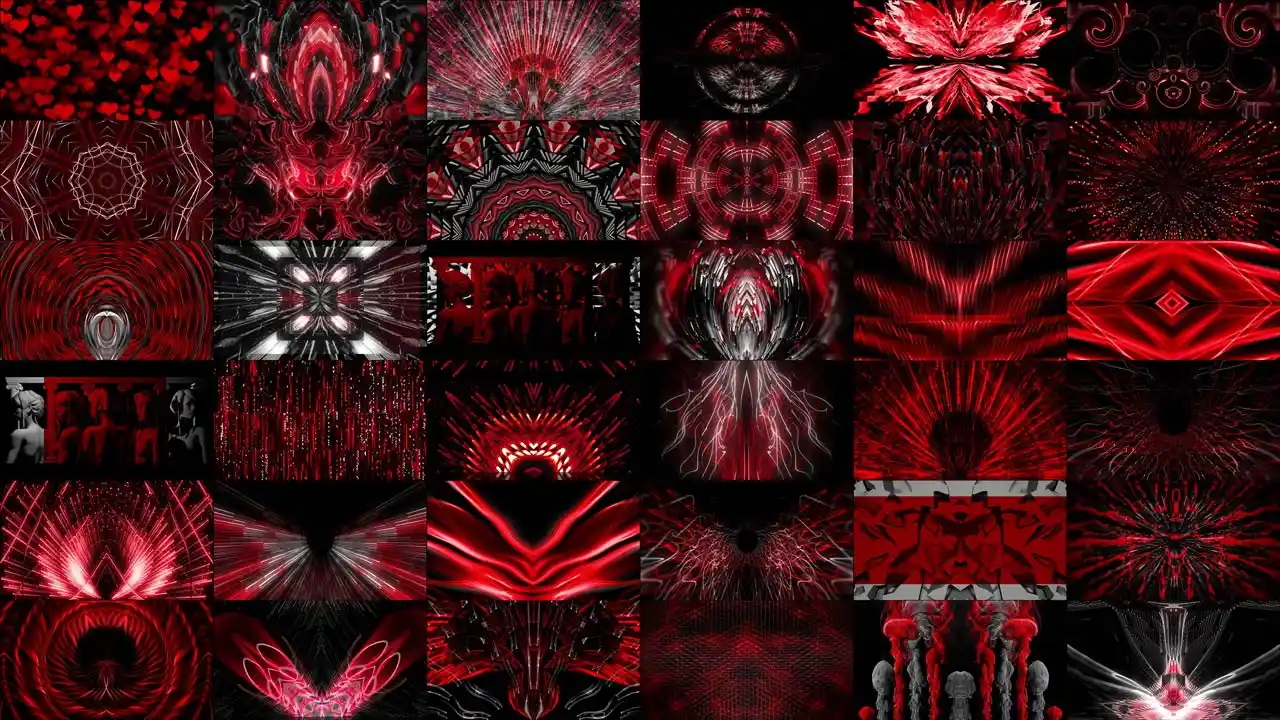
| Content producer | Making the loops, clips and sets that get played — often by other people | Motion designers and studios, including ours |
| Show operator | Running a fixed, cued timeline for a concert or corporate show | Video technicians and show callers |
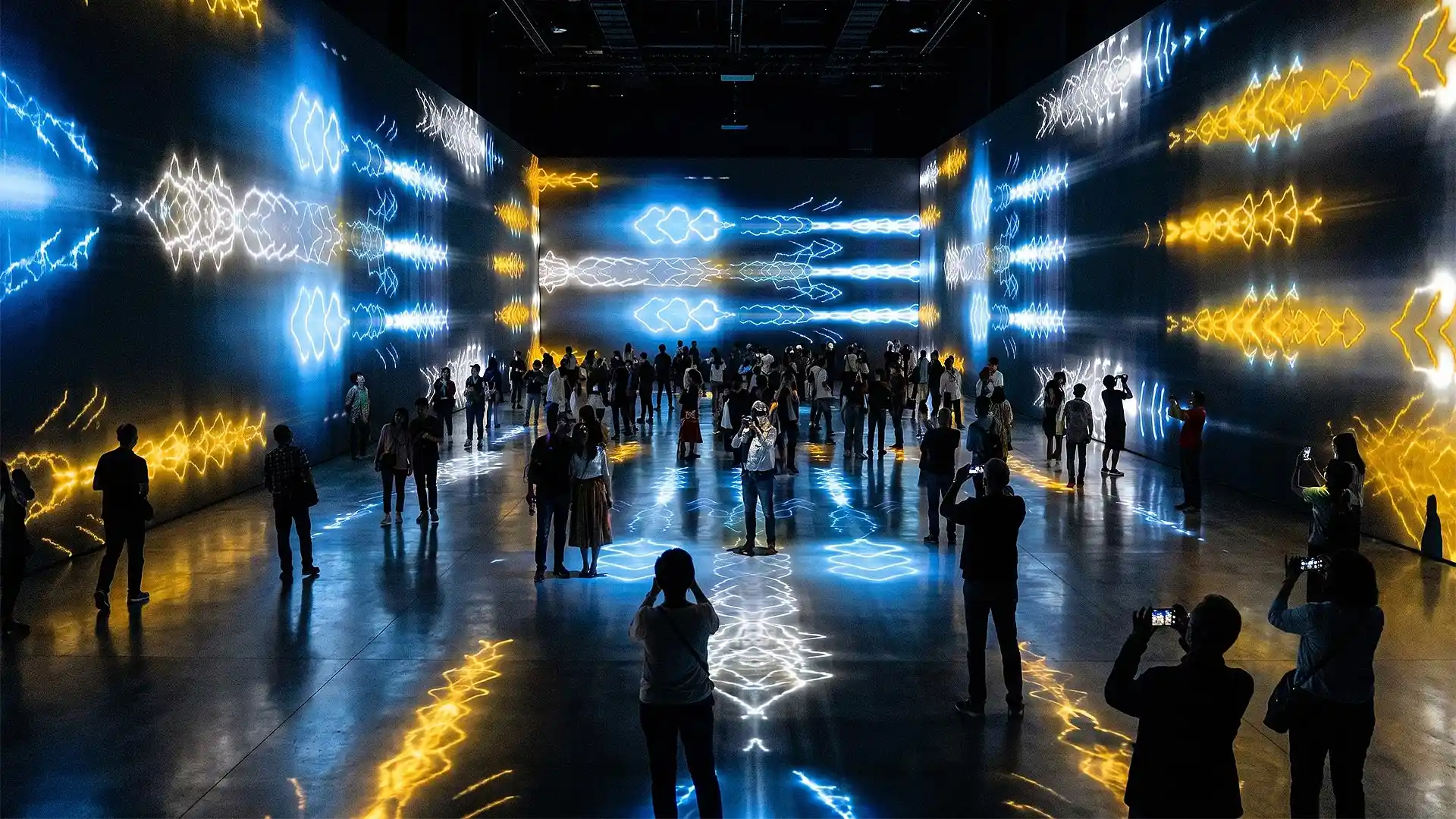
| Projection mapper | Aligning content to architecture or objects | Mapping artists, who usually reject the VJ label entirely |
That last row matters. Mappers generally do not call themselves VJs and are right not to. The skills barely overlap: mapping is a geometry and calibration discipline done in advance, VJing is an improvisation discipline done live. Watch the credits on any festival show and you will see separate names for content, mapping and operation.
None of these four is the “real” VJ. But pretending they are one job is how a promoter ends up booking a live improviser for a job that needed a show operator, or paying content-production rates for someone who will press play.
VJ Loops Packs
Coherent sets, so you arrive with a world rather than a folder
-
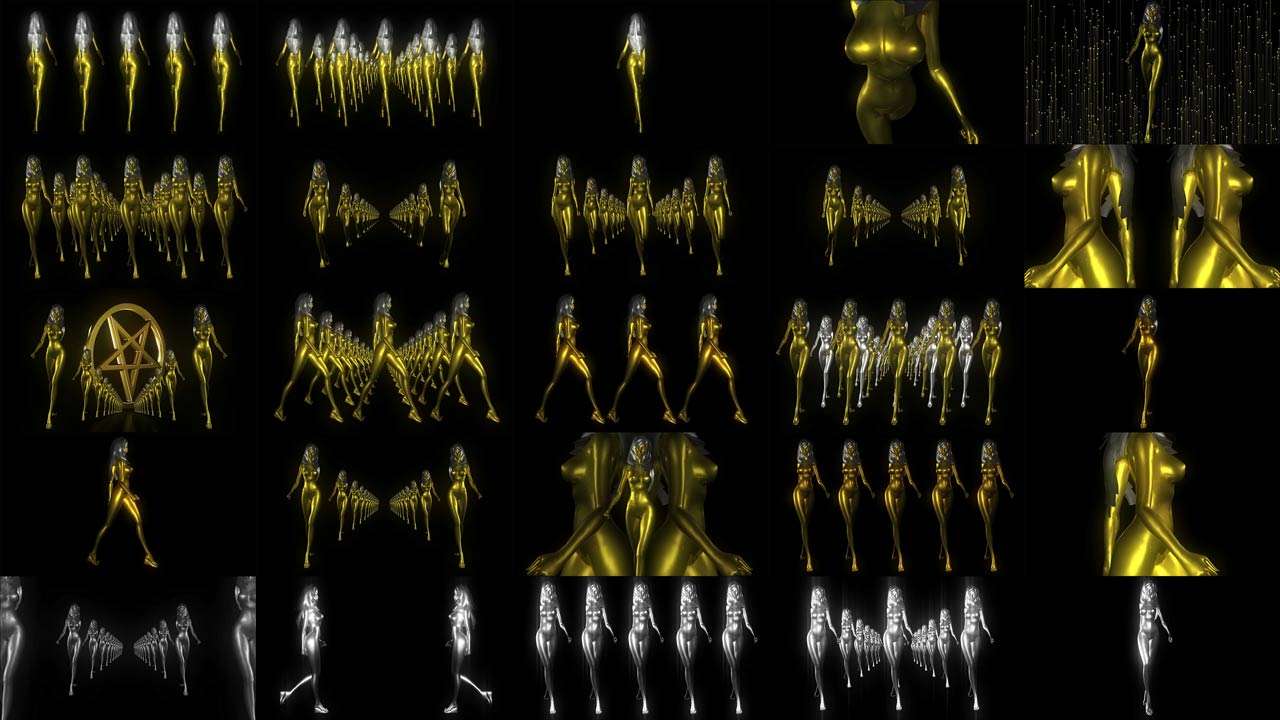
VJ Loops Pack Vol.41 – Goldfrau
79€ -
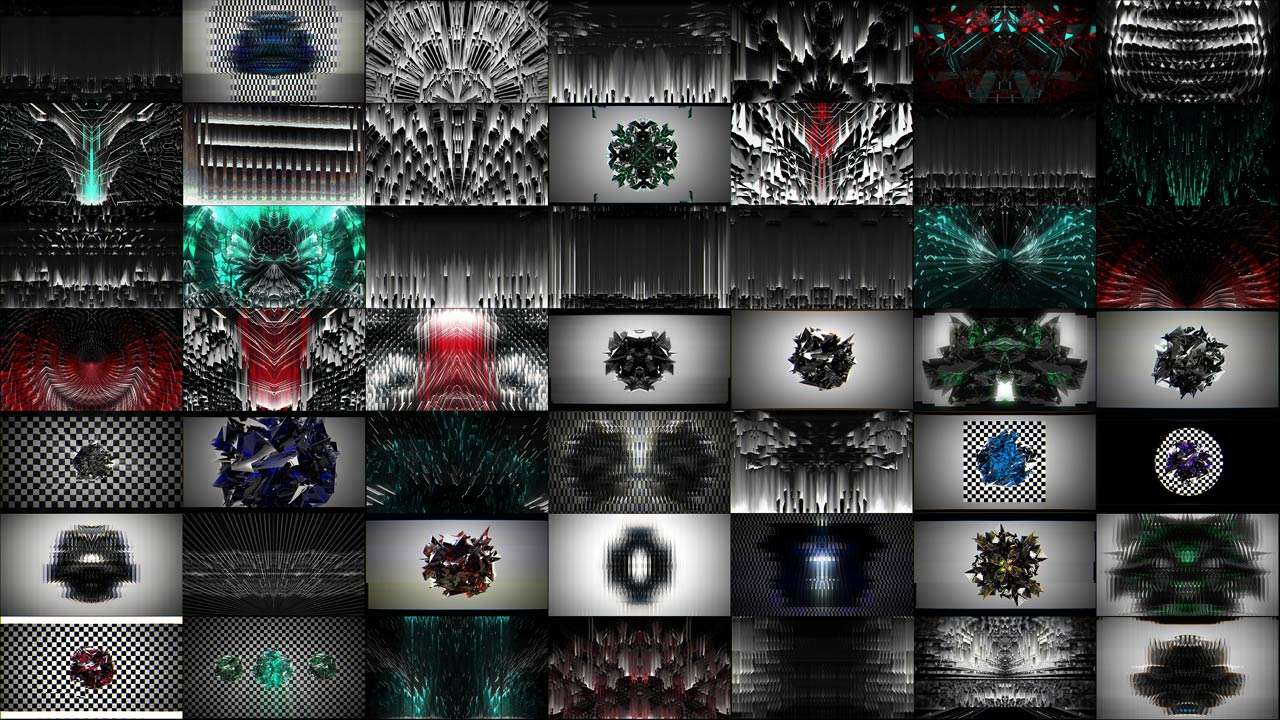
VJ Loops Pack Vol.29 – Glitch Backgrounds
89€ -
VJ Loops Pack Vol.17 – Main Element
99€ -
VJ Loops Pack Vol.28 – DecoLines
99€ -
VJ Loops Pack Vol.18 – Abstract Background Textures
89€ -
VJ Loops Pack Vol.11 – Really Madonna
89€ -
VJ Loops Pack Vol.12 – Interstellar Hypergate
59€ -
VJ Loops Pack Vol.1 – Smart Lines
99€ -
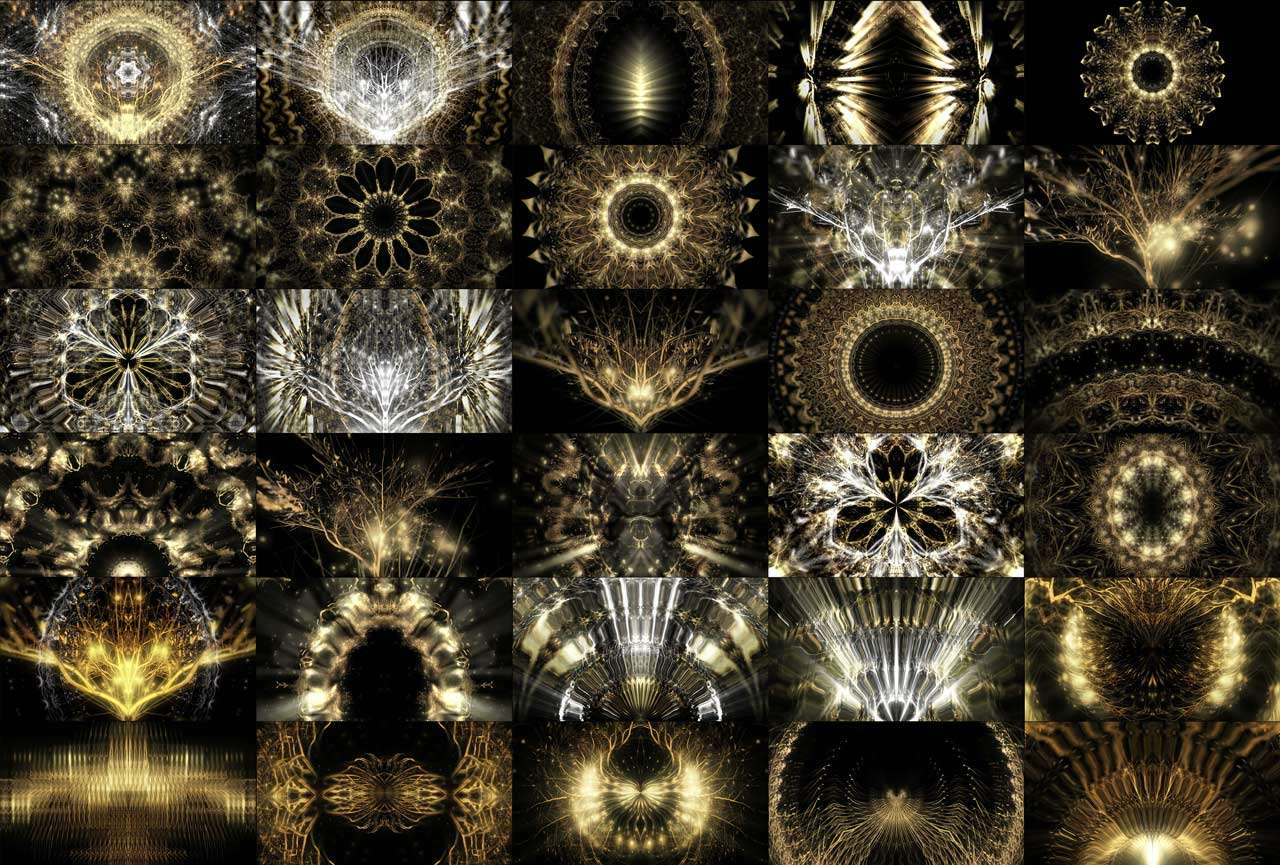
Vj Loops Pack Vol.26 – Gilded Roots
99€










What AI changed, and what it did not
Since 2023 this has been the loudest question in every VJ group, so let us be specific.
What AI genuinely changed: the cost of producing a striking still frame or a short abstract sequence fell to almost nothing. A visual style that took a motion designer a week can be approximated in an afternoon. The floor rose — bad visuals are now rarer, because the bad option is no longer the cheap option.
What it did not change: AI does not read a room. It does not know that the drop is coming in eight bars because the DJ’s shoulders moved. It does not produce alpha channels, seamless loops, or content registered to a specific building. It does not decide what the show is about.
The practical result is that AI compressed the middle of the market — generic content — and left both ends alone. The live improvisation end and the concept-and-identity end became more valuable, not less. Which is precisely what happened to DJs when everyone got access to the same catalogue: the scarce thing stopped being the material and became the judgement.
Our own AI Visuals exist because generated content is now a legitimate part of the toolkit — generated, then corrected, cut and encoded by hand, which is the part that still takes a person.
The credit problem is now a money problem
The 2016 version of this article complained that the VJ is a nameless ghost, known to the security guard, the technician and a few friends who got in free. That was written as a grievance.
In 2026 it is a commercial argument, and here is why it changed.
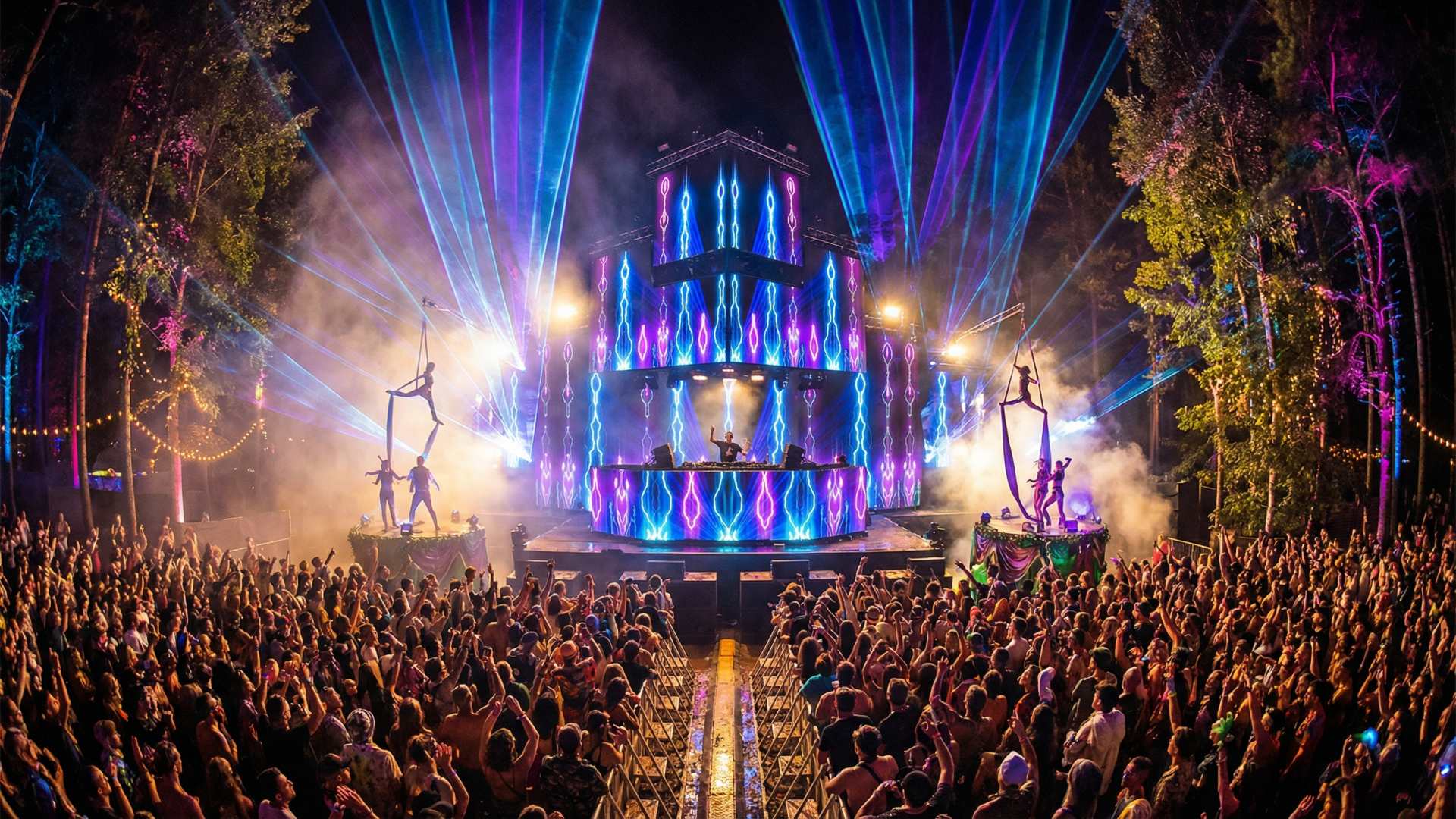
The largest electronic show in recent memory — Anyma’s residency at Sphere in Las Vegas, which sold 137,000 tickets and grossed $21 million across its first eight nights — was built around a visual world. And that production credited a visual co-creative director, a stage designer and an animation studio by name. The visual side was staffed and credited like a film.
That is the direction of travel. When the visual identity is the product, the people who make it stop being anonymous, because a promoter selling a show rather than a DJ slot needs names to sell it with.
So the old complaint has an answer now: the fastest route out of being a nameless ghost is to stop supplying wallpaper and start supplying a world. I wrote about how that partnership works in practice in our piece on DJ and VJ collaboration.
What to read
Most of what circulates about VJ history online is wrong, thin, or recycled from the same three paragraphs. These are the books worth actual time. I have included the publisher and year so you can find them; several are out of print and live in libraries and second-hand shops.
Gene Youngblood — Expanded Cinema (1970). The foundational text of the field. Written before VJing had a name, and it still frames the questions better than anything since. Reissued for its fiftieth anniversary.
Michael Faulkner / D-Fuse — VJ: Audio-Visual Art and VJ Culture (Laurence King, 2006). The best document of the scene at the moment it consolidated, by someone who was in it. Interviews and work from the practitioners who defined the 2000s.
Paul Spinrad — The VJ Book: Inspirations and Practical Advice for Live Visuals Performance (Feral House, 2005). The practical counterpart. Dated on tools, entirely current on craft and on how to think about performing images.
Xárene Eskandar (ed.) — vE-jA: Art + Technology of Live Audio-Video (2006). An artist-led survey from the same period, stronger on the art-historical framing.
Lev Manovich — The Language of New Media (MIT Press, 2001). Not about VJing, and essential anyway. It is the book that explains what happens to images when they become data you can address in real time.
Paul D. Miller / DJ Spooky — Rhythm Science (MIT Press, 2004). The mix as a way of thinking, written by a practitioner. The closest thing this field has to a philosophy of sampling.
Steve Gibson and others — Live Visuals: History, Theory, Practice (Routledge). The most recent academic treatment of live visual performance as a field, and the one that takes the lineage above seriously.
If you read only two: Youngblood for why, Faulkner for who.
And if you want to see it rather than read it, the archives worth an evening are the Joshua Light Show’s documented performances, Oskar Fischinger’s films, and anything from the Vasulkas.
Books & Guides
Reading and reference from our own catalogue
-
Sale!

 Select options This product has multiple variants. The options may be chosen on the product page
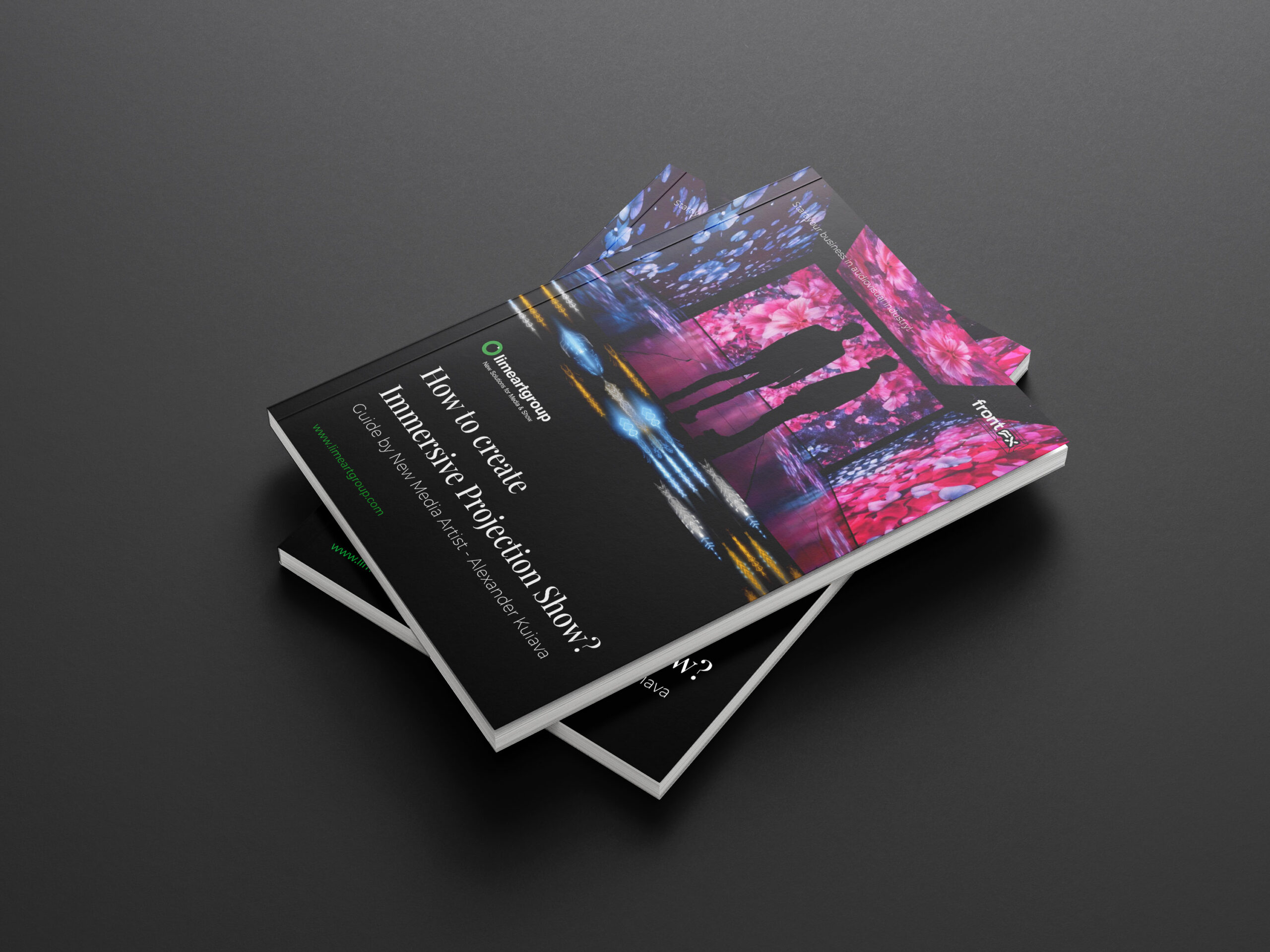
Immersive Projection Business Guide
Original price was: 19€.12€Current price is: 12€.

So is God a VJ?
The question in the title is a joke with a real argument underneath it, so let me finish the argument.
The reason the metaphor keeps working is that VJing is the only performing art whose entire medium is light. Not objects, not sound, not bodies — light, arranged in time, on a surface that was not designed to carry it. Every tradition that has thought seriously about creation has reached for light as the first material, which is why the joke lands and why it has lasted since 2016.
The reason the metaphor is wrong is more useful. A god creates and then withdraws. A VJ has to be in the room. The whole craft is in the response — to the music, to the crowd, to the moment when a track does something the producer did not plan. That is not divine. It is closer to conversation, and it is the one part of this job that no camera, no timeline and no model has yet replaced.
The historical version of the answer: this practice is three hundred years old, it has been called colour organ playing, lumia, visual music, expanded cinema, video synthesis and live visuals, and every generation that discovered it thought it had just been invented. The word “VJ” is forty-five years old and belongs to a television channel.
So: no, God is not a VJ. But Thomas Wilfred was, in 1919, and nobody put his name on the poster either. Keep calm, VJs.
The nameless ghost, revisited
Here is what actually keeps VJs anonymous, and none of it is destiny.
No consistent identity. A folder of unrelated beautiful clips produces a set nobody remembers. A palette, a motion language and a recurring symbol produce a world people can name.
No documentation. If there is no footage, there is no portfolio, and the work existed for two hundred people for one night. Film your sets. Badly filmed is better than not filmed.
Not asking for credit. Most promoters will list you if you ask before the event and never if you ask after. Put it in the agreement — one line, artist name as it should appear.
Working only as a supplier. If you are handed a track list and asked to fill a screen, you are staff. If you bring a concept, you are an artist. The rate follows the category, not the hours.
How to stop being one
One: pick three constraints — two colours, one motion language, one recurring symbol — and hold them across everything for a year. That is what an identity is. It costs nothing.
Two: document every set and publish it with the artist and venue credited. You are building the evidence that you existed.
Three: ask for the credit in writing before the show, in the same message as the fee. Nobody has ever refused.
Four: learn the history in this article well enough to explain it in two minutes. An artist who can place their work in a three-hundred-year lineage is negotiating from a different position than someone described as “the guy with the visuals”.
Five: build a library that is yours. Whether you produce it, license it, or both, the difference between a performer and a supplier is whether the material has a point of view. Ours lives in VJ Loops Packs and VJ Clips, and it exists so that a VJ with a small budget can still show up with a world rather than a folder.
Frequently asked questions about VJs and VJing
What does VJ stand for?
Video jockey, by analogy with disc jockey. MTV coined the term in 1981 for its on-air presenters, who introduced other people’s music videos. The practice of performing live visuals is far older than the word and had previously been called colour organ playing, lumia, visual music, expanded cinema and live visuals.
Who was the first VJ?
There is no clean answer, but the strongest candidate is Thomas Wilfred, who built the Clavilux in 1919 and gave public recitals of composed, moving, abstract light. Louis-Bertrand Castel proposed a colour-playing instrument as early as the 1720s. The liquid light show collectives of the late 1960s, such as the Joshua Light Show, are the direct ancestors of club VJing.
What is the difference between a VJ and a projection mapper?
A VJ performs visuals live, improvising to music. A mapper aligns content precisely to architecture or objects, which is a geometry and calibration discipline done largely in advance. Most mappers do not call themselves VJs, and the skills barely overlap. Large productions credit them separately.
Is VJing still relevant in 2026?
Yes, and the value has shifted upward. AI made generic visual content cheap, which compressed the middle of the market and increased the value of both live improvisation and coherent visual identity. Large audiovisual shows are now booked and marketed as shows rather than DJ slots, which requires named visual authorship.
Has AI replaced VJs?
No. AI lowered the cost of producing striking material, but it does not read a room, does not respond to the moment a track breaks, does not produce alpha channels or seamless loops, and does not decide what a show is about. It changed what a VJ spends time on rather than whether one is needed.
What should I read to learn VJ history properly?
Start with Gene Youngblood’s Expanded Cinema (1970) for the theory and Michael Faulkner’s VJ: Audio-Visual Art and VJ Culture (Laurence King, 2006) for the scene. Add Paul Spinrad’s The VJ Book (Feral House, 2005) for craft and Lev Manovich’s The Language of New Media (MIT Press, 2001) for the underlying ideas.
Why do VJs rarely get credited?
Partly convention and partly the artists’ own habit of not asking. The situation is improving where the visual identity is the product: major audiovisual productions now credit visual directors, stage designers and animation studios by name, because a show sold on its visuals needs names attached to them. Ask for the credit in writing before the event.
Sources
Historical material below is drawn from the published literature on visual music, expanded cinema and live visual performance. Nothing in the historical section is our own claim.
Books and foundational texts
- Gene Youngblood — Expanded Cinema, 1970
- Michael Faulkner / D-Fuse — VJ: Audio-Visual Art and VJ Culture, Laurence King, 2006
- Paul Spinrad — The VJ Book: Inspirations and Practical Advice for Live Visuals Performance, Feral House, 2005
- Xárene Eskandar, ed. — vE-jA: Art + Technology of Live Audio-Video, 2006
- Lev Manovich — The Language of New Media, MIT Press, 2001
- Paul D. Miller / DJ Spooky — Rhythm Science, MIT Press, 2004
- Steve Gibson and others — Live Visuals: History, Theory, Practice, Routledge
Figures and institutions referenced
- Louis-Bertrand Castel and the clavecin oculaire
- Thomas Wilfred, the Clavilux and Lumia
- Mary Hallock-Greenewalt and her colour-light instrument and patents
- Viking Eggeling, Hans Richter, Walter Ruttmann, Oskar Fischinger, Mary Ellen Bute, John and James Whitney
- The Joshua Light Show and the Fillmore East
- Nam June Paik and Shuya Abe, the Paik-Abe Video Synthesizer
- Dan Sandin and the Sandin Image Processor
- Steina and Woody Vasulka, and The Kitchen, New York
- MTV, launched 1 August 1981
- Coldcut and Hexstatic, and VJamm
- Arkaos, Resolume, Modul8, VDMX
- Live Performers Meeting, Mapping Festival Geneva, Ars Electronica
Contemporary figures
- Anyma residency at Sphere Las Vegas: ticket and gross figures as reported to Billboard Boxscore
Opinions, the four-jobs taxonomy and the argument about credit are our own.
One last thing
If you are a VJ reading this and you have never been credited on a poster, the problem is fixable and most of the fix is administrative rather than artistic. Ask before the show. Film the set. Hold a visual identity long enough for people to recognise it. And if you want the material to build that identity with, our VJ Loops Packs are built as coherent sets rather than folders of unrelated files, which is the difference between a look and a library. Come and argue with me about any of this in our VJ communities. The question of what a VJ actually is has been unresolved for forty-five years and I do not expect one article to settle it.
Latest Featured VJ Loops
Hand-picked visuals by our New Media Artists
-
Deep Serenas – Immersive Visuals Vol.2
149€ -
Sale!
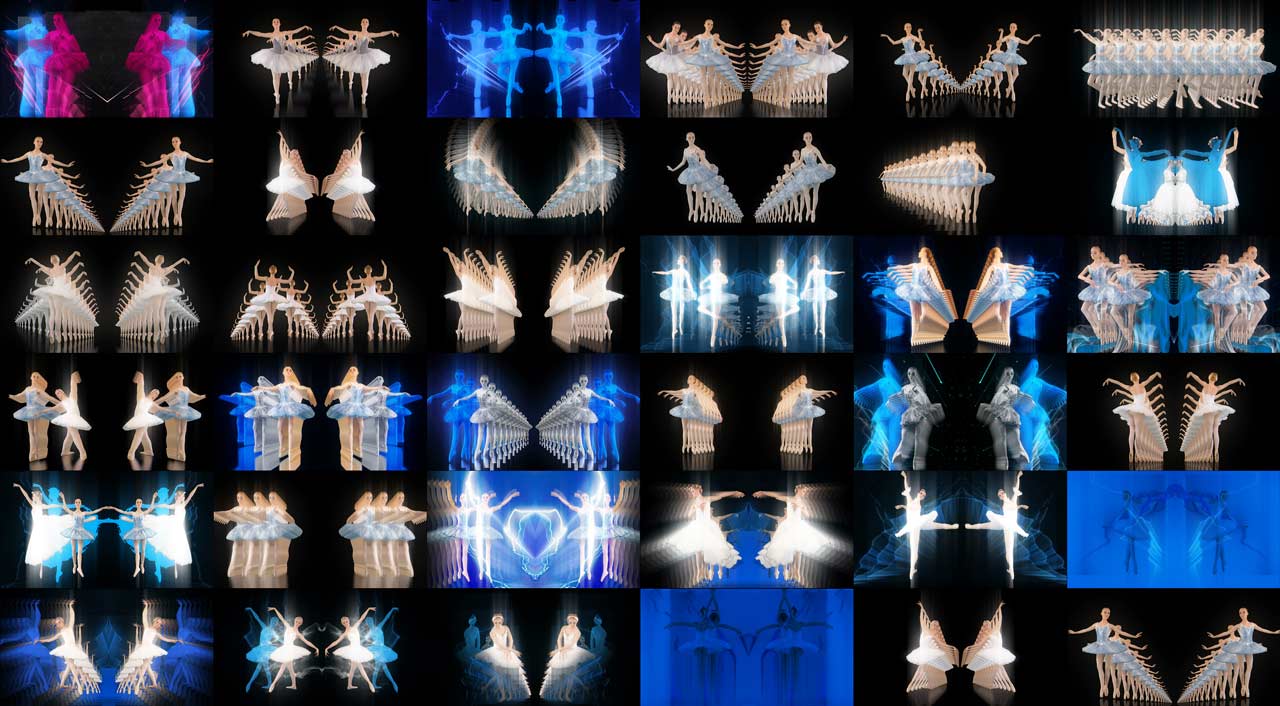
VJ Loops Pack Vol.73 – Mirror Ballet
Original price was: 129€.99€Current price is: 99€. -
VJ Loops Pack Vol.18 – Abstract Background Textures
89€ -
VJ Loops Pack Vol.19 – Lovely Red
79€ -
VJ Loops Pack Vol.11 – Really Madonna
89€ -
Sale!
Interior Patterns – Immersive Visuals Vol.1
Original price was: 249€.199€Current price is: 199€. -
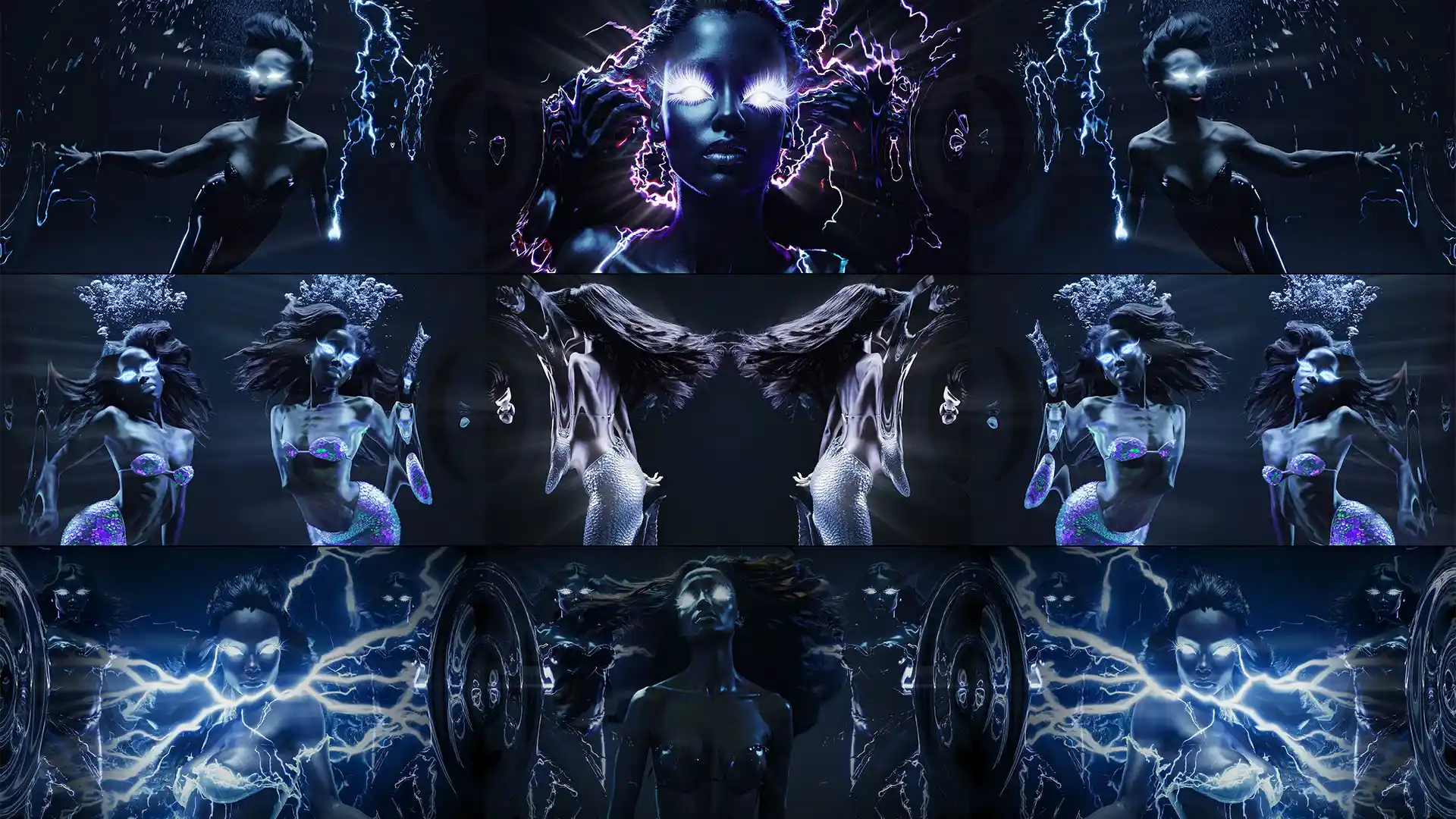
VJ Loops Pack Vol.85 – Gnosis Lightning
99€ -
VJ Visuals Starter Pack
99€ -
Sale!
Select options This product has multiple variants. The options may be chosen on the product page
Immersive Projection Business Guide
Original price was: 19€.12€Current price is: 12€.








Best wishes from Vienna,
Thanks for your attention, faithfully yours,
Alexander Kuiava – Founder & CEO LIME ART GROUP
https://alexanderkuiava.com/
