
Visual Identity for Online Events, DJ Streams and Virtual Shows
The article is written by a human. Mistakes have been edited by AI.
Originally published 2020. Rewritten August 2026 with current market data and three working case studies.
In 2020 this article argued that online events needed a visual identity because everyone had suddenly moved online. That reason expired. The conclusion did not — it just needs a completely different argument, because what a stream is for has changed.
Streaming did not become a paying gig market. It became the channel that gets you booked. Which is precisely why the visuals matter more now than they did when everyone was locked indoors.
Who this article is for: DJs, VJs and artists building a recurring online format — a monthly mix, a residency stream, a launch — and the people producing the visuals for them.
What it solves: most advice about stream visuals is a list of effects. The actual question is what makes a channel recognisable in three seconds, and that turns out not to be production budget.
What you get by the end: current market numbers, three formats that genuinely work with the honest economics of each, what a visual identity kit actually contains, and what it costs to build a space instead of travelling to one.
Hello dear VJs, DJs and clients of LIME ART GROUP. I am new media artist Alexander Kuiava. I got the 2020 version of this half wrong, so the framing below is the corrected one.
What changed since 2020
The market is large and it is not shrinking. The global live stream market is estimated at around $99.82 billion, projected past $300 billion by 2031. Total livestream viewership across the major Western platforms now runs above 30 billion hours per quarter, and US livestream viewers are forecast to reach 164.6 million in 2026.
Where those hours go has shifted sharply:
| Platform | Position in 2026 |
|---|---|
| YouTube | 47%+ of all livestreaming hours watched — nearly equal to every other platform combined |
| TikTok Live | Overtook Twitch for second place; 10+ billion hours in Q4 2025, around 27% share |
| Twitch | Lost 8.3 percentage points of share in 2025; 19.2 billion hours, down roughly 10% year on year |
For an artist that ranking is the single most actionable fact on this page. YouTube is where the hours are, and it is also the platform with the longest shelf life — a well-titled set is still being found three years later, which no other platform offers.
But here is the correction I owe from 2020, and from a later article where I made it worse: I predicted that remote and virtual performance would become a gold mine for artists. It did not. Livestreaming became a permanent, modestly paid format rather than a growth market for fees. Live music including livestreamed shows accounts for about 4% of global music engagement hours.
So why does any of this matter? Because the money was never in the stream. The stream is the portfolio. It is what a promoter watches before booking you, what a label sees before signing you, and what an audience uses to decide whether you are a person or a playlist. Judged that way, a recognisable visual world stops being decoration and becomes the asset.
There is even infrastructure appearing specifically for this: LFG.TV, launched over Labor Day weekend 2025, runs 24/7 livestreaming dedicated to dance music culture, explicitly to give DJs visibility outside gaming streams and viral clips.

Three ways artists build a visual world online
Three formats, three completely different budgets, all of them working. What they share is not production value.

Cercle — the location is the show
The reference case. Cercle was launched in 2016 with a €10,000 investment and built its entire identity on one idea: put a DJ somewhere extraordinary and film it properly. The Great Pyramids of Giza. The peak of Mount Schilthorn. The Salar de Uyuni salt flats. A hot-air balloon over Cappadocia. The Eiffel Tower. Al-Khazneh at Petra.
The results are not ambiguous: around 3.63 million YouTube subscribers and roughly 5.21 million views in a recent 30-day period. Revenue comes from YouTube advertising across a large back catalogue, channel memberships, and a shop selling merchandise and vinyl.
And now the part that almost nobody quotes. In 2026 Cercle cancelled its festival amid serious financial difficulties, citing rising costs, shrinking margins and the strain on a 35-person staff, and launched a fundraising campaign. The company has remained independent since 2016.
I include that not to diminish what they built — it is the most influential visual format in electronic music — but because the lesson is the opposite of the obvious one. The highest production value in the field is also the most financially fragile. Helicopters, permits, crews and remote locations are a cost structure, and 3.6 million subscribers did not make it safe.
If you are looking at Cercle and thinking “that is the model”, understand what you are actually copying.
Flavour Trip — warmth as a production value
Now the opposite end, and the one I find more instructive.
Flavour Trip is Amii and Jimmi, a DJ duo from Luxembourg, who describe themselves as slow travellers. They live and move in a camper with two cats, Franky and Josy. They publish one house music mix a month from a different location, and they combine the music with cooking. Their channel line is “Where spicy grooves and tasty food set the mood.” They run their own store and are supported directly by a community of around 290 Patreon patrons.
There is no helicopter. There is a van, a kitchen, two cats and a consistent monthly rhythm.
And the identity is unmistakable within three seconds. Not because of a colour grade or a logo animation, but because the world is specific and it never changes: domestic, warm, unhurried, slightly cluttered, food on the counter, a cat walking through the shot. That is a visual identity in the strict sense — a palette, a register, a recurring element — assembled from a life rather than from a render.
The economics are also completely different. A monthly cadence, low production cost, direct audience support, own store. It does not scale like Cercle and it does not need to.
The lesson for anyone building an online format: the variable is not budget. It is whether somebody who lands on your video with the sound off can tell within three seconds whose channel this is.
The third path — build the space instead of travelling to it
Both formats above solve the same problem in the same way: they put the artist somewhere specific. Cercle flies there. Flavour Trip drives there and cooks dinner.
The third option is to construct the space, and it is the one that suits most artists because it removes the two things that make the other two hard — travel and permits.
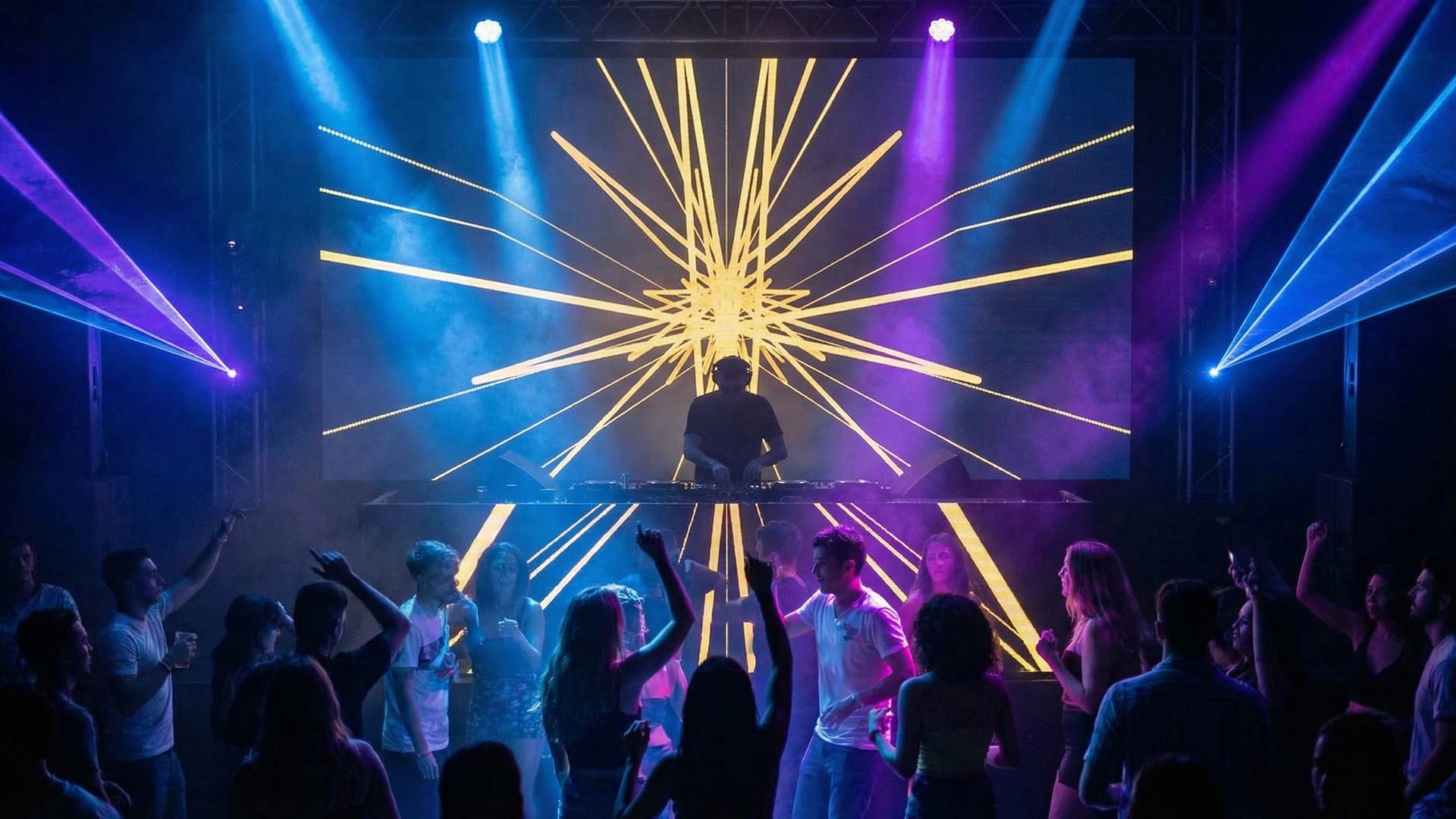
A DJ in a room with a keyed background and a coherent visual set has the same distribution as a DJ on a glacier. What they need instead of a location is content with a point of view, which is the rest of this article.
What a visual identity kit actually contains
Not effects. Assets, with a rule for how each is used. This is the checklist I would give any artist starting a recurring format.
VJ Clips
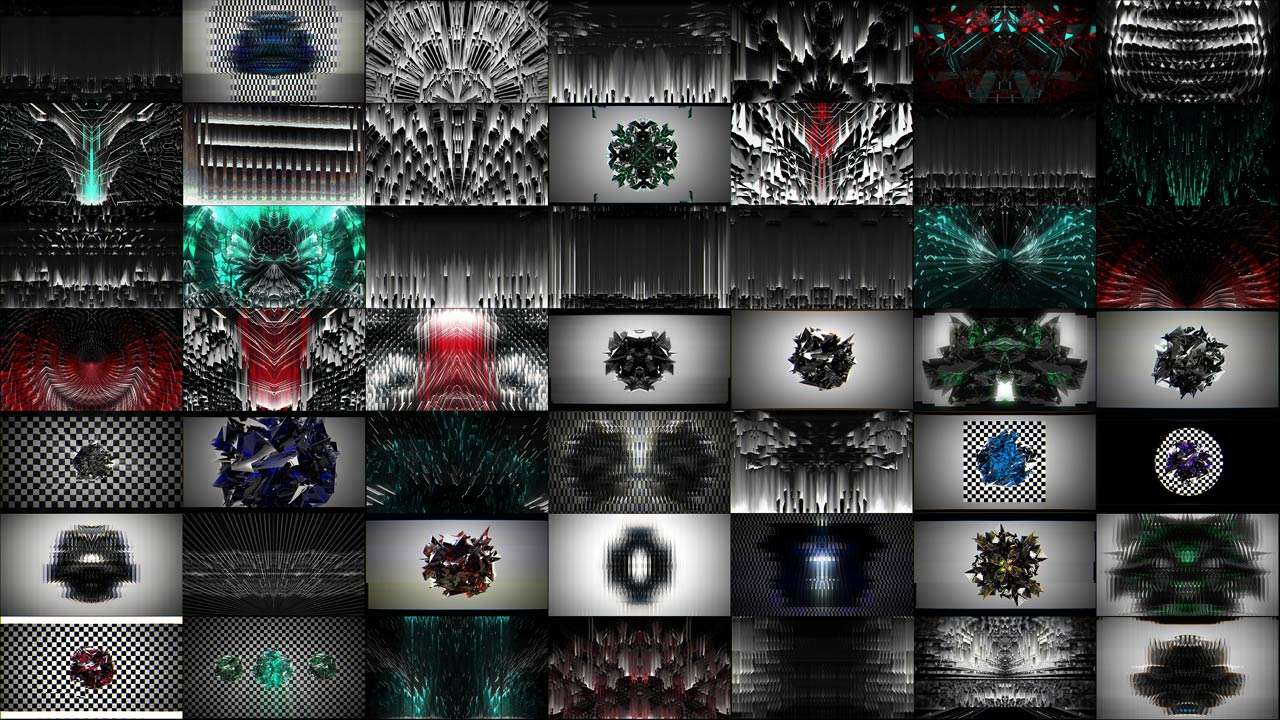
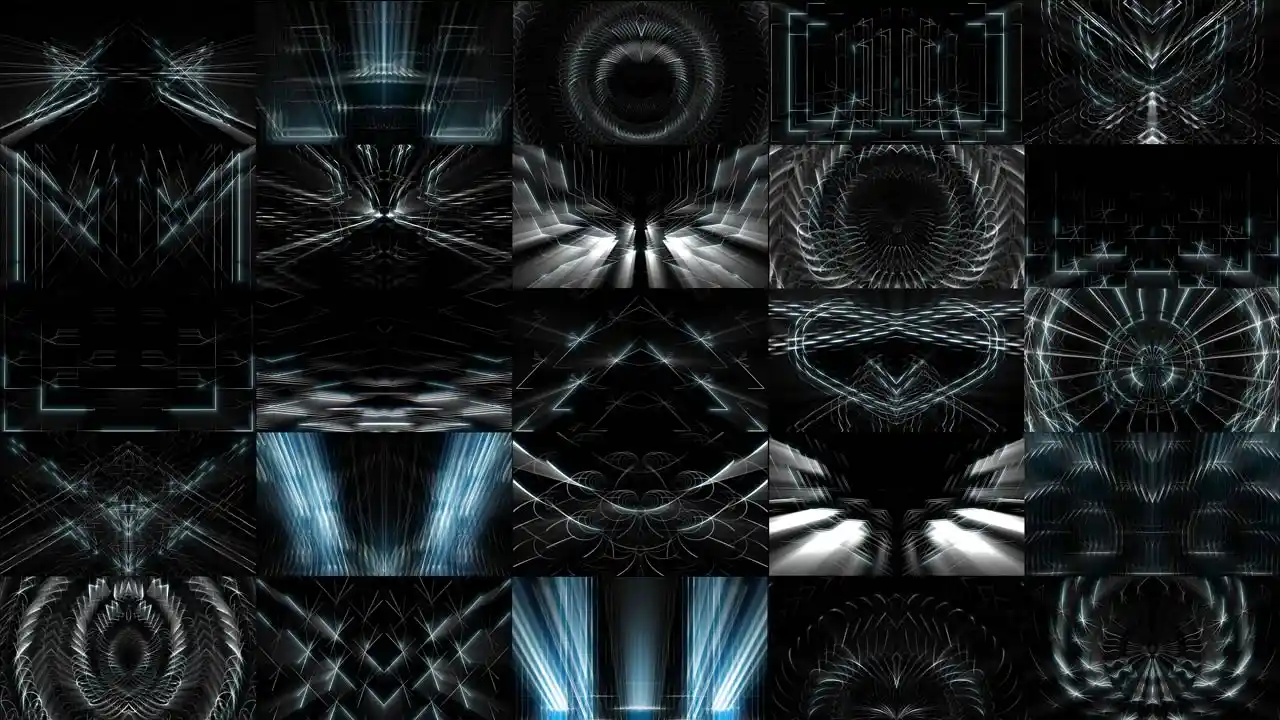
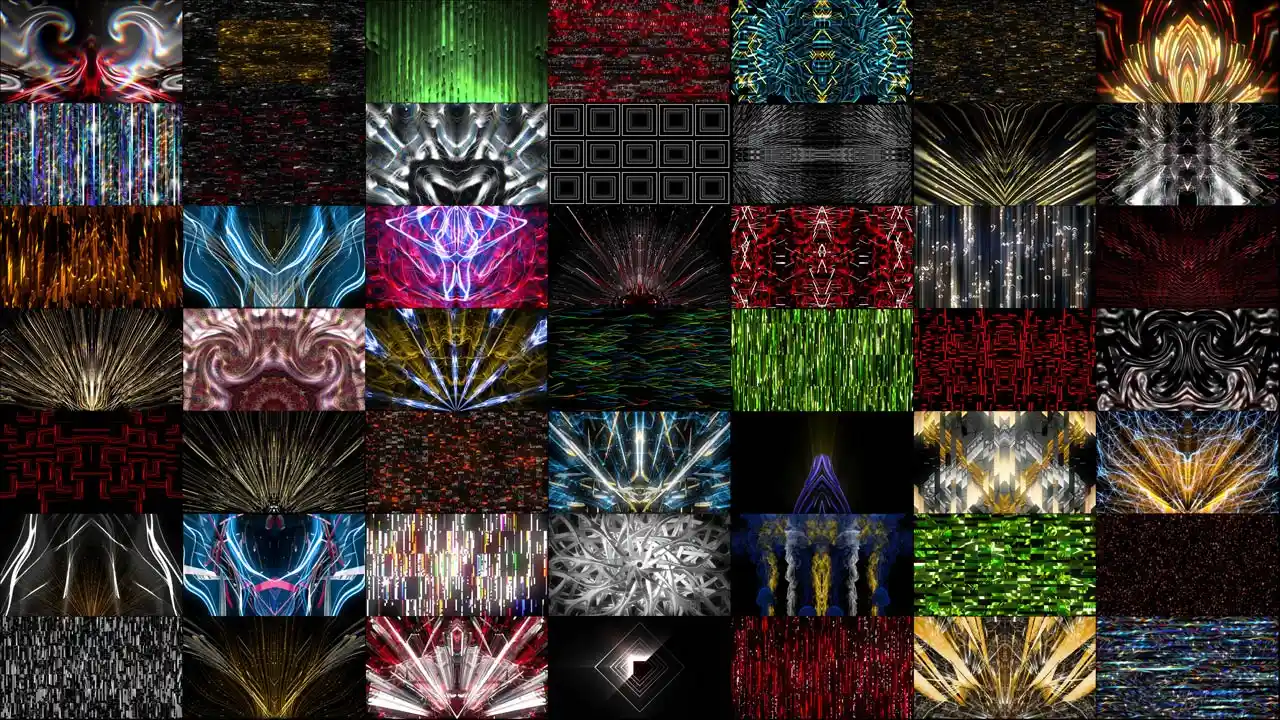
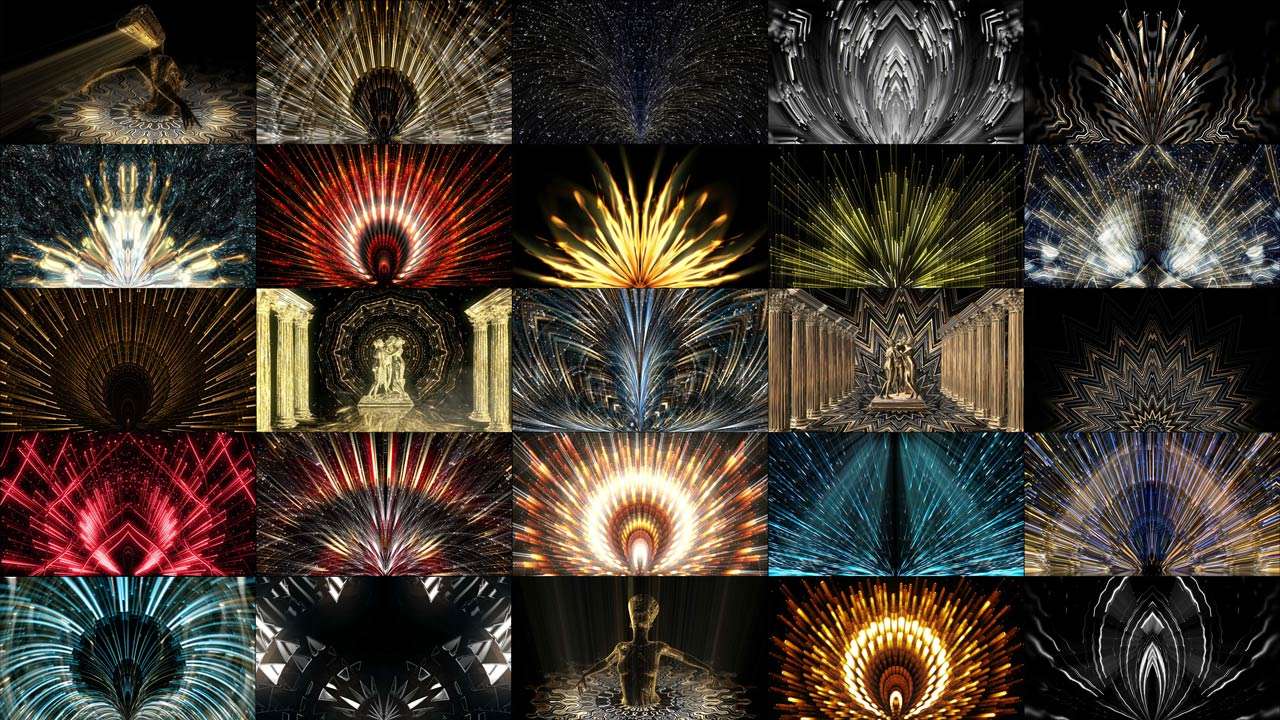
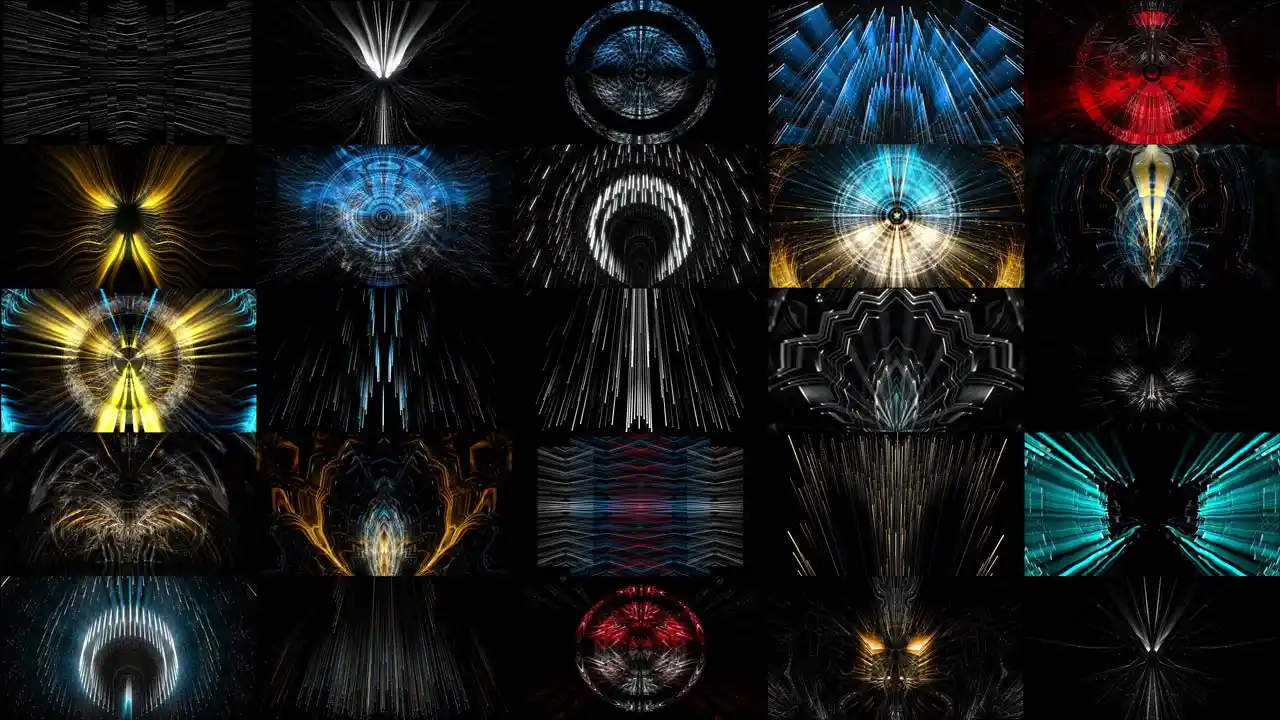
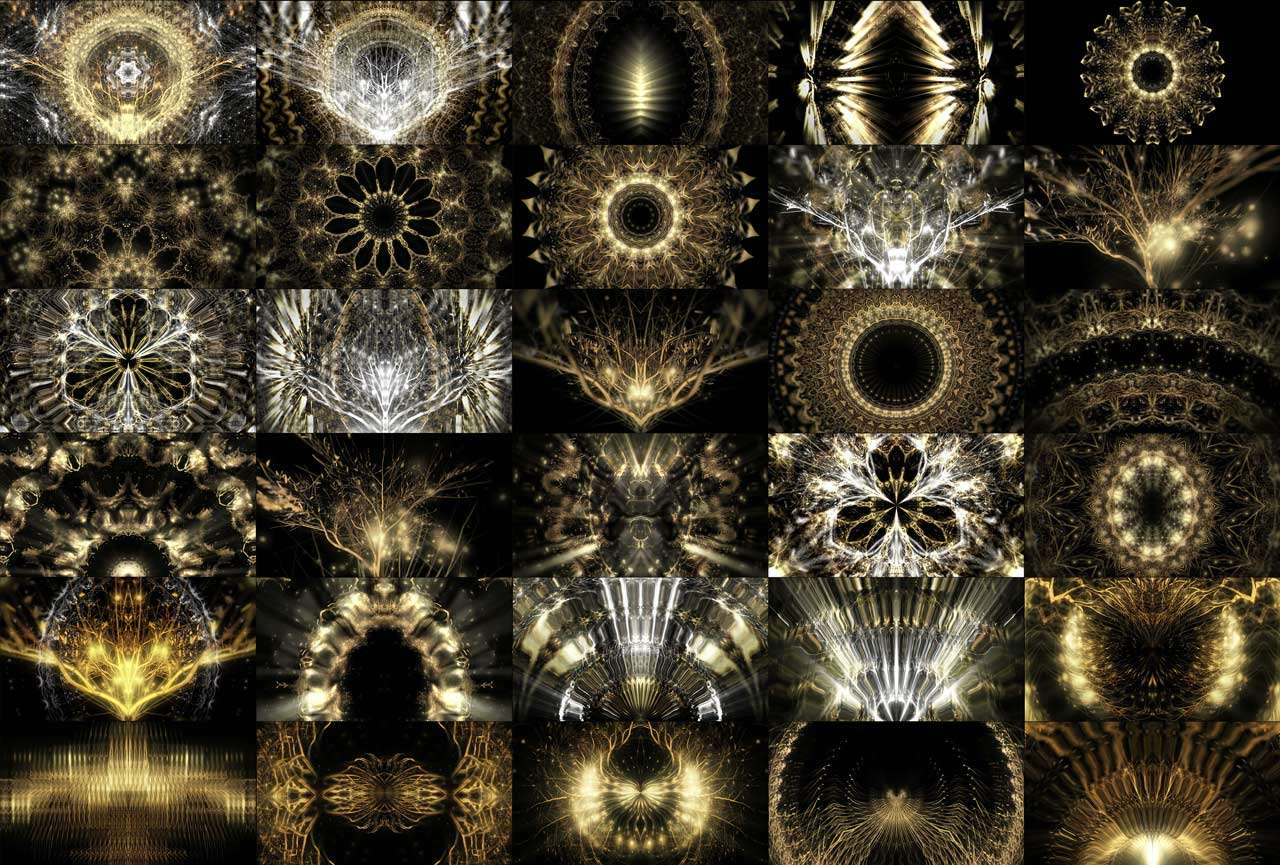
Motion backgrounds and clips that share one palette
-
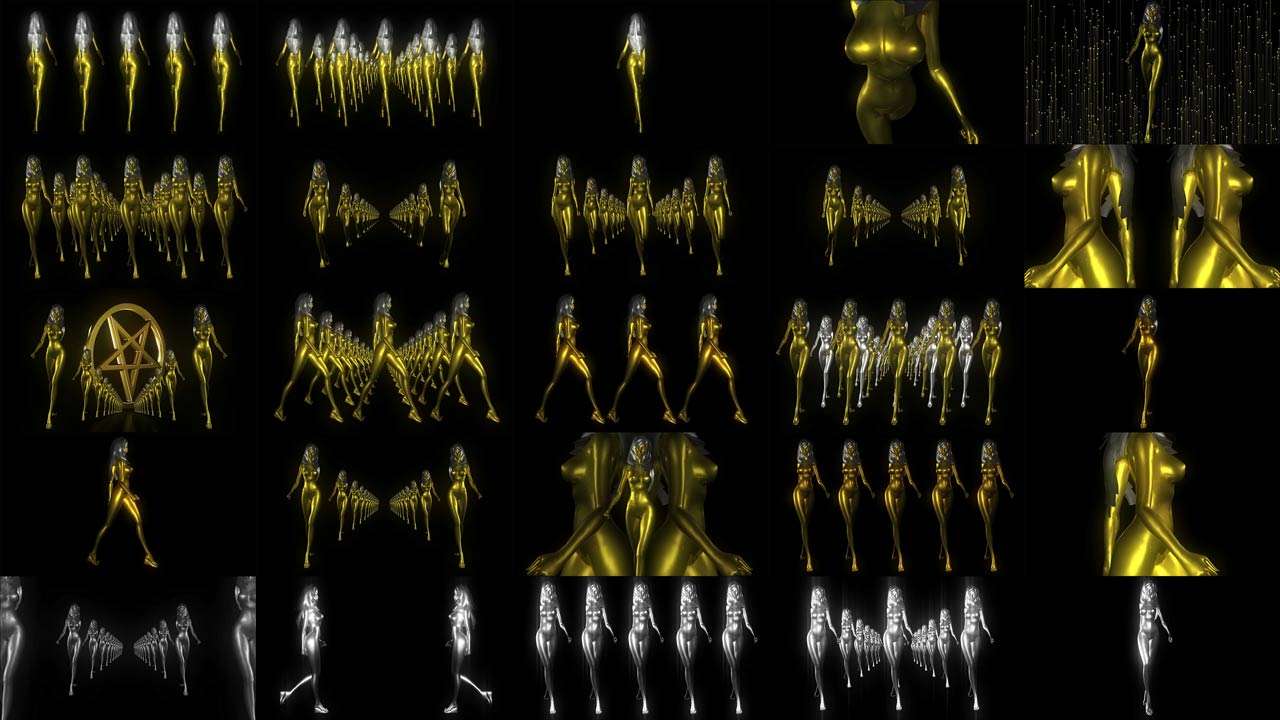
VJ Loops Pack Vol.41 – Goldfrau
79€ -
VJ Loops Pack Vol.29 – Glitch Backgrounds
89€ -
VJ Loops Pack Vol.17 – Main Element
99€ -
VJ Loops Pack Vol.28 – DecoLines
99€ -
VJ Loops Pack Vol.18 – Abstract Background Textures
89€ -
VJ Loops Pack Vol.11 – Really Madonna
89€ -
VJ Loops Pack Vol.12 – Interstellar Hypergate
59€ -
VJ Loops Pack Vol.1 – Smart Lines
99€ -
Vj Loops Pack Vol.26 – Gilded Roots
99€









Logo and brand animation
Your logo needs to exist as a moving object, not a PNG dropped in a corner.
Minimum useful set:
- An animated logo sting, 2–4 seconds, for the intro and the outro
- A static watermark version for the corner of the stream, low opacity
- A white version of everything — this matters more than people expect, because on dark visuals a coloured logo disappears and on light ones a dark one does
- An animated lower third for guest names, track IDs and social handles
Consistency rule: the sting is identical every time. People recognise a channel by repetition, not by variety. Changing your intro every month is the most common way artists destroy the recognition they are trying to build.
Motion backgrounds
The layer behind the artist, and the one doing most of the work.
Three properties matter, in this order:
It must loop invisibly. A stream runs for two hours. A four-second loop with a visible seam becomes unbearable at minute forty.
It must not compete with the performer. High-contrast, high-motion content behind a face is exhausting to watch. Backgrounds are for holding the frame between moments, not for winning attention.
It must have one palette. Two or three colours held across every background in the set. This is the single cheapest thing that makes a channel look designed rather than assembled.
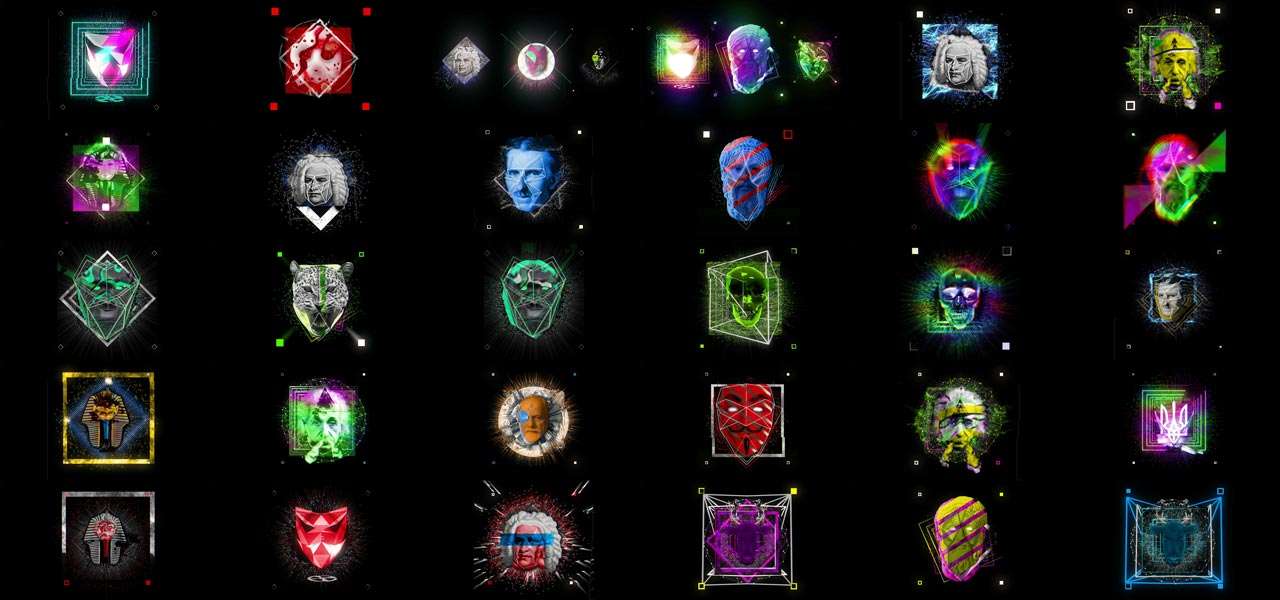
Our VJ Clips and Motion Backgrounds are produced as coherent packs for exactly this reason — a set that shares a world will hold a two-hour stream together in a way that twelve unrelated beautiful clips will not.
Loops, video mixes and VJ sets — three different products
These get confused constantly, and the distinction matters when you are planning a format.
| What it is | Use in a stream | |
|---|---|---|
| VJ loop | A single seamless clip, seconds to a minute | One element in a live mix, or a background layer |
| VJ set | A coherent collection, 20–40 related clips, one world | The library you perform an entire stream from |
| VJ mix | Those clips already arranged into a timed sequence | A finished visual track — intro, peak, outro — that plays alongside the audio |
For a monthly stream the practical answer is usually a set, performed or triggered live, plus a small number of fixed mixes for the opening and closing. That combination gives you variation within the show and total consistency at the edges, which is exactly the shape of a recognisable format.
The parts nobody prepares and then needs at 21:00
- A holding card for before the stream starts and after it ends. Branded, looping, with the next date on it.
- A “technical difficulties” card. You will need it once and be very glad.
- Track ID lower third, because the single most frequent comment on any DJ stream is somebody asking what the track is.
- A vertical crop of your key assets. TikTok Live is now the second largest platform by hours, and a 16:9-only identity simply does not exist there.
Building the space: loops, motion graphics, AI and 3D
This is the part where the third path becomes concrete. Any environment, any volume, without leaving the room.
AI Visuals
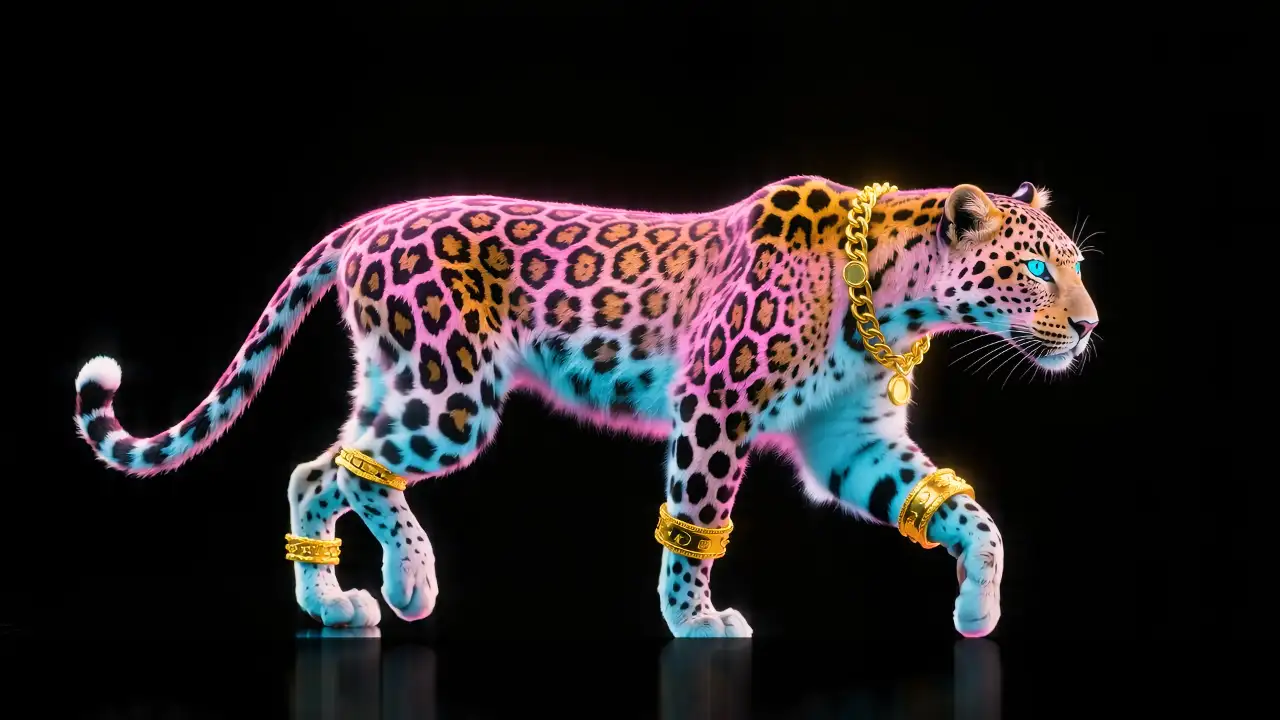
Generated, then cut, looped and encoded for real broadcast





Green screen and keying
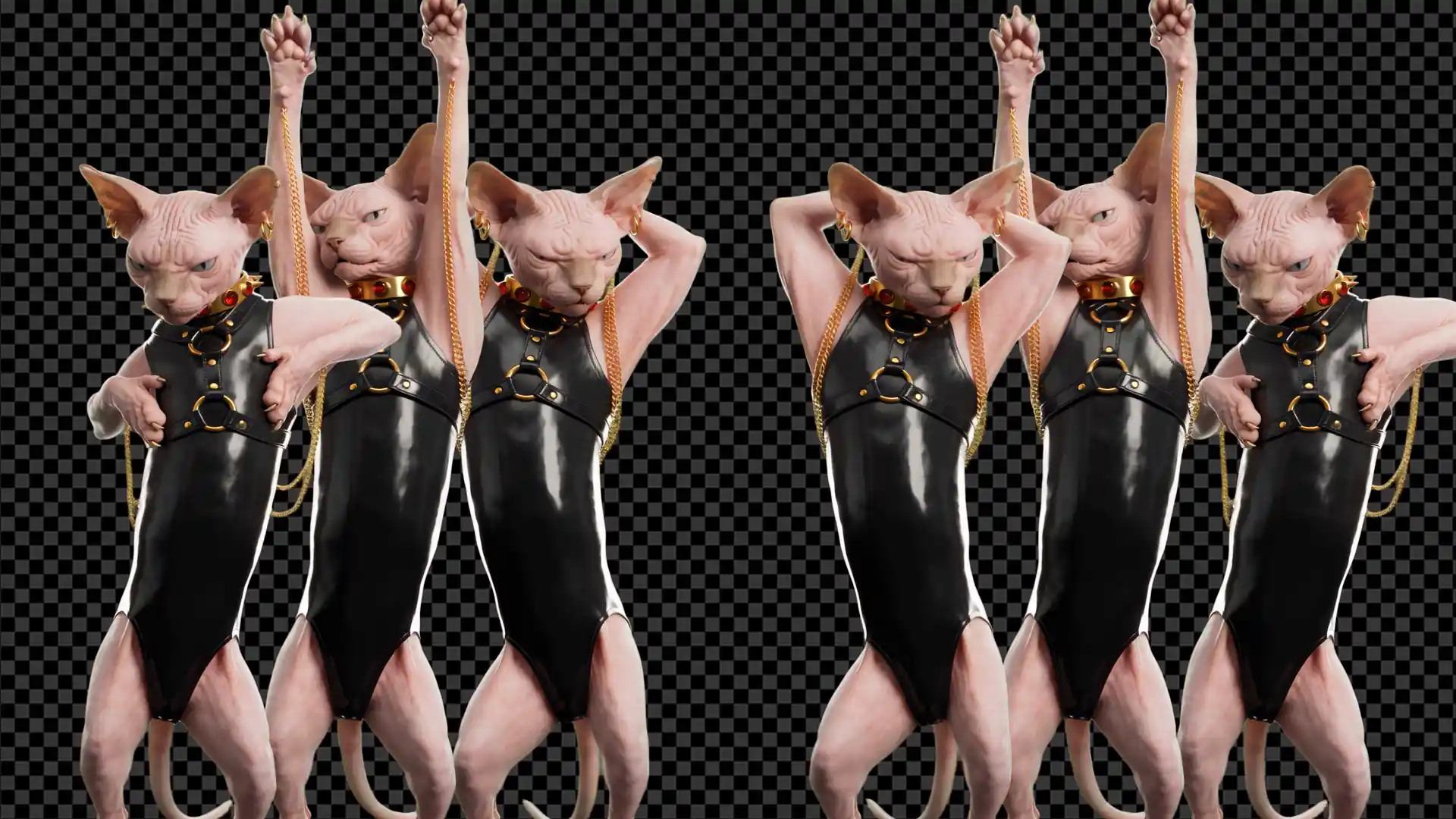
The cheapest route and still the most reliable. Key the background, put anything behind it.
The practical requirements are unglamorous and they are what separates a good key from a bad one: even lighting on the screen — separate from the lighting on you — distance between you and the screen so the green does not spill onto your shoulders, and a matte surface with no creases. Most bad keys are lighting problems, not software problems.
What goes behind is then entirely your choice: motion backgrounds, a 3D render, an AI-generated environment, or a real location plate. Our Green Screen Footage and Alpha Channel Videos exist for the reverse case as well — putting elements in front of your scene rather than behind it, which is how you get particles, light leaks and objects passing between the camera and the artist.
Real-time 3D environments
The professional end, and it has become genuinely accessible.
Unreal Engine is free for individuals and companies under $1 million in annual revenue, with seats at $1,850 per year above that threshold. That means the same engine used on major film production costs nothing for essentially every independent artist reading this.
Around it sits a real toolchain: the OWL Live-Streaming Toolkit streams video, alpha and audio out of Unreal in professional formats, and at the broadcast end Zero Density’s Reality 5 with Traxis camera tracking and its PixelPerfect keyer is what television studios use for real-time green screen compositing.
The honest caveat: a convincing real-time 3D environment is a serious build, not a preset. Budget weeks, not an afternoon, and a machine with a real GPU. The middle path most artists actually take is a pre-rendered 3D environment played back as a loop, which gets you 80% of the look for a fraction of the work — and which is exactly what a well-made Immersive Visuals pack is.
AI-generated environments
Generative tools can now produce environments that were impossible to shoot and expensive to model. Used well this is the fastest route to a distinctive space.
Used badly it is the fastest route to looking like everyone else, and the failure mode is specific: generated content does not loop, does not hold a consistent look across a two-hour stream, and does not come with an alpha channel. For a stream background, all three of those are the requirements.
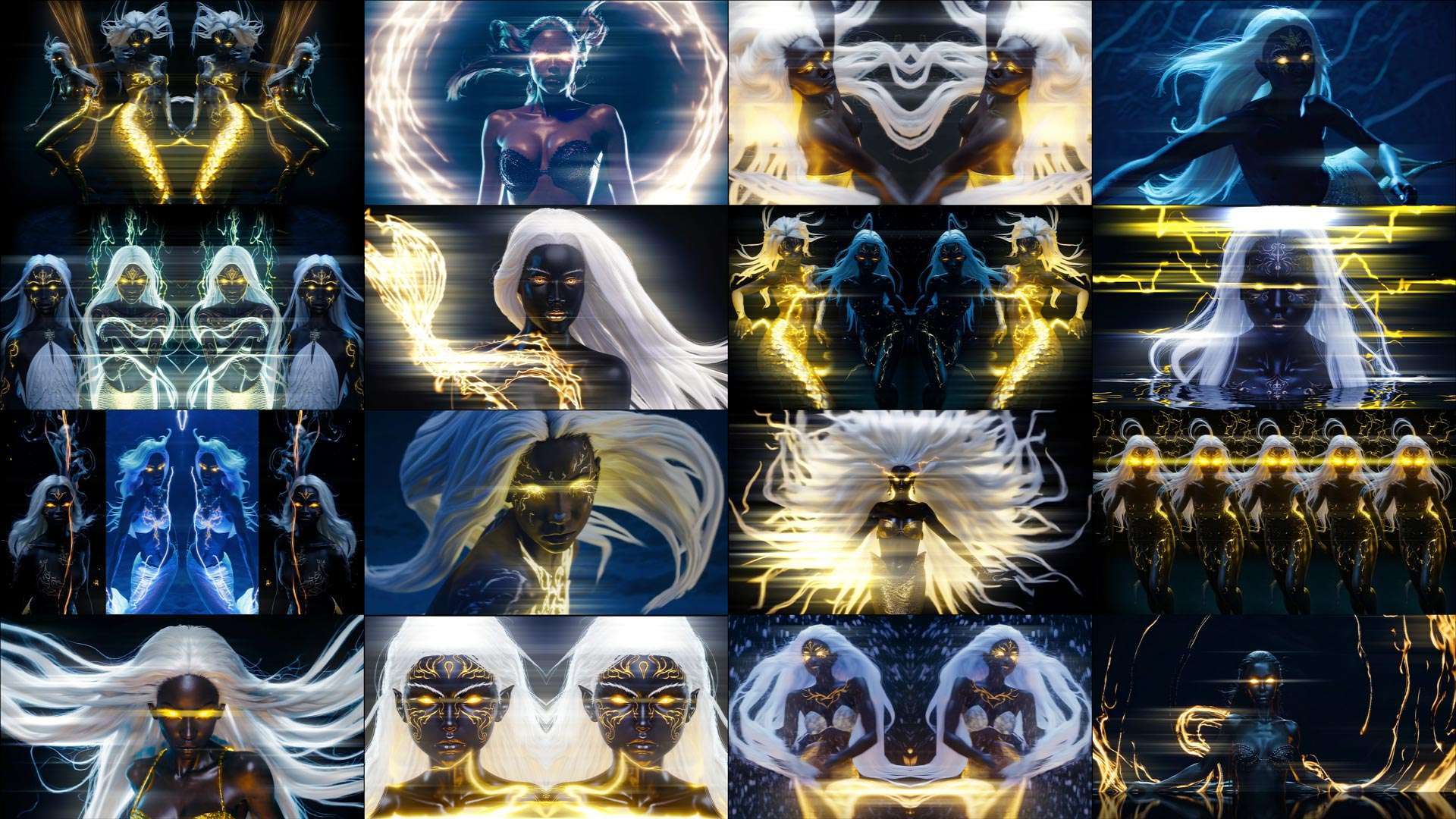
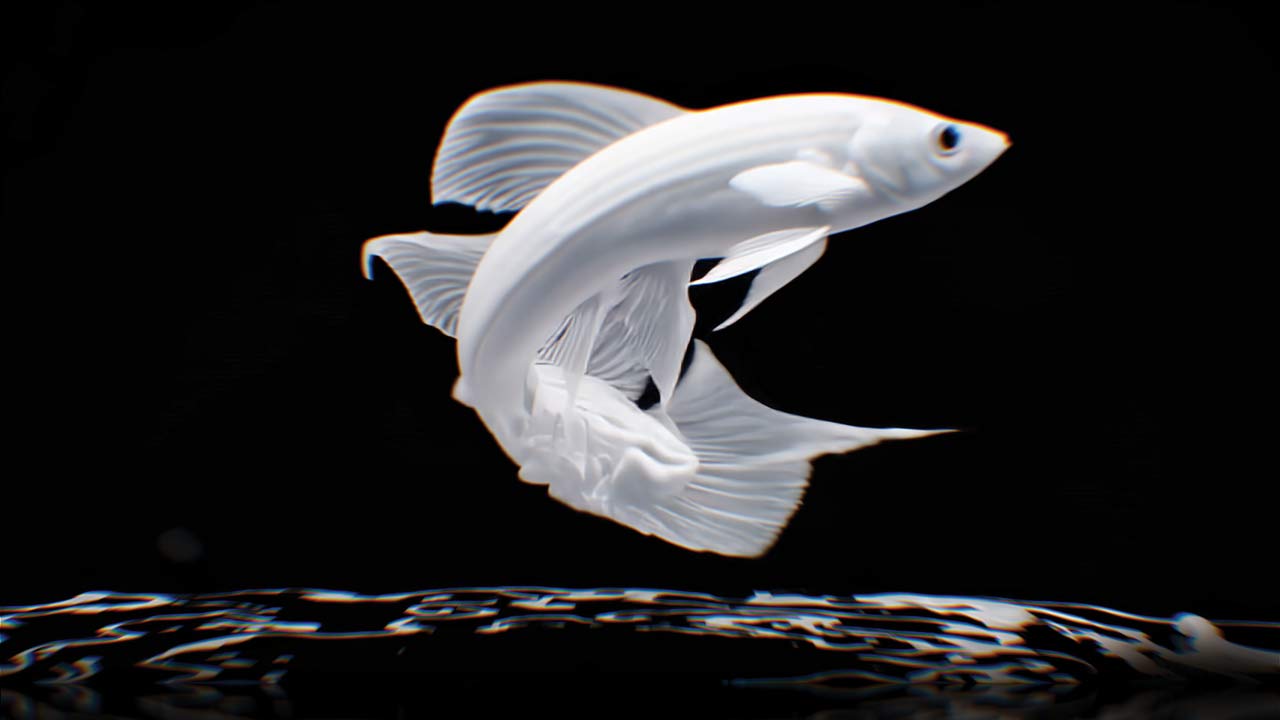
The workable pattern is generate, then finish by hand — cut the loop point, stabilise the palette, add the alpha where you need it, encode it properly. That is what our AI Visuals are: generated, then corrected, cut and encoded so they survive a real broadcast rather than a demo.
What it actually costs
Realistic ranges for a recurring monthly format, one-off unless noted:
| Element | Realistic cost |
|---|---|
| Animated logo sting, watermark, lower thirds | €200–1,500 commissioned, or a weekend in After Effects |
| A coherent motion background set | €50–500 licensed, reusable forever |
| Green screen, stand and two soft lights | €150–600 |
| Capture card and a decent camera | €200–1,200 |
| Pre-rendered 3D environment loops | €50–400 licensed |
| Real-time Unreal environment | Free software; weeks of build time, or €3,000+ commissioned |
The whole visual identity of a professional-looking monthly stream costs less than one mid-range projector, and unlike a projector it does not depreciate — the assets work on every stream you ever publish.
Production value is not the variable
Cercle has 3.6 million subscribers, films at the Pyramids, employs 35 people, and cancelled its 2026 festival because the margins did not hold.
Flavour Trip has a camper, two cats and a monthly cooking-and-house-music mix, and is directly supported by its audience.
Both are recognisable in three seconds with the sound off. That is the actual variable, and it is available at any budget.
What kills most artist channels is not a lack of spectacle. It is inconsistency — a different intro each month, a different palette every stream, a logo that changes, a format that drifts. Recognition is built by repetition, and repetition is free.
The minimum viable visual identity
If you are starting a recurring stream this month, this is the whole list.
One: two colours and one motion language. Write them down. Do not change them for a year.
Two: an animated logo sting, 3 seconds, identical every episode. Plus a white version.
Three: one coherent set of motion backgrounds that share a palette — licensed is fine, coherent is not optional.
Four: a holding card, a track ID lower third, and a vertical crop of all of it.
Five: publish on a fixed schedule. Monthly is enough. A recognisable channel that appears predictably beats a spectacular one that appears randomly.
That is a weekend of setup and a few hundred euro. Everything past it is refinement.
Frequently asked questions about visuals for online events and DJ streams
Why do DJ live streams need visuals?
Because the stream is not the income, it is the portfolio. Promoters, labels and audiences use it to decide whether you are an artist or a playlist. Live streaming is a large market — around $99.82 billion globally, with over 30 billion hours watched per quarter across major Western platforms — but live music accounts for only about 4% of engagement hours, so competition for attention within it is severe.
What platform should a DJ stream on in 2026?
YouTube, for two reasons: it accounts for over 47% of all livestreaming hours watched, nearly matching every other platform combined, and it has by far the longest shelf life. TikTok Live is now second by hours and overtook Twitch, so a vertical crop of your assets is worth preparing. Twitch lost 8.3 percentage points of share in 2025.
What is the difference between a VJ loop, a VJ set and a VJ mix?
A loop is a single seamless clip. A set is a coherent collection of 20–40 related clips sharing one visual world, which you perform from. A mix is that content already arranged into a finished timed sequence. For a recurring stream, a set for the body of the show plus fixed mixes for the intro and outro is the practical combination.
Do I need a green screen for a DJ stream?
Not necessarily, but it is the cheapest way to place yourself in any environment. The quality of a key depends mostly on lighting: light the screen evenly and separately from yourself, keep distance so green does not spill onto your shoulders, and use a matte surface without creases. Most bad keys are lighting problems rather than software problems.
Can I use AI to generate stream backgrounds?
Yes, with finishing. Generated content does not loop seamlessly, does not hold a consistent look across a two-hour stream, and has no alpha channel — all three of which a background needs. The workable approach is to generate, then cut the loop point, stabilise the palette, add alpha where required and encode properly.
How much does a professional-looking stream identity cost?
Roughly €650–3,000 in total for logo animation, a coherent motion background set, a green screen with lighting, and a camera and capture card. Most of it is a one-off cost that applies to every stream you publish afterwards.
Is Unreal Engine realistic for a solo artist?
The licence is: Unreal is free for individuals and companies under $1 million in annual revenue. The build time is the real cost — a convincing real-time environment takes weeks, not an afternoon. Most artists get a better return from pre-rendered 3D environment loops, which deliver most of the look for a fraction of the effort.
What makes a stream channel recognisable?
Consistency, not spectacle. Two colours, one motion language, one recurring element, an identical intro every episode and a fixed publishing schedule. Cercle achieves recognition with helicopters and Flavour Trip achieves it with a camper and two cats — the common factor is that neither changes.
Sources
Market figures and case-study details were checked in August 2026. Opinions and the production recommendations are our own.
Streaming market
- Live streaming market size and viewership statistics for 2026, including platform share for YouTube, TikTok Live and Twitch
- US livestream viewer forecasts for 2026
- Music engagement hour data for live and livestreamed shows
- LFG.TV launch reporting, 2025
Case studies
- Cercle — company background, filming locations, YouTube subscriber and view figures, monetisation model, and 2026 festival cancellation and fundraising reporting
- Flavour Trip — official channel description, format, cadence and Patreon community size
Production tools
- Epic Games — Unreal Engine licensing terms
- OWL Live-Streaming Toolkit for Unreal Engine
- Zero Density — Reality 5, Traxis camera tracking and PixelPerfect keying
Our own material
- LIME ART GROUP production experience and content catalogue since 2012
Start with the three seconds
Open any successful artist channel, mute it, and see how long it takes to know whose it is. If the answer is more than three seconds, that is the thing to fix — before the camera, before the lighting, before the engine.
If you want the components rather than the commission, the VJ Clips and VJ Loops Packs are built as coherent sets, the Alpha Channel Videos are for the layers in front of you, and the AI Visuals are the generated ones that have already been finished properly. And if you build a format worth watching, post it in our VJ communities. The channels worth studying are usually the ones nobody has heard of yet.
Latest Feature VJ Loops
Hand-picked visuals by our New Media Artists
-
Deep Serenas – Immersive Visuals Vol.2
149€ -
Sale!
VJ Loops Pack Vol.73 – Mirror Ballet
Original price was: 129€.99€Current price is: 99€. -
VJ Loops Pack Vol.18 – Abstract Background Textures
89€ -
VJ Loops Pack Vol.19 – Lovely Red
79€ -
VJ Loops Pack Vol.11 – Really Madonna
89€ -
Sale!
Interior Patterns – Immersive Visuals Vol.1
Original price was: 249€.199€Current price is: 199€. -
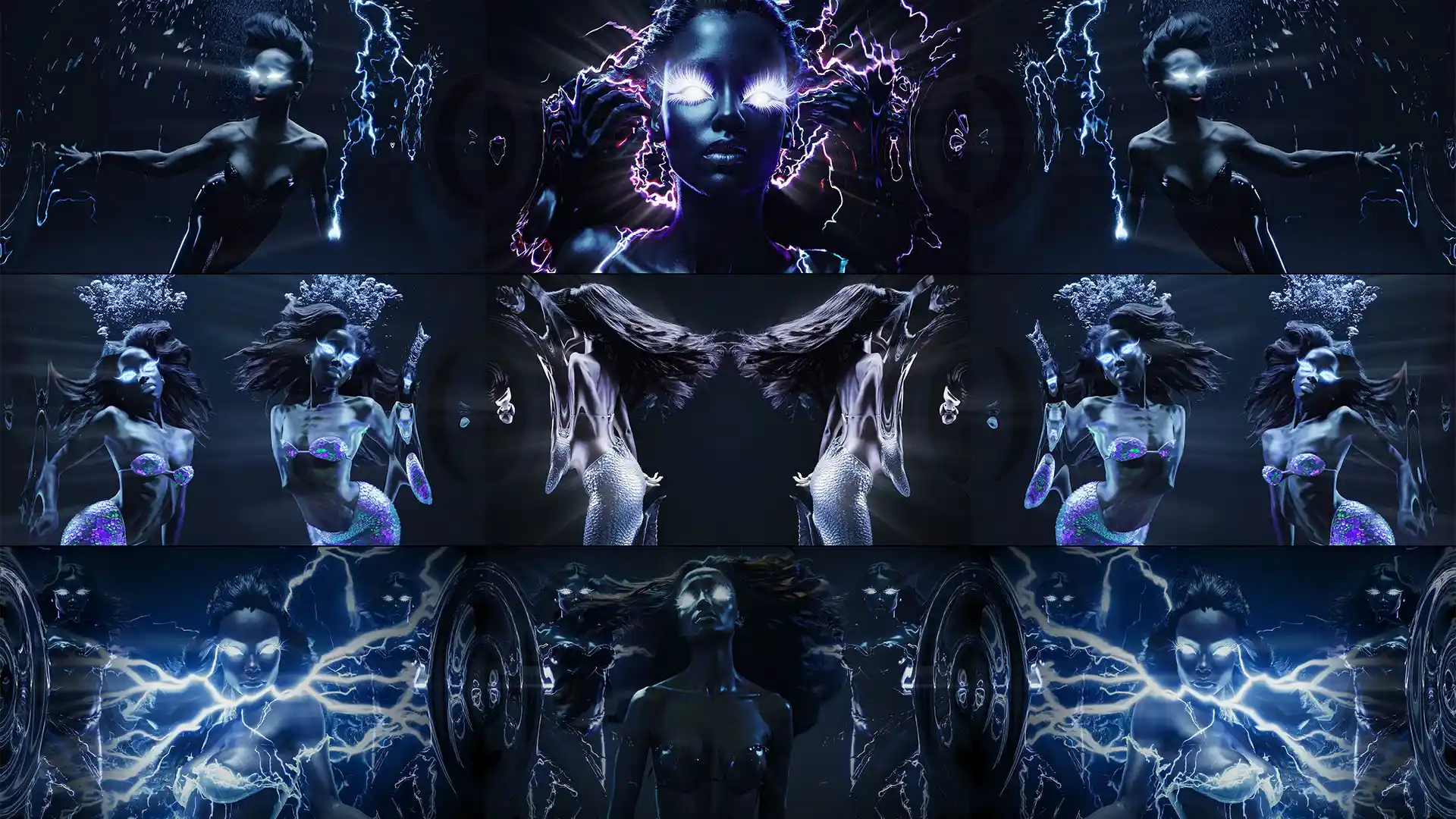
VJ Loops Pack Vol.85 – Gnosis Lightning
99€ -
VJ Visuals Starter Pack
99€ -
Sale!

 Select options This product has multiple variants. The options may be chosen on the product page
Immersive Projection Business Guide
Original price was: 19€.12€Current price is: 12€.







Best wishes from Vienna,
Thanks for your attention, faithfully yours,
Alexander Kuiava – Founder & CEO LIME ART GROUP
https://alexanderkuiava.com/
