
Three Mistakes Every Beginner VJ Makes
The article is written by a human. Mistakes have been edited by AI.
This is a craft article. If you are still assembling a rig, start with what you need to start instead.
Every experienced VJ has made all three of these. I made all three. They are not subtle errors of taste — they are visible from the middle of the dance floor, by people who have never heard the word VJ and could not tell you what went wrong.
That is what makes them worth naming. The VJ mistakes beginners make are not obscure. They are three specific, mechanical failures, and all three are fixable in an afternoon.
Who this article is for: VJs who can already run a set and want it to land better, and anyone about to play their first paid gig.
What it solves: most advice on this subject is a list of adjectives. This one gives you the arithmetic — how fast you are burning your library, how much dynamic range you have left, and how long a phrase actually lasts in seconds.
What you get by the end: a way to tier your library, a brightness discipline, a tempo table you can buy content against, and a pre-gig checklist.
Hello dear VJs and clients of LIME ART GROUP. I am new media artist Alexander Kuiava. Everything below has been made in front of an audience, mostly by me.
Mistake one: you spend the whole set in the first hour
The evening starts. The room fills. You are excited, the folder is full of clips you love, and you play them. All of them. By midnight everything good has been on screen at least twice.
Then five hours remain. Of all the VJ mistakes beginners make, this is the one with the longest consequences, because it ruins the second half of a night that had not started badly.

VJ Loops Packs
Coherent sets that can be intercut – the material you tier, not a folder of downloads
-
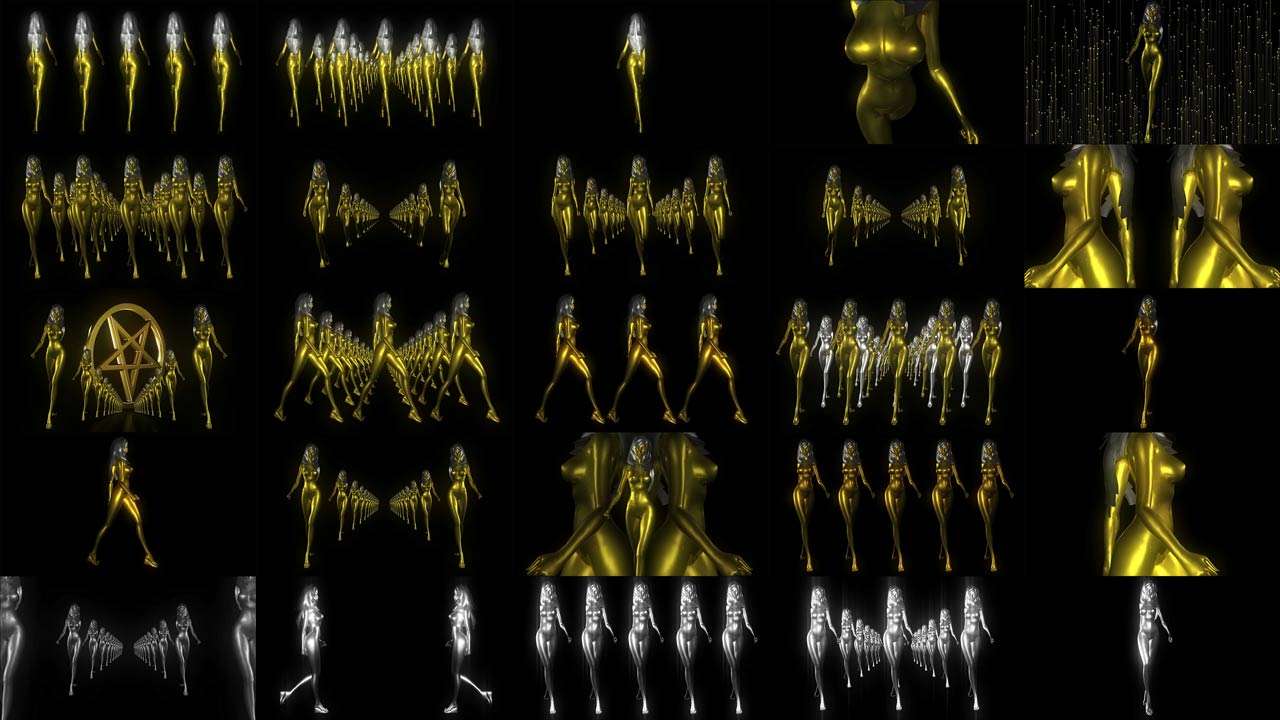
VJ Loops Pack Vol.41 – Goldfrau
79€ -
VJ Loops Pack Vol.29 – Glitch Backgrounds
89€ -
VJ Loops Pack Vol.17 – Main Element
99€ -
VJ Loops Pack Vol.28 – DecoLines
99€ -
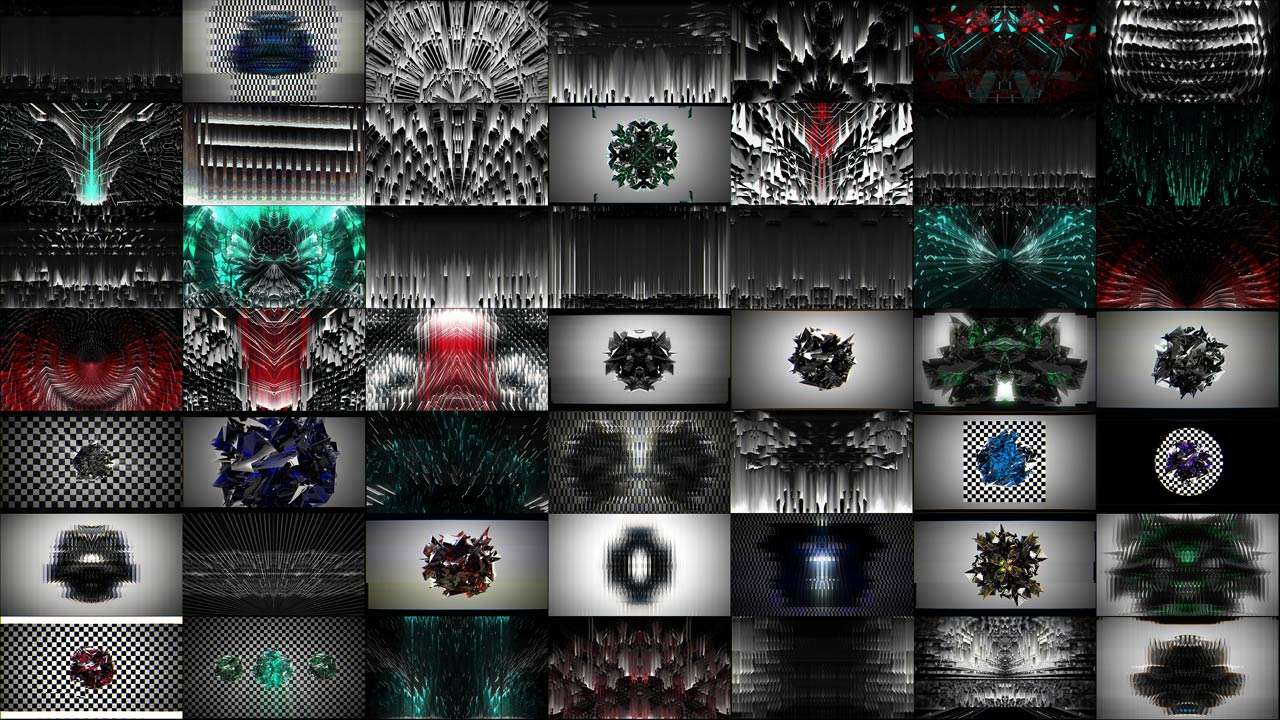
VJ Loops Pack Vol.18 – Abstract Background Textures
89€ -
VJ Loops Pack Vol.11 – Really Madonna
89€ -
VJ Loops Pack Vol.12 – Interstellar Hypergate
59€ -
VJ Loops Pack Vol.1 – Smart Lines
99€ -
Vj Loops Pack Vol.26 – Gilded Roots
99€









The arithmetic that makes it obvious
Take a realistic club night: six hours, and a working library of forty clips you would actually be happy to show.
Burn twenty-five of them in the first two hours and you are running at 12.5 clips per hour. What is left is fifteen clips for four hours, which is 3.8 per hour — a third of the pace, at exactly the point in the night when the music gets more intense, not less.
The room feels that inversion even if nobody articulates it. The visuals peaked at 23:00 and the music peaked at 02:00, and the two halves of the show stopped speaking to each other.
Prepare more than you can possibly use
The standard guidance in the VJ community is a three-to-one ratio: for a one-hour show, have at least three hours of content and playlist ready. It sounds excessive until the first time a set runs long, the headliner overruns by forty minutes, or the promoter asks if you can cover the changeover.
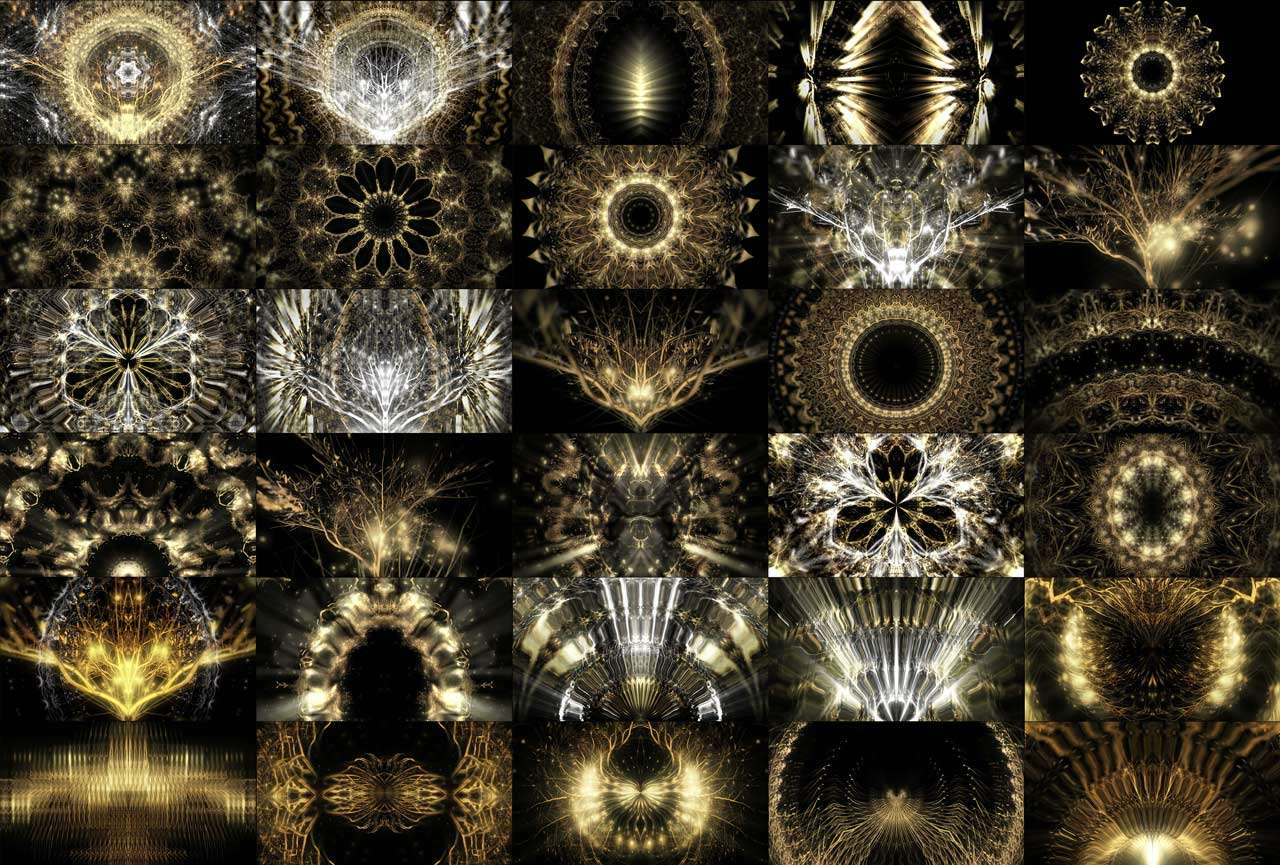
Depth is not the same as variety, though, and this is where people misread the rule. Forty unrelated clips is not a deeper library than twenty coherent ones — it is a shallower one, because half of them cannot follow each other without the show visibly breaking. What you want is a set of material that shares a palette and a level of abstraction, so that any clip can follow any other clip. That is exactly what a well-built VJ loops pack gives you and a folder of downloads does not, and it is why three or four coherent packs will carry a long night better than two hundred loose files. If you play regularly, a bundle is the cheaper way to get that depth than buying packs one at a time.
Structure the night in tiers, not in favourites
The fix is not restraint through willpower. It is organisation. Before the gig, split your library into three tiers:
- Ambient. Slow, low contrast, low density. Opening, warm-up, breakdowns, the recovery after a peak.
- Working. Your general-purpose material. This is where you spend most of the night.
- Peak. The five or six clips that are genuinely your best. Highest density, strongest colour, most movement.
Then apply one rule: the peak tier stays locked until the music gets there. Not until you get bored. Not until someone compliments you. Until the music gets there.
If you are in your peak folder at midnight, you have nothing to escalate to at three, and escalation is the entire job.
Effects are ammunition, not decoration
The same failure repeats one level down. Beginners stack effects because effects are fun, and by the second hour every layer has a strobe, a kaleidoscope and an RGB shift on it.
Two costs. The obvious one is that your machine is now doing far more work than it needs to and you have moved closer to the moment it drops frames. The less obvious one is that you have spent your surprises. An effect only reads as an event if it was not there a second ago.
Treat each effect as a single shot. Applied once, at the right moment, a hard strobe is a gasp. Applied for forty minutes, it is wallpaper, and you have nothing left to do when the track actually demands it.
Mistake two: you play too bright, and you never go dark
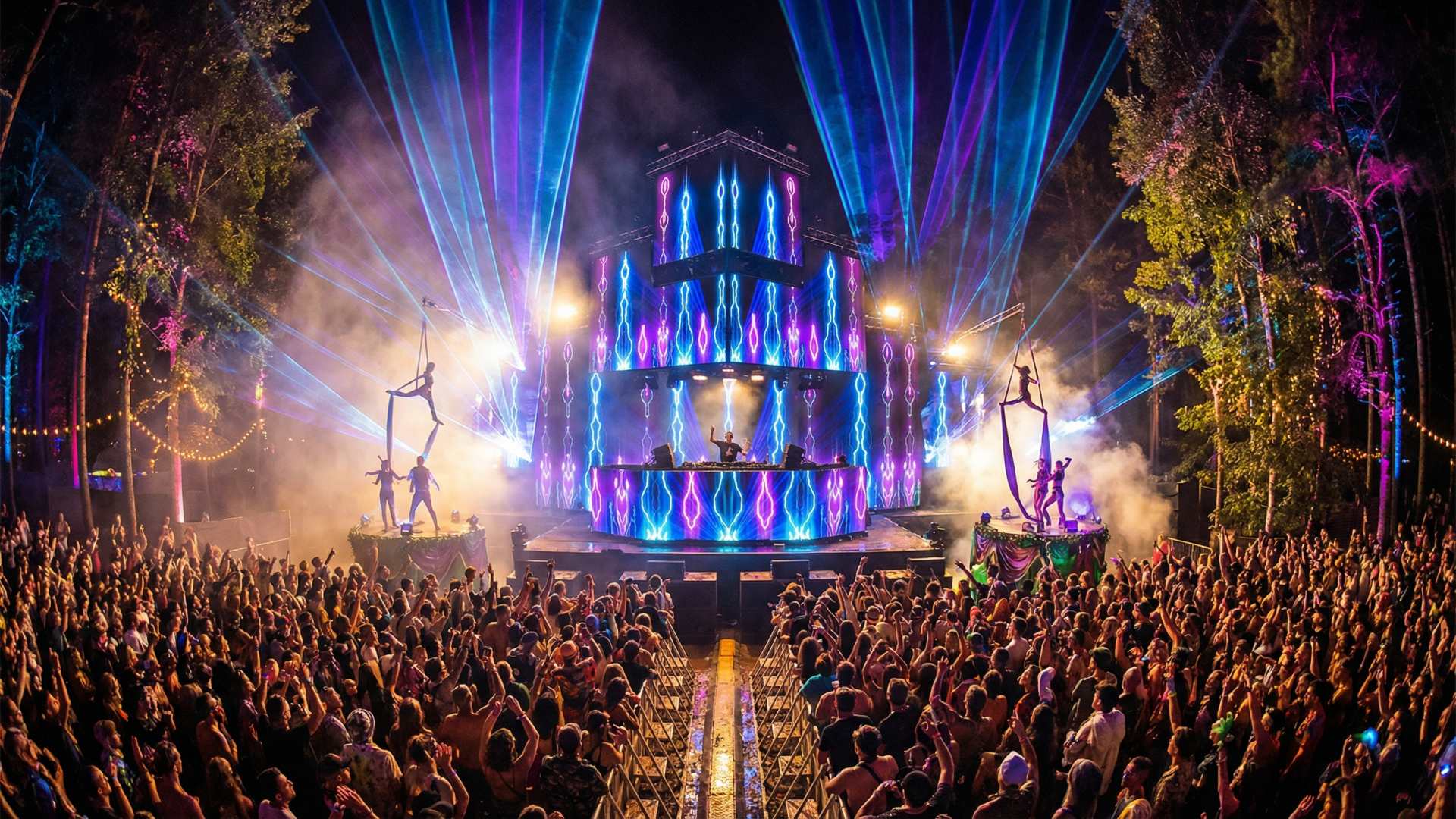
A screen is a light source. That makes a VJ part of the lighting design of the room whether anyone briefed them or not, and most beginners do not realise it until someone from the lighting desk asks them to pull it down.
Here is the moment it shows: the music breaks down, the lights drop, the room goes quiet and dark — and the VJ, absorbed in the mix, keeps a full-brightness wall of visuals running. The room cannot go anywhere. The moment the lighting designer just built is flattened by a video wall doing 100% white at the exact instant it should be doing almost nothing.
Contrast is a budget, and you can overspend it
This is the part worth internalising, because it turns an abstract note about taste into arithmetic.
Your impact at any moment is not your absolute brightness. It is the difference between where you are now and where you just were.
Sit at 80% output all night and your biggest possible escalation is 25% brighter — and it will barely register. Sit at 30% for the grooves and the same peak is now three times brighter than what preceded it, and it lands like a physical event.
Darkness is not the absence of the show. Darkness is what you spend to make light mean something. A VJ who never goes below half is a VJ who has thrown away most of their range before the night started.
The practical version
- Put a master dimmer on a physical fader you can find without looking. Not a menu, not a mouse. If you cannot pull the whole output down in half a second, you will not do it when it matters.
- Keep a black clip on a dedicated key. Instant, total, deliberate darkness is a move, and it needs to be one button.
- Treat pure white as expensive. A full-white frame on a large LED wall physically resets the audience’s night vision. Use it once, at the drop, and never as a background.
- Watch the room, not the screen. If you are looking at your preview monitor during the breakdown, you have no idea what the room actually looks like.
Work with the lighting operator, not against them
You are sitting next to them at front of house, and you are both lighting the same room. If they build a slow blue wash and you run a hot orange strobe over it, neither of you gets what you designed — the audience just sees mud.
Thirty seconds of conversation before doors solves most of it. Who owns the breakdowns? Who owns the drops? Is there a colour the artist has asked for? Are there timecoded moments where you should be black? On any show above club level, a lighting designer who knows what you are planning will build around you, and that is worth more than any effect in your rack.
The same is true of the artist. If you can speak to the DJ or the band beforehand — even a single message asking what the set is built around and whether there are moments they want marked — you get to plan something instead of reacting to everything. Pre-planned moments are what audiences remember.
Mistake three: you are not cutting with the music
The build starts. It goes eight bars, sixteen, the filter opens, the room lifts its hands, the drop lands.
And the visual does not change.
Nothing else you do that night will undo that. It is the clearest possible signal that the screen is playing back rather than being played, and it is the single most common reason a room stops looking at a VJ.
Layer Elements
Alpha channel and overlay content – a hundred visible states from a dozen files
-
VJ Loops Pack Vol.41 – Goldfrau
79€ -
VJ Loops Pack Vol.29 – Glitch Backgrounds
89€ -
VJ Loops Pack Vol.17 – Main Element
99€ -
VJ Loops Pack Vol.28 – DecoLines
99€ -
VJ Loops Pack Vol.18 – Abstract Background Textures
89€ -
VJ Loops Pack Vol.11 – Really Madonna
89€ -
VJ Loops Pack Vol.12 – Interstellar Hypergate
59€ -
VJ Loops Pack Vol.1 – Smart Lines
99€ -
Vj Loops Pack Vol.26 – Gilded Roots
99€
Knowing the music is not optional
This is the third of the VJ mistakes beginners make, and it is the least forgivable, because it is the cheapest to avoid. You cannot cut with music you do not know. If the lineup is published, listen to it. If it is not, at minimum know the genre and its conventions — where builds sit, how long they run, whether the drops are on the 1 or delayed.
Freestyling to an unknown set is a skill, and it is a skill you develop after you can do the prepared version, not instead of it.
The three cut rates nobody explains
Beginners find one change rate and use it for six hours. Experienced VJs move between three, and match them to the structure of the music rather than to the kick drum.
Electronic music is built in bars and phrases, usually in multiples of 8. Your changes should sit on those boundaries. Here is what that actually means in seconds:
| BPM | 4 bars | 8 bars | 16 bars | 32 bars |
|---|---|---|---|---|
| 100 | 9.6 s | 19.2 s | 38.4 s | 76.8 s |
| 120 | 8.0 s | 16.0 s | 32.0 s | 64.0 s |
| 124 | 7.7 s | 15.5 s | 31.0 s | 61.9 s |
| 128 | 7.5 s | 15.0 s | 30.0 s | 60.0 s |
| 140 | 6.9 s | 13.7 s | 27.4 s | 54.9 s |
| 150 | 6.4 s | 12.8 s | 25.6 s | 51.2 s |
| 174 | 5.5 s | 11.0 s | 22.1 s | 44.1 s |
Read it as three working speeds:
- Section rate — every 32 bars, roughly a minute. Ambient passages, long grooves, the opening hour. One idea, held.
- Phrase rate — every 8 to 16 bars, 15 to 30 seconds at club tempo. Your default for most of the night. It matches how the music is actually written.
- Bar rate — every 4 bars or faster. Peaks and drops only. Sustained for more than a minute it stops reading as intensity and starts reading as noise.
The table is also a buying guide, and this is the part people miss: a clip whose natural loop is around 15 or 30 seconds will sit cleanly inside a phrase at 128 BPM. A seven-second clip will loop twice per phrase, which is fine. An eleven-second clip will not land on any boundary and will feel subtly wrong all night. When you build a set, check your loop lengths against the tempo you will be playing.
Change something on the drop
The bar is lower than beginners think. You do not need a bespoke animation for every drop. You need the screen to be different immediately after the drop than it was immediately before.
Cut to a different clip. Bring in a second layer. Kill a layer. Invert. Fire the strobe you have been saving. Go to black for one beat and come back. Any of those reads as intent. Doing nothing reads as absence.
The subtler mistake is the opposite one: cutting on every beat, all night. That is not synchronisation, it is a seizure. Let the material breathe through the grooves so that the moments you do cut hard actually mean something.
Layers are how you change without changing
The reason experienced VJs can hold one clip for a minute and still feel responsive is that they are not showing one thing. They are showing a base layer plus one or two elements on top, and they are moving the elements.
This is what alpha channel content is for — masks, particles, geometric elements and typographic bits that sit over a background and can be brought in, taken out, and re-coloured without touching what is underneath. It gives you a hundred visible states from a dozen files, and it means you always have a small move available when the music asks for one and a big move is wrong.
All three are the same mistake
Look at the three VJ mistakes beginners make together and they collapse into one thing.
Playing everything early is not knowing where the night is going. Playing too bright is not knowing what the room looks like. Not cutting with the music is not knowing what the music is doing.
Every one of them is a failure to pay attention to something outside your own screen. The beginner watches the preview monitor and the clip bank. The experienced VJ spends most of the night looking at the room, the stage, and the lighting desk, and glances at the software only to execute a decision that was already made.
You can fix all three with the same habit: look up more than you look down.
What to do before the gig, so none of this happens
Almost every one of these failures is decided before you arrive, not during.
- Know the lineup and get the assets. Artist logos at minimum. Anything the promoter can send you — event branding, sponsor marks, a theme — is content you can prepare instead of improvise.
- Prepare themed material if the event has a concept. A summer party, Halloween, New Year, a national holiday, a brand launch. Turning up with content that matches the concept is the cheapest way to look like you care about their event rather than your reel.
- Get the screen dimensions and the stage plan before you build anything. A 16:9 project on a 4:1 LED wall is a wasted night, and it is a five-minute question.
- Keep the live rig simple. Anything experimental stays in the studio until you are certain of it. Every extra device, plugin and cable is another thing that can fail in front of people, and a simpler rig that works beats a clever one that might.
- Check your files play. Not that they exist — that they play, in the software you will use, at full layer count. The most avoidable disaster in this job is a clip that opens fine at home and stutters on the night, which is usually a codec problem rather than a machine problem. Our guide to the video codecs every VJ needs covers what to encode to and why.
- Drop the low-resolution files. Old material at 720p on a modern LED wall looks like a mistake, because it is one. Either replace it or leave it out.
- Plan travel and sleep. Know when you have to leave, when you have to arrive, and — on multi-day runs — when you are actually going to sleep. Tired VJs make all three mistakes above and then blame the equipment.
- Rehearse to real music. Not to silence, not to a track you know by heart. Put on a set you have never heard and practise cutting to it.
The checklist
- Split your library into ambient, working and peak tiers before the gig, and lock the peak tier until the music gets there.
- Prepare roughly three times more content than the set length — and make it coherent, not merely numerous.
- Treat every effect as one shot. If it has been on for ten minutes it is no longer an effect.
- Put a master dimmer on a fader you can reach without looking, and keep a black clip on one key.
- Live in the lower half of your brightness range so the top half still means something.
- Talk to the lighting operator before doors. Agree who owns breakdowns and who owns drops.
- Know the music, or at least the genre and where its builds and drops sit.
- Match your change rate to the phrase structure — roughly 15 to 30 seconds at club tempo, faster only at peaks.
- Change something on every drop. A cut, a layer, an invert, one beat of black. Anything but nothing.
- Look at the room, not at the preview monitor.
Frequently asked questions about beginner VJ mistakes
What are the most common VJ mistakes beginners make?
Three, and they are visible from the dance floor: playing all your best material in the first hour so there is nothing left for the peak; running at full brightness all night so breakdowns have no darkness and drops have no escalation; and failing to change the visual when the music changes, which reads as nobody driving. All three are failures of attention to something outside your own screen.
How much content should a VJ prepare for a set?
The common guidance is roughly three times the length of the show — around three hours of material for a one-hour set. But depth matters more than count. Twenty clips that share a palette and level of abstraction, so that any one can follow any other, are more useful than forty unrelated files, half of which cannot be intercut without the show visibly breaking.
How often should a VJ change the visual?
Match the music’s phrase structure rather than the kick drum. At 128 BPM, 8 bars is 15 seconds and 16 bars is 30 seconds, and that is the right default range for most of a night. Drop to 4 bars or faster only at peaks, and stretch to 32 bars — about a minute — during ambient passages. Cutting on every beat all night is not synchronisation, it is noise.
Why is it a mistake to play visuals too bright?
Because impact is relative, not absolute. If you sit at 80% output all night, your biggest possible escalation is about a quarter brighter and nobody will notice it. Sit at 30% during grooves and the same peak is three times brighter than what preceded it. Screens are part of the room’s lighting, so a VJ who never goes dark has spent their entire dynamic range before the first drop.
What should a VJ do when the beat drops?
Something. The bar is lower than beginners assume — you do not need a bespoke animation. Cut to a different clip, bring in or kill a layer, invert, fire an effect you have been saving, or go to black for a single beat and come back. Any deliberate change reads as intent. No change reads as absence, and it is the fastest way to lose a room.
How do I avoid running out of visuals mid-set?
Tier your library and lock the top tier. Split everything into ambient, working and peak material, then refuse to open the peak folder until the music actually reaches that point. The failure mode is arithmetic: burn 25 of 40 clips in the first two hours of a six-hour night and you are left with 3.8 clips per hour for the rest, at exactly the point the music intensifies.
Should a VJ talk to the lighting designer?
Yes, and it takes thirty seconds. You are both lighting the same room from the same booth. Agree who owns the breakdowns, who owns the drops, whether the artist has requested a colour, and whether there are timecoded moments where you should be black. A lighting designer who knows your plan will build around it; one who does not will fight you all night, and the audience sees mud.
How do I practise VJing without a gig?
Rehearse to music you have never heard. Practising to a track you know by heart teaches you to anticipate rather than to respond, which is the opposite of the skill. Put on an unfamiliar set, run your real rig at full layer count, and practise finding the phrase boundaries and cutting on them. Do it long enough that reaching for the dimmer stops requiring thought.
Sources
The three central mistakes — pacing across a long night, brightness during breakdowns, and cutting with the music — are drawn from practitioner material published by working VJs, and from our own experience running shows.
Additional practitioner guidance on preparation and avoidable errors is drawn from the same body of published VJ tutorial material: the three-to-one content ratio, effects as ammunition, knowing the music, reading the crowd, cooperating with lighting, communicating with the artist, avoiding low-resolution material, keeping live setups simple, and rehearsing.
Bar and phrase durations in the tempo table are calculated: seconds per bar equals 240 divided by BPM, on the assumption of 4/4 time.
The reserve arithmetic is our own worked example, not a survey figure.
What to do next
The VJ mistakes beginners make do not need fixing simultaneously. Pick one of the three and fix it at your next gig. The easiest to fix is brightness, because it is a single hardware decision — put a dimmer on a fader tonight and use it.
The one with the largest effect is tiering your library, because it changes how the whole night is shaped rather than how any one moment looks.
If your problem is that you do not have enough coherent material to tier in the first place, that is a content problem rather than a technique problem, and the categories below are organised by how the material behaves rather than by what it depicts — which is the way the decision actually gets made at two in the morning.
Latest Feature VJ Loops
Hand-picked visuals by our New Media Artists
-
Sale!
VJ Loops Pack Vol.73 – Mirror Ballet
Original price was: 129€.99€Current price is: 99€. -
VJ Loops Pack Vol.18 – Abstract Background Textures
89€ -
VJ Loops Pack Vol.19 – Lovely Red
79€ -
VJ Loops Pack Vol.11 – Really Madonna
89€ -
VJ Loops Pack Vol.85 – Gnosis Lightning
99€ -
VJ Visuals Starter Pack
99€ -
VJ Loops Pack Vol.83 – Vivid Wheat
99€ -
Sale!
Green Screen Video Footage Bundle Vol.1 – 5in1
Original price was: 499€.299€Current price is: 299€. -
Sale!
OCCULT VJ Loops Bundle Vol.7
Original price was: 499€.249€Current price is: 249€.











Best wishes from Vienna,
Thanks for your attention, faithfully yours,
Alexander Kuiava – Founder & CEO LIME ART GROUP
https://alexanderkuiava.com/
