

How Much Do VJs Earn in 2026? Two Polls, Real Numbers
The article is written by a human. Mistakes have been edited by AI.
Poll data is our own. Market figures checked August 2026.
I have run two polls in the VJ community. The first asked what clients pay for a 4–7 hour gig: 302 votes. The second asked how many gigs people actually get in a month: 66 votes.
Multiply them together and you get something nobody in this industry publishes: the average working freelance VJ grosses around $2,500 a month. Not $10,500. I know, because the earlier version of this article said $10,500, and the second poll proved that number was fantasy.
Who this article is for: working and aspiring VJs deciding whether this is a career or a side income, and promoters who want to know what a fair fee looks like.
What it solves: every discussion of VJ pay quotes a fee per gig and stops there. A fee is meaningless without the number of gigs, and the gig count is the number nobody measures.
What you get by the end: both poll results in full, the monthly income that actually falls out of them, why the same job pays $150 in one market and $1,500 in another, an industry forecast to 2030, and the five things that move you up a band.
Hello dear VJs and clients of LIME ART GROUP. I am new media artist Alexander Kuiava. I performed as a VJ before moving to producing content and shows, so I have been paid at the bottom of these tables and I have paid people at the top of them.

Poll 1 — what a gig pays
“How much does a customer pay you for VJing at a festival or club? For example, a gig of 4–7 hours of live VJing.” 302 votes, 42 comments.
| Fee per gig | Share |
|---|---|
| $100–200 | 12% |
| $200–400 | 35% |
| $400–600 | 31% |
| $600–1,000 | 13% |
| $1,000–1,500 | 2% |
| $1,500–2,000 | 2% |
| “Free drinks” (added by a respondent) | 1% |
Two thirds of working VJs are paid between $200 and $600 per gig. The weighted average across all bands is about $465. Only 4% are paid above $1,000.
I did not specify what was included — whether you bring gear, whether you produce content, whether travel is covered. That was deliberate. The point was to see the number that lands in the bank account, and 302 people answered it.
The 1% who added “free drinks” as an option deserve their own sentence. That is not a joke entry; somebody meant it.


Poll 2 — how many gigs there actually are
“How many VJ gigs do you have per one month?” 66 votes.
| Gigs per month | Share |
|---|---|
| 1–2 | 24% |
| 3–5 | 13% |
| 5–10 | 32% |
| I work full-time in one place (club or with an artist) | 23% |
| 8–18 (added by a respondent) | 6% |
This is the poll that changes everything, and it is the one nobody runs.
Only 6% of respondents do more than eight gigs a month. Nearly a quarter do one or two. And 23% are not freelancing at all — they are salaried or on retainer with one club or one artist, which is a completely different income model that the previous version of this article ignored entirely.
Among the freelancers, the average is about 5.4 gigs a month.
What VJs actually earn
Now multiply.
Average freelance VJ: about 5.4 gigs × about $465 = roughly $2,500 per month, gross.
Before tax, before equipment, before content, before travel. In most European and North American markets that is not a living. In many others it is a good one. We will come back to geography.
Here is the same maths across the real distribution:
| Gigs per month | At $300/gig | At $500/gig | At $800/gig |
|---|---|---|---|
| 1–2 (24% of VJs) | $300–600 | $500–1,000 | $800–1,600 |
| 3–5 (13%) | $900–1,500 | $1,500–2,500 | $2,400–4,000 |
| 5–10 (32%) | $1,500–3,000 | $2,500–5,000 | $4,000–8,000 |
| 8–18 (6%) | $2,400–5,400 | $4,000–9,000 | $6,400–14,400 |
Read the shading in that table honestly.
A quarter of VJs are earning a few hundred dollars a month from this. That is a hobby that pays for itself, and there is nothing wrong with it — but it is not a career and it should not be sold as one.
The largest single group — 32% doing 5–10 gigs — lands between roughly $1,500 and $5,000 a month depending on their fee band. That is the actual middle of this profession.
Getting past $5,000 a month as a freelancer requires being in the top few per cent on both axes at once — more than eight gigs and a fee above $500. Very few people are.
VJ Loops Packs
Buy once, play at every gig — no royalties
-
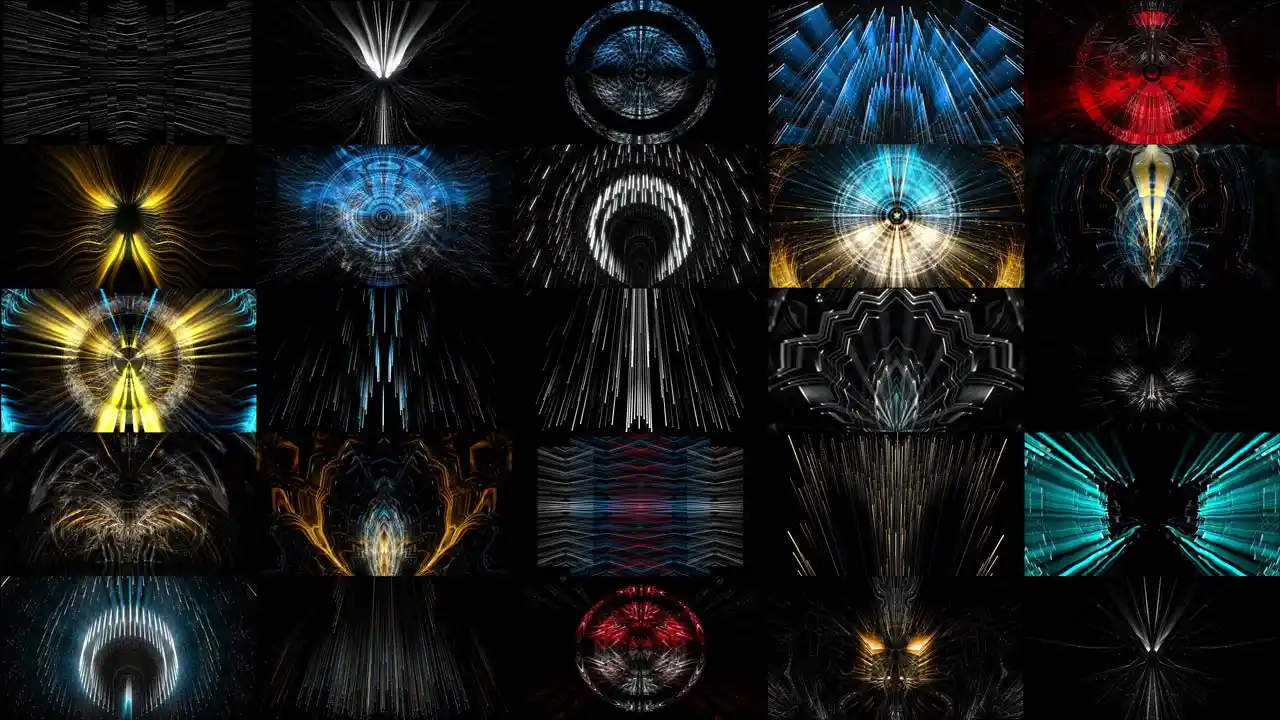
VJ Loops Pack Vol.41 – Goldfrau
79€ -
VJ Loops Pack Vol.29 – Glitch Backgrounds
89€ -
VJ Loops Pack Vol.17 – Main Element
99€ -
VJ Loops Pack Vol.28 – DecoLines
99€ -
VJ Loops Pack Vol.18 – Abstract Background Textures
89€ -
VJ Loops Pack Vol.11 – Really Madonna
89€ -
VJ Loops Pack Vol.12 – Interstellar Hypergate
59€ -
VJ Loops Pack Vol.1 – Smart Lines
99€ -
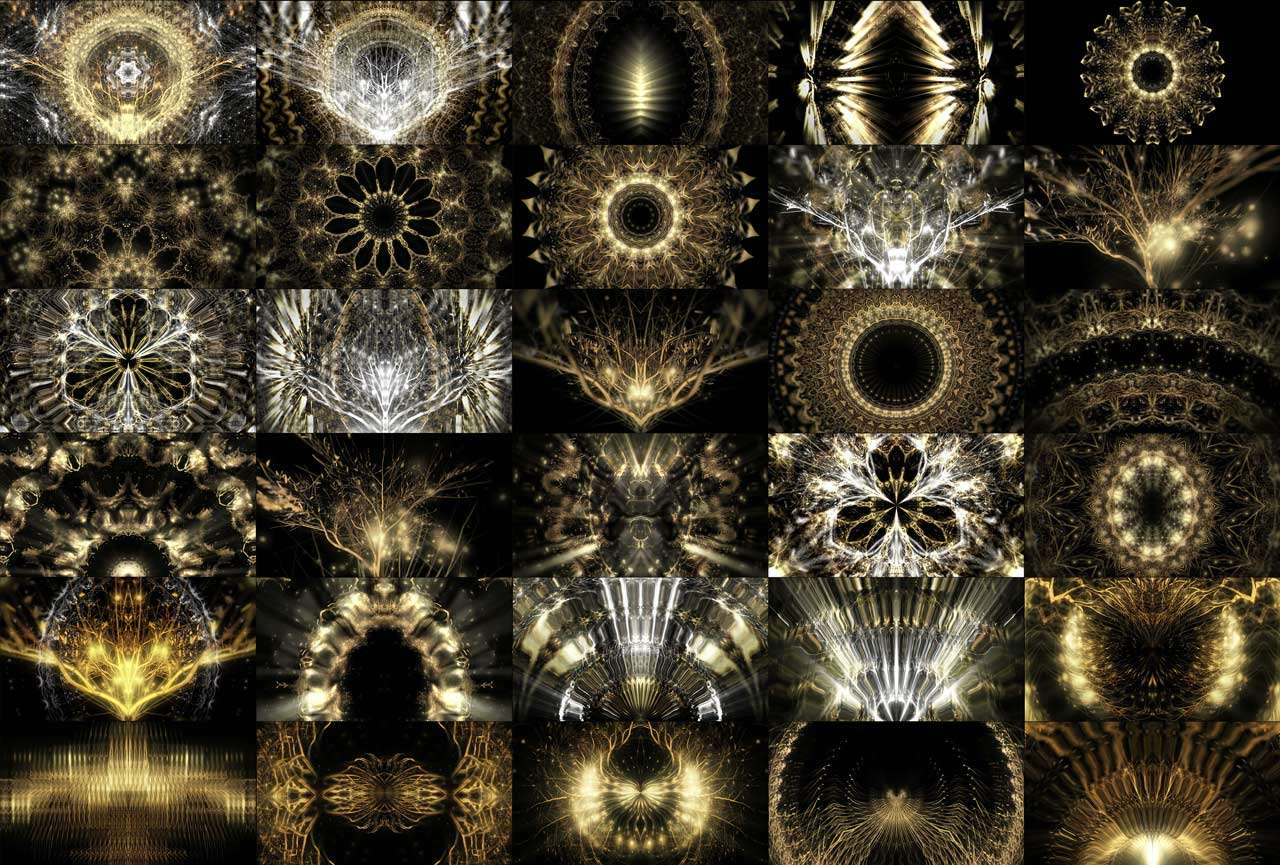
Vj Loops Pack Vol.26 – Gilded Roots
99€











The full-time 23%, and why they are the quiet winners
Almost a quarter of respondents said they work full-time in one place: a club residency or an artist’s touring team.
That group does not appear in any fee-per-gig discussion, which is why nobody writes about them. And structurally they have the best deal in the profession:
Predictable income. A salary or monthly retainer instead of a distribution.
No sales work. The single largest hidden cost of freelancing is the unpaid hours spent finding the next booking.
Compounding relationships. A resident VJ at a serious club builds a body of work with one visual identity, which is exactly what makes an artist bookable elsewhere later.
The trade is ceiling and freedom. You will not have a $9,000 month, and you play what the venue wants.
If you are currently at one or two gigs a month and want this to be a job rather than a hobby, a residency is a far more realistic next step than doubling your fee.
Why the same job pays $150 and $1,500
The spread in that first poll is a factor of ten, and it is not random. Four things explain almost all of it.

Geography
A VJ in the United States generally will not work for $200. In parts of South Asia, Latin America or Eastern Europe, $200 for a night is a serious fee and $500 is a very good one.
This is the single largest variable in the data and it makes any global “average VJ rate” partly meaningless. Compare yourself to your city, not to the internet.
The useful benchmark for a developed market comes from the US: VJ Academy, run by two working VJs, states that the standard professional day rate among the professionals in their community is $1,000–1,500. That is roughly triple the global poll average — and both numbers are true, because they describe different markets.
What is actually included
The polls asked what the client pays. They did not ask what the VJ delivers for it, and that varies enormously:
- Performance only, venue supplies everything
- Performance plus your own laptop, controller and software
- Plus content produced specifically for the night
- Plus projectors, media server or LED processing
- Plus travel, accommodation and a day of setup
A $300 fee for turning up with a laptop and a $300 fee that includes two days of custom content are wildly different jobs at the same headline price. This is the most common way VJs underprice themselves and never notice.
Which leads directly to the practice VJ Academy describes and I would endorse without reservation: professionals quote itemised — performance, gear, content, travel — and never as one lump number. An itemised quote is also how you get paid more without asking for more, because the client sees what they are actually buying.
Tier of work
The fee bands map roughly onto categories, not onto talent:
| Typical fee | Kind of work |
|---|---|
| $100–200 | Small local club, student night, favour-adjacent |
| $200–400 | Regular club night, local promoter |
| $400–600 | Established club, small festival stage, regional touring |
| $600–1,000 | Large festival stage, corporate event, artist support |
| $1,000+ | Headline audiovisual show, brand activation, named artist tour |
Corporate and branded work is where the higher fees live, and it is the segment growing fastest. It also values reliability and paperwork over aesthetic risk, which is why many club VJs never move into it — not because they cannot, but because they never try.
Whether you are a person or a supplier
The last one is not about the market. If you are handed a track list and asked to fill a screen, you are staff and you are priced like staff. If you arrive with a visual identity, a show file and a concept, you are an artist and priced differently for exactly the same hours.
I wrote about how that shift happens in practice in our piece on DJ and VJ collaboration.
Where the money is going, 2026 to 2030
Now the forecast. Labelled as a forecast, with the sources attached so you can disagree with the reasoning rather than the conclusion.
Big Bundles
Whole libraries at once, for VJs building a full show file
-
Sale!
Video Mapping Loops Bundle Vol.1
Original price was: 1,000€.549€Current price is: 549€. -
Sale!
 Select options This product has multiple variants. The options may be chosen on the product page
Video Mapping Toolkits Bundle Vol.1
Price range: 549€ through 1,489€ -
Sale!
EDM VJ Loops Bundle Vol.1
Original price was: 499€.249€Current price is: 249€. -
Sale!
GOLDEN VJ Loops Bundle Vol.8
Original price was: 699€.299€Current price is: 299€. -
Sale!
Video Mapping Toolkits Winter Bundle Vol.2
Original price was: 899€.399€Current price is: 399€. -
Sale!
TECHNO VJ Loops Bundle Vol.6
Original price was: 499€.249€Current price is: 249€. -
Sale!
GLITCH VJ Loops Bundle Vol.4
Original price was: 499€.249€Current price is: 249€. -
Sale!
STAGE VJ Loops Bundle Vol.2
Original price was: 499€.249€Current price is: 249€. -
Sale!
BURN VJ Loops Bundle Vol.5
Original price was: 499€.249€Current price is: 249€.














The demand side is genuinely growing
The numbers point the same way across several independent sources:
- The electronic music festival market is estimated at $14.51 billion in 2026, projected to reach $28.32 billion by 2035 at a 7.71% CAGR.
- The global live music market sits at about $40.95 billion in 2026, forecast to reach $67.1 billion by 2035 at 5.6%.
- More than 52 million people attended electronic dance music events in 2025, across over 4,800 festivals in 76 countries.
- 78% of millennials and Gen Z report a preference for live music experiences, and 54% of consumers say they prioritise festival attendance over spending on physical products.
Meanwhile the surfaces multiply. LED panel prices have been falling 8–12% per year, China produces over 70% of the world’s LED display modules, and venues that could not afford a wall in 2018 now have one. Every one of those screens needs something on it.
The supply side is contracting where VJs used to start
And now the other half, which the market reports never mention.
The UK — the best-documented night-time economy in Europe — has lost 36% of its nightclubs since March 2020, down to 823 venues. 26% of towns that had a club in 2020 now have none. At the same time, UK electronic music generated £2.47 billion in 2025, up 3% year on year.
That combination is the whole forecast in two sentences. The culture is growing and the small rooms are closing. The money is moving to festivals, large-format shows, corporate and branded work, and online formats.
For a VJ this cuts both ways, and it is important to be honest about both:
Bad: the small local club that used to be where you got your first ten gigs is disappearing. The bottom rung of the ladder is being removed. That is why 24% of respondents are on one or two gigs a month.
Good: the work that remains is larger, better paid, and more likely to need a visual identity rather than wallpaper. Corporate and festival budgets are where the $600–1,000+ bands live.
There is also a genuine correction underway in dance music itself — commentators are describing a decline in the middle tier and a shift back from content-first “Instagram DJ” bookings toward experience programming, smaller curated rooms and stronger communities. If that holds, it favours artists with a coherent visual world and disadvantages generalists.
My forecast for VJ fees to 2030
Reasoning first, numbers second.
Freelance creative rates broadly have risen with inflation and demand — UK contractor day rates averaged £576 in late 2024, a 26% increase since 2022. VJ fees have not moved at anything like that pace, because the supply of people who can run Resolume competently has grown faster than the number of paying rooms.
So my expectation, stated so it can be checked against my next poll:
The $200–600 band stays dominant through 2030 and rises roughly with inflation rather than faster. There are more competent VJs every year and the small-venue segment is shrinking.
The $600–1,500 band grows as a share, driven by corporate work, festival stages and named audiovisual shows — the segments the market data says are expanding.
The gap between the two widens. This is the important prediction. As AI makes competent generic visuals cheap, the middle of the market compresses and the two ends separate. Artists with a visual identity and clients who need one will price above the trend; generalists filling screens will price below it.
The full-time residency share holds or grows, because venues with permanent LED installations increasingly need someone who knows the room rather than a different freelancer every Saturday.
I will re-run both polls in 2027 and publish the comparison against these predictions.
About that $10,500 a month
The previous version of this article did the following maths: take $500 as an average fee, multiply by 21 working days, and conclude that $10,500 a month is possible.
That was wrong, and the second poll is what proved it.
Nobody in 302 respondents reported doing 21 gigs a month. The highest band anyone volunteered was 8–18, and 6% chose it. Twenty-one performances a month is not a demanding target that few reach — it is a scenario that essentially does not exist in this profession.
The article then said that even at 8 gigs a month, $4,000 is “not so bad”. That part is closer to true, but 8+ gigs is the top ~6% of the profession, not a modest fallback.
I am leaving this correction in the article rather than quietly editing the number out. If you are going to publish numbers about people’s livelihoods, you have to publish the corrections too — and the reason the first version was wrong is exactly the reason the second poll was worth running.
Five things that actually move your fee
Not motivational advice. These are the levers that show up in the data and in every negotiation I have been on either side of.
One: itemise the quote. Performance, gear, content, travel, setup day — separate lines. Clients accept a $900 quote made of five justified lines far more readily than a $900 lump sum, and you stop giving away content production for free inside a performance fee.
Two: set a personal minimum and hold it. Every working professional has a number they do not go below. Decide yours before the next negotiation rather than during it, and let the number do the refusing instead of you.
Three: use a written agreement. A short contract or even a confirming email that states fee, hours, what you supply, what the venue supplies, and payment terms. It removes the ambiguity that costs people money, and it is the single easiest professional upgrade available.
Four: move category, not price. Going from $300 to $400 in the same club is a hard conversation. Going from club nights to corporate events is a different conversation entirely, with budgets already sitting a band or two higher.
Five: own a visual identity. The thing that separates a $300 booking from a $900 one is rarely technical skill. It is whether the client is buying a person with a recognisable world or an operator who can fill a screen. Building that world is cheaper than most people assume — our VJ Loops Packs are produced as coherent sets rather than folders of unrelated clips precisely so a VJ with a small budget can arrive with a look rather than a library.
And one thing that is not on this list: buying more gear. Nothing in either poll suggests equipment correlates with fee.
On being uncomfortable about money
There is a piece of advice from the VJ community that I keep coming back to, and it is worth repeating in full because it is more useful than any rate table.
Be confident in the value you bring, and be specific about it — every time you learn something that improves your workflow, you have raised what you are worth to a client. Make sure clients understand exactly what they are paying for, and never over-promise. Be firm and polite. Set your rate before the conversation, and blame the rate rather than yourself when you hold it. Put it in writing so both sides are on the same page, and then go back to doing the actual work.
And if a client is genuinely unreasonable or abusive, walk away. You have the right to refuse work. Nothing in this article’s tables is worth a bad night.
Frequently asked questions about VJ earnings
How much do VJs get paid per gig?
In a poll of 302 VJs, 35% are paid $200–400 for a 4–7 hour gig and 31% are paid $400–600 — so roughly two thirds fall between $200 and $600. The weighted average is about $465. Only 4% are paid above $1,000. In developed markets the figure is higher: VJ Academy reports a standard professional day rate of $1,000–1,500 among US working professionals.
How much do VJs earn per month?
Combining both polls, the average freelance VJ does about 5.4 gigs a month at about $465, which is roughly $2,500 gross. But the distribution matters more than the average: 24% do one or two gigs a month, 32% do five to ten, and only 6% do more than eight. A further 23% work full-time in one place on a salary or retainer.
Can you make a living as a VJ?
In most developed markets, freelance VJing alone rarely covers a full living — the median works out around $2,500 a month gross before tax, gear and content. It becomes a living when combined with a residency, corporate work, content production, or a fee band above $600. In lower-cost markets the same numbers go considerably further.
How many gigs does a working VJ get?
About 5.4 a month on average among freelancers. A quarter of respondents get only one or two, the largest group gets five to ten, and just 6% get more than eight. Nobody reported anything approaching twenty.
Why do VJ rates vary so much between countries?
Local event budgets and cost of living. A $200 fee that is unacceptable in the United States is a serious payment in parts of South Asia, Latin America and Eastern Europe. Compare your rate to your own city rather than to a global average.
What should a VJ charge for a corporate event?
More than a club night, and quoted itemised. Corporate and branded work sits in the higher fee bands and it is the segment growing fastest, but it expects professional paperwork: a written agreement, clear deliverables and separate lines for performance, equipment, content and travel.
Is VJing still worth getting into in 2026?
The demand side is growing — the electronic music festival market is forecast to roughly double between 2026 and 2035, and falling LED prices mean more venues have screens that need content. But the small-club segment where beginners used to build experience is contracting sharply. Entering now means aiming at festivals, corporate work and residencies rather than expecting a ladder of local club nights.
How can a VJ earn more?
Itemise your quotes, set and hold a personal minimum, use a written agreement, move into a higher-paying category rather than negotiating harder in the same one, and build a recognisable visual identity. Buying more equipment is not on the list — nothing in the data suggests gear correlates with fee.
Sources
Poll data is our own. Market and rate figures were taken from the sources below and checked in August 2026.
Our own data
- LIME ART GROUP VJ fee poll, 302 votes, 42 comments, July, across our VJ community channels
- LIME ART GROUP VJ gig-frequency poll, 66 votes, July, same channels
- Observations from our own production and booking experience since 2012
Rate benchmarks
- VJ Academy — professional day rate guidance and 2026 industry notes
- Creative and contractor freelance rate reports for 2026, including UK contractor day-rate averages
- Freelance videographer and film crew day-rate guides, 2026
Industry and market data
- Electronic music festival market size and forecast to 2035
- Global live music market size and forecast to 2035
- EDM attendance and festival count data for 2025
- NTIA — Fourth UK Electronic Music Industry Report, February 2026, with Audience Strategies and Amazon Music
- NTIA and UK trade press on late-night venue closures
- LED display market pricing and manufacturing share reports
Community practice
- VJ community guidance on negotiating fees and financial terms
The income model combining both polls, the fee forecast to 2030 and the five levers are our own analysis and are labelled as such.
Help me make the next one better
Both polls above are small — 302 votes and 66 votes. The fee poll is solid; the gig-frequency poll needs more people, because it is doing most of the work in this article.
I am re-running both in 2027 with the same options plus one addition: average fee for corporate versus club work, which is the split the data suggests matters most and which neither poll currently separates.
They go out in our VJ communities. Vote, and add an option if the one that describes you is missing — the two most interesting answers in these polls were both added by respondents.
And if you are trying to move up a band, start with the identity rather than the gear. Our VJ Loops Packs and VJ Clips are built as coherent sets for exactly that reason. Buy once, use them at every gig you ever play — no royalties, which is the whole point when your income is 5.4 bookings a month.
Latest Feature VJ Loops
Hand-picked visuals by our New Media Artists
-
Deep Serenas – Immersive Visuals Vol.2
149€ -
Sale!
VJ Loops Pack Vol.73 – Mirror Ballet
Original price was: 129€.99€Current price is: 99€. -
VJ Loops Pack Vol.18 – Abstract Background Textures
89€ -
VJ Loops Pack Vol.19 – Lovely Red
79€ -
VJ Loops Pack Vol.11 – Really Madonna
89€ -
Sale!
Interior Patterns – Immersive Visuals Vol.1
Original price was: 249€.199€Current price is: 199€. -
VJ Loops Pack Vol.85 – Gnosis Lightning
99€ -
VJ Visuals Starter Pack
99€ -
Sale!

 Select options This product has multiple variants. The options may be chosen on the product page
Immersive Projection Business Guide
Original price was: 19€.12€Current price is: 12€.








Best wishes from Vienna,
Thanks for your attention, faithfully yours,
Alexander Kuiava – Founder & CEO LIME ART GROUP
https://alexanderkuiava.com/
