
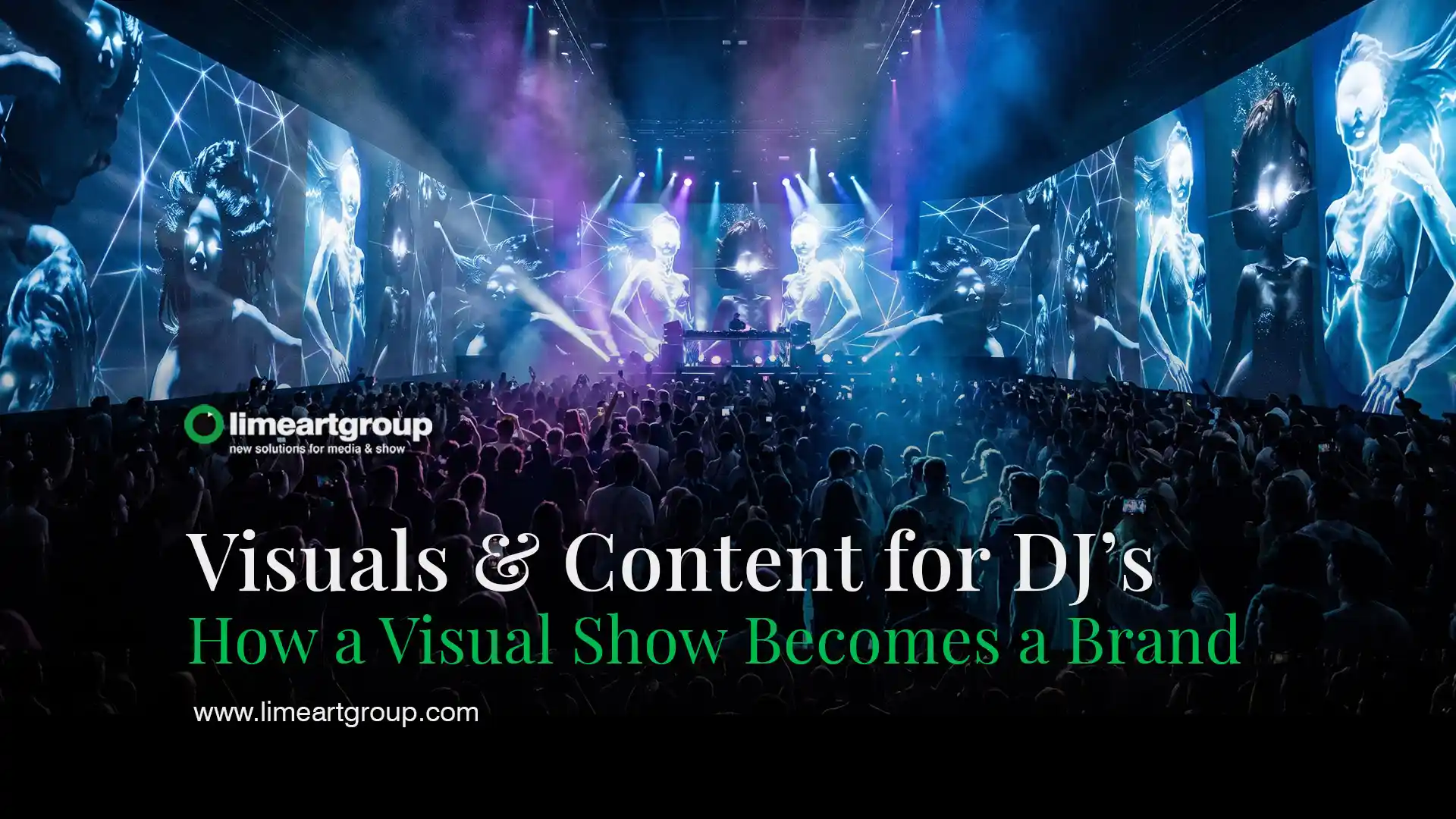
Visuals for DJs: How a Visual Show Becomes a Brand
The article is written by a human. Mistakes have been edited by AI.
Case study details and figures checked August 2026.
Nobody says “I’m going to see a DJ” about Eric Prydz. They say they are going to see HOLO. That difference — between an artist and a named show — is worth more than any booking fee negotiation, and five artists have built entire careers on it.
This article is about how that actually works, and then about the unglamorous part: how you fill ninety minutes of screen without repeating yourself.
Who this article is for: DJs building a live show rather than a set, and the visual artists and studios producing for them.
What it solves: everyone agrees visuals matter. Almost nobody explains what a two-hour show actually contains, how much content that is, or how it is organised.
What you get by the end: five verified case studies with real technical specifications, what those five have in common, and the arithmetic of assembling a 60-minute to 3-hour show.
Hello dear DJs, VJs and clients of LIME ART GROUP. I am new media artist Alexander Kuiava. We produce the content that fills shows like these at every scale below the stadium level, so the second half of this article is the part I actually know from the inside.
A note on where this sits
Three related things are easy to confuse, so to be clear about what this article is not:
- If you want the working relationship between a DJ and a VJ — the three models, what each side needs from the other, the market context — that is in our piece on DJ and VJ collaboration.
- If you are building an online format — streams, a monthly mix, virtual shows — that is in visual identity for online events.
This one is about the branded live show, and the anatomy of filling one.

Five artists who built a brand on a visual show
Not “DJs who use visuals”. Artists whose show became the product, with a name of its own.
VJ Loops Packs
Coherent 20–40 clip sets, three or four carry a two-hour show
-
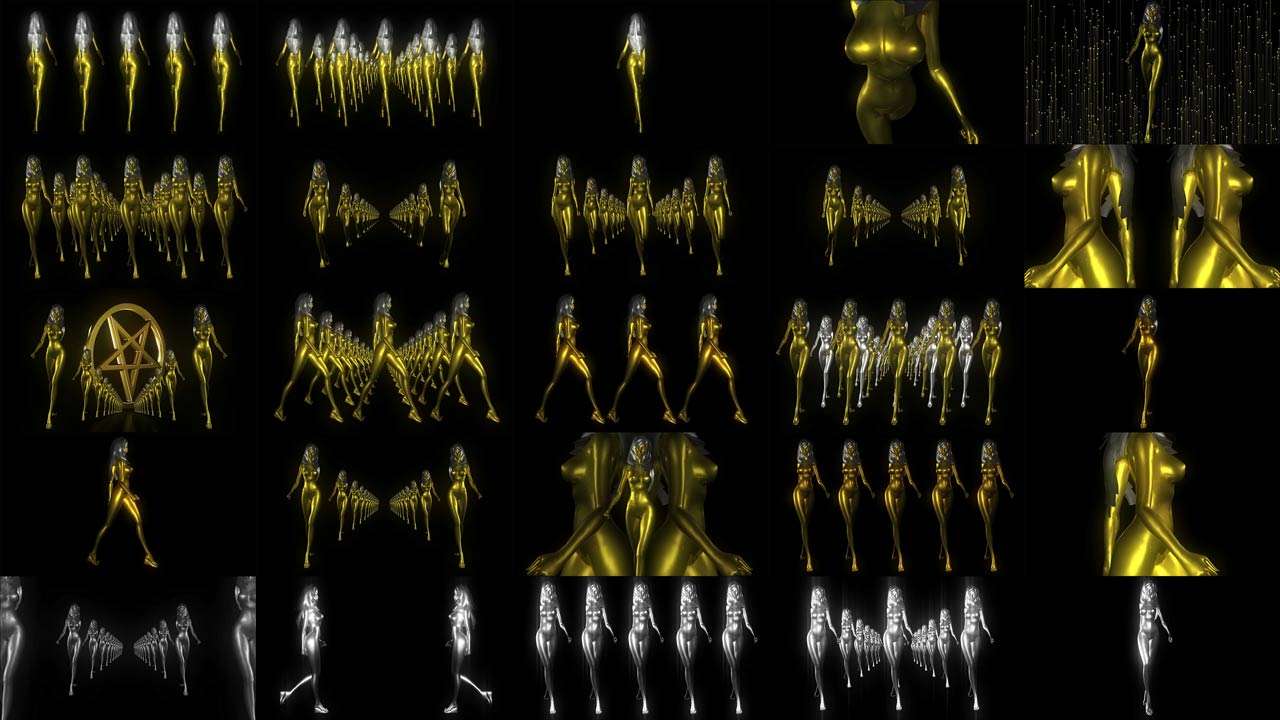
VJ Loops Pack Vol.41 – Goldfrau
79€ -
VJ Loops Pack Vol.29 – Glitch Backgrounds
89€ -
VJ Loops Pack Vol.17 – Main Element
99€ -
VJ Loops Pack Vol.28 – DecoLines
99€ -
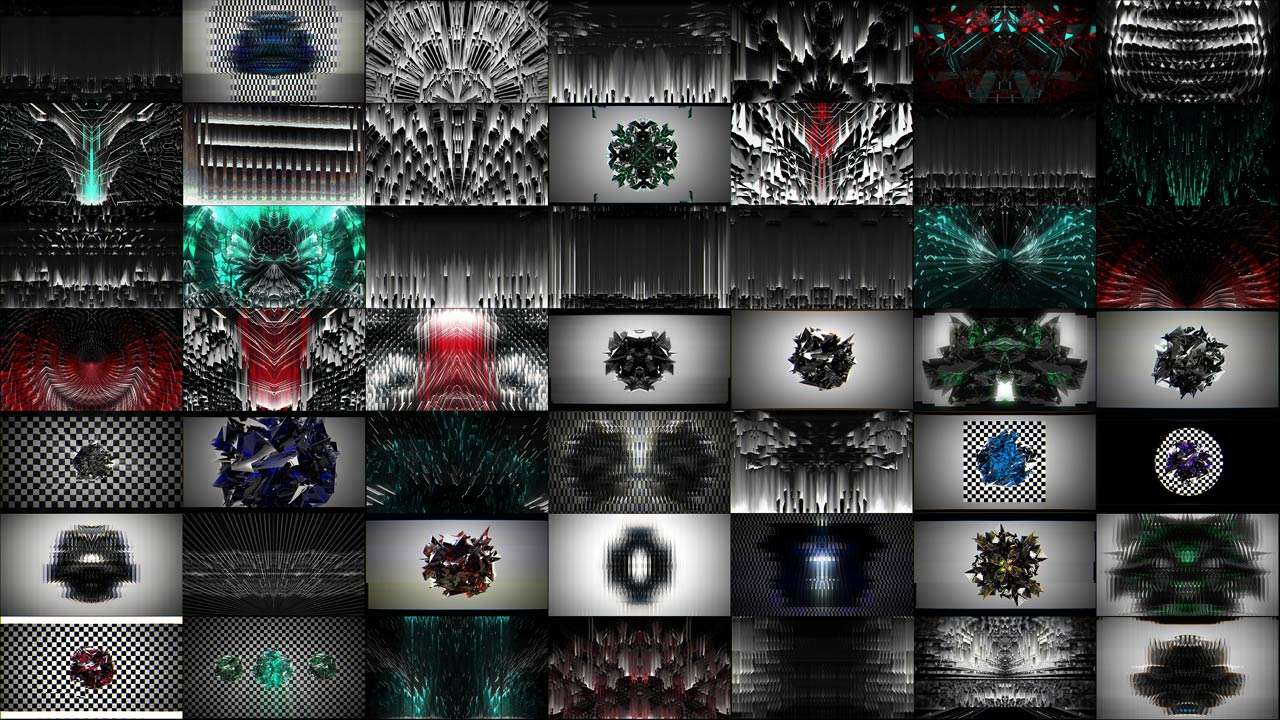
VJ Loops Pack Vol.18 – Abstract Background Textures
89€ -
VJ Loops Pack Vol.11 – Really Madonna
89€ -
VJ Loops Pack Vol.12 – Interstellar Hypergate
59€ -
VJ Loops Pack Vol.1 – Smart Lines
99€ -
Vj Loops Pack Vol.26 – Gilded Roots
99€








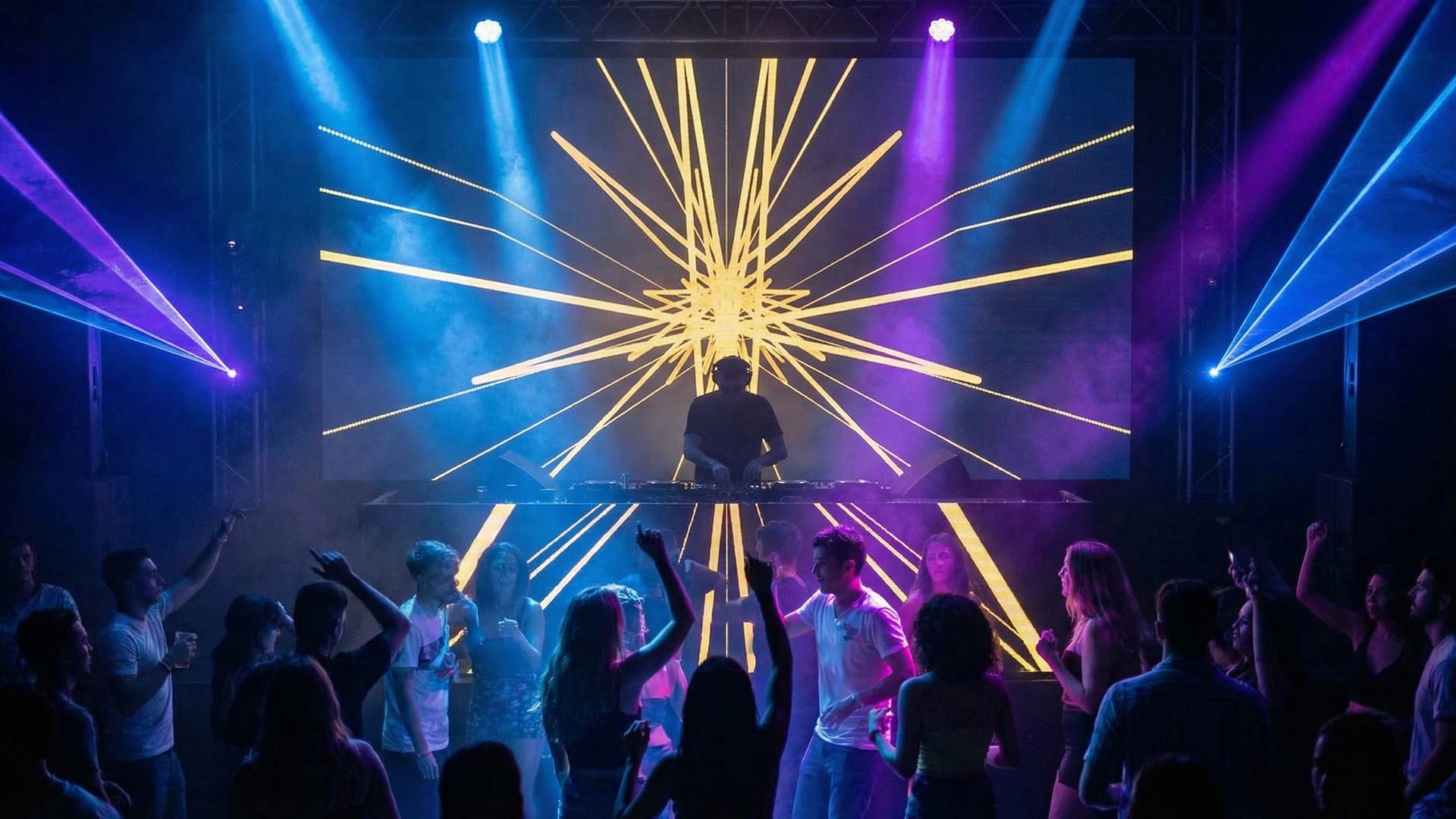

Eric Prydz — HOLO and EPIC
The most technically ambitious of the five, and the clearest example of a show being the brand: HOLO and EPIC are booked as productions, not as a DJ slot.
The stage is built in three depth layers, which is the whole trick: a 28 mm see-through LED wall at the front, a Holo-Gauze through the middle carrying the hologram, and a 12 mm 4:1 widescreen LED at the back. Content plays across all three, and because the front layer is transparent the audience reads genuine depth rather than a flat picture.
The scale is not modest. EPIC 3.0 in 2014 projected what was billed as the world’s largest hologram — Prydz’s own head, hovering over the crowd — and current shows use holograms up to 20 metres wide alongside laser work. HOLO has run at Coachella, Sónar, Tomorrowland and, in a sign of where this format now travels, at GITEX Global in Dubai. The EPIC 4.0 visuals were created with the artist GMUNK.
The brand lesson: one idea — depth, achieved physically rather than digitally — held for over a decade across numbered versions. People book the version.
deadmau5 — Cube
The Cube is the clearest case of a visual show becoming an object people recognise before they recognise the music.
Cube V3 is a three-sided cube built by Chris Schroeder Productions, standing 21 feet tall and 22 feet wide, with video panels on the exterior faces and rows of LED pixels lining the interior. It rotates through 360 degrees and shifts from 90 to 45 degrees during the show. Behind it sits an upstage video wall roughly 75 feet wide by 28 feet tall, with 40 strobe fixtures on vertical ladders behind it.
The content runs on a custom TouchDesigner system — worth noting because that is the same tool an independent artist can learn, at the same licence cost as everyone else.
It debuted at Creamfields in August 2019 and toured North America from September 2019 to February 2020.
The brand lesson: a single physical object, iterated across versions rather than replaced. The Cube is a silhouette, and a silhouette is the cheapest brand asset that exists.
The Chemical Brothers — Smith & Lyall
The longest-running visual partnership in electronic music, and the reason this list is not only about hardware.
Adam Smith and Marcus Lyall have designed the live shows for over 25 years, working together as show directors since 2009. The main screen is roughly 20 metres by 8, but the show is deliberately not screen-only: giant mechanical robots, hundreds of oversized bouncy balls dropped from the ceiling, and at one point a wall of 70 strobes, 24 lasers and 50 MegaPointe fixtures.
Smith is a filmmaker who directed the immersive concert film Don’t Think. Lyall is an installation artist whose tour visual work includes Metallica, U2 and The Rolling Stones.
The brand lesson: the visual directors are named, publicly, over decades. That continuity is why a Chemical Brothers show is recognisable across three generations of technology — the tools changed completely, the authorship did not.
David Guetta — The Monolith
Proof that this is not a niche-artist strategy.
Guetta was crowned No.1 in DJ Mag’s Top 100 DJs 2025 — fourteen years after his first win in 2011, making him only the third artist to win five times, alongside Martin Garrix and Armin van Buuren. The poll drew record numbers of votes from 231 countries, and for the first time the awards show itself was staged live, at [UNVRS] in Ibiza.
His live show, The Monolith, puts him in front of a towering LED structure with sci-fi-inflected content, staged at venues including AlUla in Saudi Arabia and the Stade de France.
The brand lesson: at the very top of a mainstream field where every artist has access to the same production companies, the named show is how you stop being interchangeable.
Anyma — the format as the booking
The newest of the five and the one that changed what promoters believe is possible. Anyma climbed into the DJ Mag top 10 in 2025 and became the first EDM act to headline a residency at Sphere in Las Vegas.
We covered the numbers and the production credits in detail in the DJ and VJ collaboration article, so the short version here: the show was staffed and credited like a film, and it was sold as a show rather than as a DJ set.
The brand lesson: when the visual world is coherent enough, the promoter markets the show. That is a different price category, not a better negotiation.
What the five actually have in common
Strip out the budgets and four things remain. All four are available at any scale.
One idea, held for years. Depth. A cube. A screen plus physical objects. A monolith. None of these five changes its central concept between tours — they iterate versions of it. The version numbering itself is a brand device: EPIC 3.0, 4.0, 5.0; Cube V3. It tells an audience that this is a continuing work rather than a new backdrop.
A recognisable silhouette. Every one of them is identifiable from a badly-shot phone photo. That is not an accident of budget, it is a design decision made early: a shape you can recognise in one frame.
Named authorship. Smith and Lyall are credited by name after 25 years. GMUNK is credited on EPIC 4.0. Anyma’s residency credited a visual co-creative director, a stage designer and an animation studio. Anonymous visuals do not build a brand — they build a backdrop, and the difference shows up in the fee.
The show has a name. HOLO. Cube. The Monolith. A name turns a booking into a piece of programming a promoter can put on a poster and sell tickets against.
None of that costs money. It costs deciding.
The part nobody writes about: filling 90 minutes
Here is where the practical work lives, and where most artists building their first show underestimate the job by an order of magnitude.
Big Bundles
A full show file in one purchase
-
Sale!
Video Mapping Loops Bundle Vol.1
Original price was: 1,000€.549€Current price is: 549€. -
Sale!
 Select options This product has multiple variants. The options may be chosen on the product page
Video Mapping Toolkits Bundle Vol.1
Price range: 549€ through 1,489€ -
Sale!
EDM VJ Loops Bundle Vol.1
Original price was: 499€.249€Current price is: 249€. -
Sale!
GOLDEN VJ Loops Bundle Vol.8
Original price was: 699€.299€Current price is: 299€. -
Sale!
Video Mapping Toolkits Winter Bundle Vol.2
Original price was: 899€.399€Current price is: 399€. -
Sale!
TECHNO VJ Loops Bundle Vol.6
Original price was: 499€.249€Current price is: 249€. -
Sale!
GLITCH VJ Loops Bundle Vol.4
Original price was: 499€.249€Current price is: 249€. -
Sale!
STAGE VJ Loops Bundle Vol.2
Original price was: 499€.249€Current price is: 249€. -
Sale!
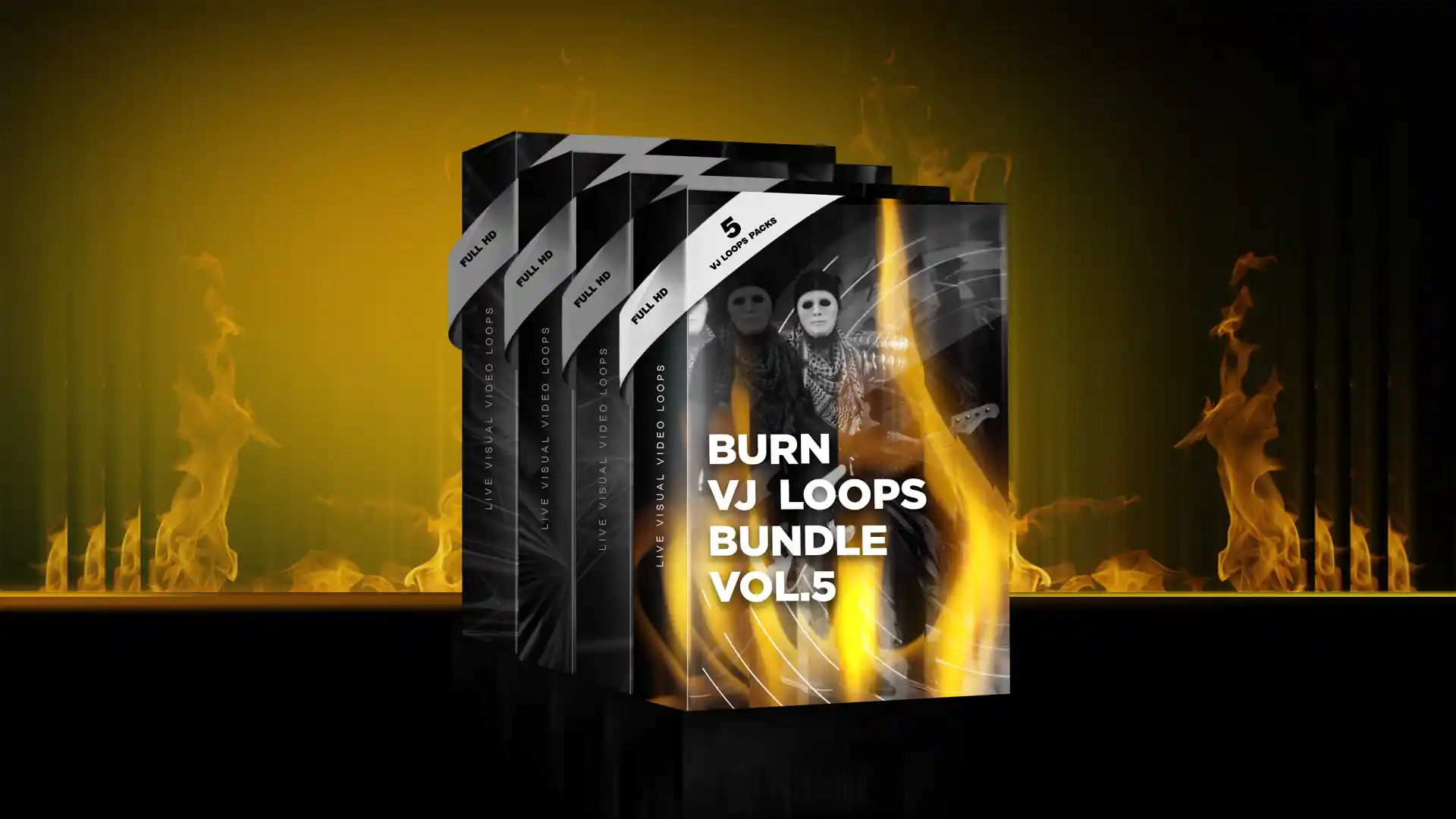
BURN VJ Loops Bundle Vol.5
Original price was: 499€.249€Current price is: 249€.








How much content a show actually needs
A visual show is not one loop. It is a library, organised, with a plan for the arc. The arithmetic:
| Show length | Change every 4 min | Every 3 min | Every 2 min |
|---|---|---|---|
| 60 minutes | 15 primary looks | 20 | 30 |
| 90 minutes | 22 | 30 | 45 |
| 2 hours | 30 | 40 | 60 |
| 3 hours | 45 | 60 | 90 |
Those are primary looks — the thing an audience would describe as “the visual right now”. On top of that you are running background layers, overlays and transitions, so the total number of clips in a working show file is typically two to three times the primary count.
A two-hour show therefore wants roughly 60 to 100 usable clips, and they cannot be 60 to 100 unrelated clips or the show reads as a slideshow.
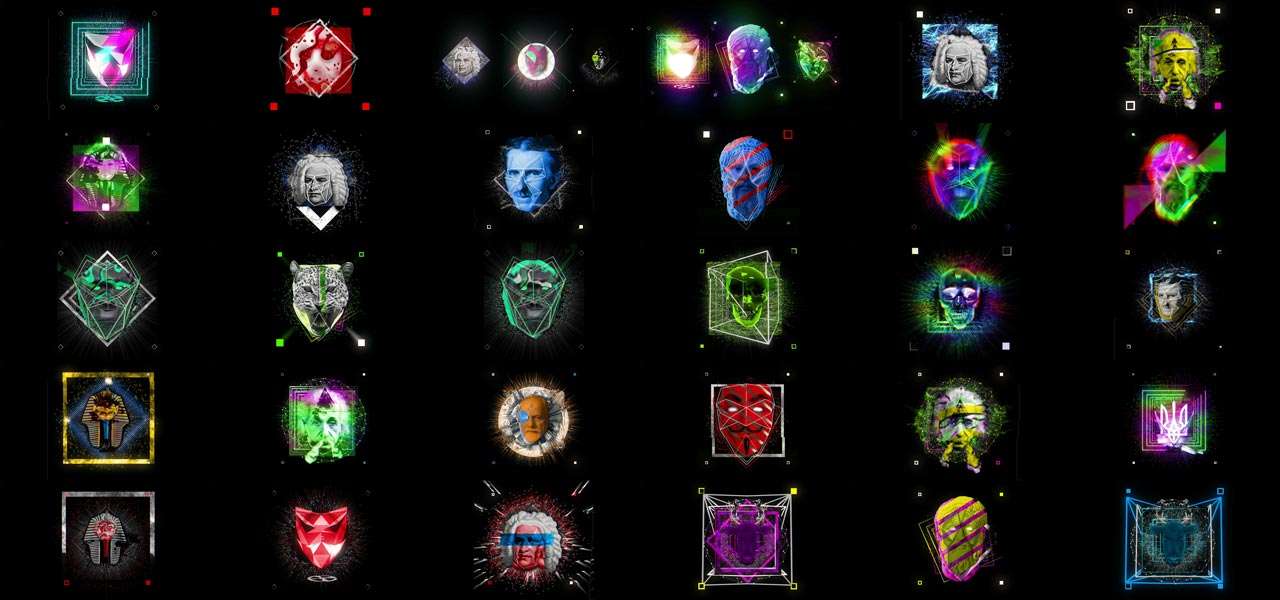
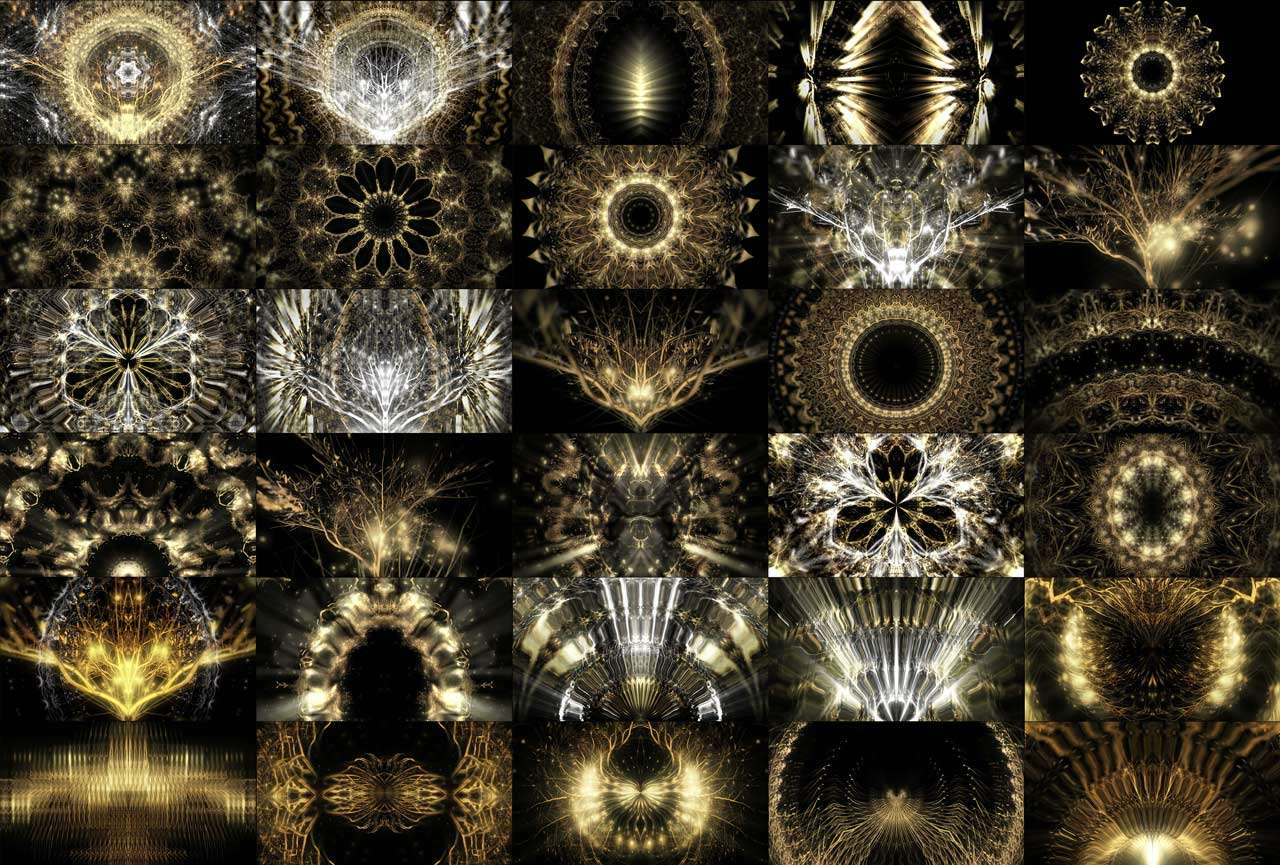
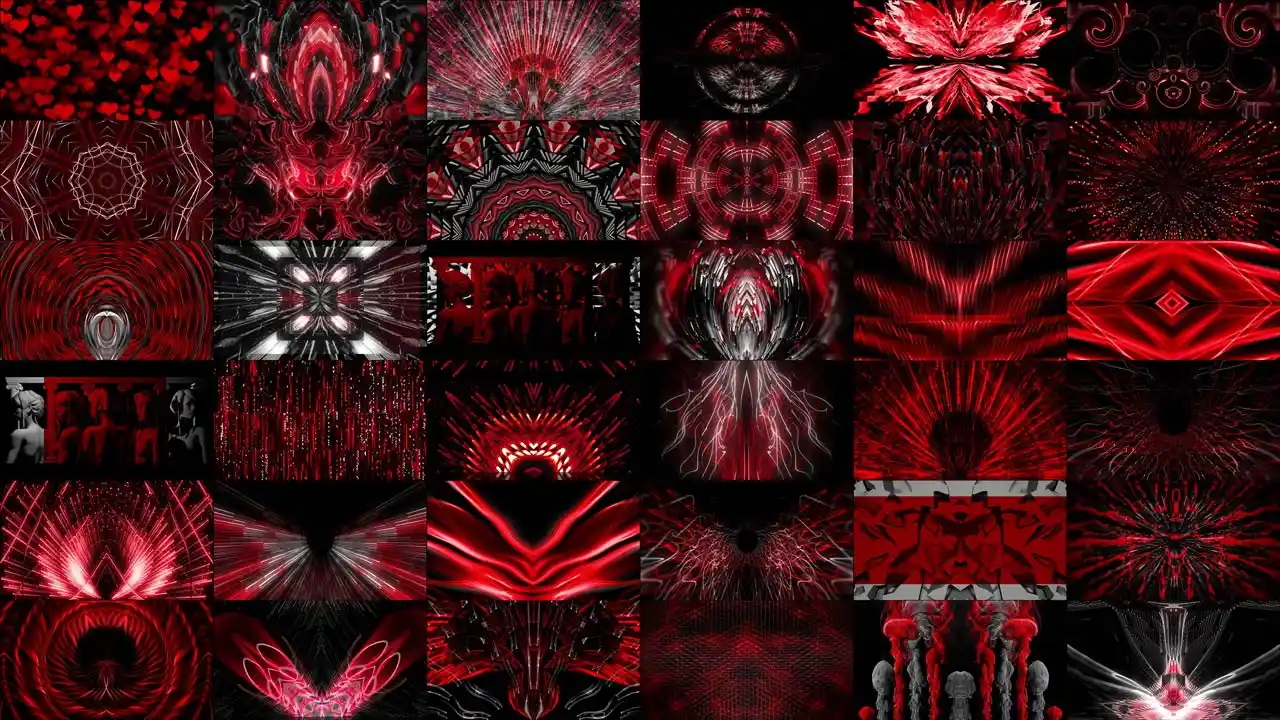
That is the real reason coherent packs matter more than individual files: a set of 20–40 clips sharing one palette and one motion language behaves as one look with variations, which is what lets you change the screen every two minutes without the audience feeling that the show restarted.
In practice, three to four coherent packs will carry a two-hour show, and that is the honest mapping between a catalogue and a set length. Our VJ Loops Packs are produced at that size for exactly this reason, and the Big Bundles exist for artists assembling a full show file in one go rather than pack by pack.
The energy arc
Content volume is the easy half. Structure is what separates a show from a playlist of visuals.
A workable arc for a 90-minute to 2-hour set, which maps onto how DJs already build music:
| Section | Share of the set | Visual behaviour |
|---|---|---|
| Intro | First 5–10 min | Slow, dark, low contrast. Establish the world. Logo or title moment. |
| Build | 20–30% | Introduce motion and colour gradually. Hold back the signature effect. |
| Peak | 30–40% | Highest contrast and cut rate. This is where the signature look lives. |
| Breakdown | 10–15% | Drop to near-black or a single element. The room needs to breathe. |
| Second peak | 15–20% | Return harder, with a variation the audience has not seen. |
| Outro | Last 5 min | Return to the intro world. Close the loop. |
Two rules that matter more than any effect:
Keep something in reserve. If the signature look appears at minute twelve, the last hour has nowhere to go. Every one of the five artists above holds one moment back — the hologram, the cube rotation, the robots — and the entire show is built as an approach to it.
Contrast is a resource you spend. An hour of maximum intensity reads as an hour of nothing. The breakdown is not a gap in the show; it is what makes the second peak land.
Organising the show file
Practical structure, which is the same whether you run Resolume, VDMX or a media server:
- Banks by energy level, not by theme. When you need to lift the room you need to reach for a bank, not scroll for a file.
- One layer reserved for the artist’s own assets — logo, track IDs, tour branding. Never mixed into the content banks.
- A blackout and a hold mapped to dedicated keys. You will need both, at short notice.
- Everything pre-encoded in the codec your software actually wants, on fast local storage. A show that stutters is a storage problem far more often than a software one.
- A backup drive with the same file structure, carried separately.
We wrote the full production pipeline — from source to encode to playback — in our guide to making video mapping, and the codec section applies identically to a DJ show.
What the case studies do not prove
It would be easy to read the five above as an argument that you need a budget. They are not, and this is the most important paragraph in the article.
Every brand mechanism in that list is free. Choosing one idea and holding it. Designing a recognisable silhouette. Crediting the person who makes the visuals. Naming the show. None of those requires a Holo-Gauze or a 75-foot video wall.
What the budget buys is scale, and scale is the last thing to solve, not the first. A club artist with a coherent 40-clip world, a named show and a consistent look is doing the same thing Prydz is doing, at a different size. An artist with a €50,000 LED wall and forty unrelated clips is doing something else entirely, and it will read as expensive rather than as authored.
The order is: idea, name, coherence, consistency — and then, if the money arrives, scale.
If you are building your first show
One: name it. Not your artist name — the show. This single decision changes how a promoter lists you.
Two: pick the one thing that is always true visually. A colour, a shape, a recurring object. Write it down and do not change it for a year.
Three: get to 60 usable clips that share a world, in three or four coherent groups. That is a two-hour show file.
Four: build the arc before you build the content. Intro, build, peak, breakdown, second peak, outro — decide where the signature moment sits, then work backwards.
Five: credit whoever makes your visuals, by name, every time. Including yourself.
That is a show. Everything above it is scale.
Frequently asked questions about DJ visual shows
Do DJs need visuals to build a brand?
For club work, not strictly. For anything that competes at festival, touring or headline level, effectively yes — the five biggest examples in electronic music are all booked as named shows rather than DJ slots, which is a different pricing category. What produces the brand is coherence and consistency rather than production budget.
How much content does a DJ visual show need?
Roughly 15 to 30 primary looks per hour depending on how often you change the screen, plus background and overlay layers. A two-hour show typically wants 60 to 100 usable clips in the show file — and they need to share a visual world, or the set reads as a slideshow rather than a show.
How many VJ loops packs do I need for a full set?
Three to four coherent packs of 20–40 clips each will carry a two-hour show. The number of files matters less than whether they share a palette and a motion language, because that is what lets you change the screen every couple of minutes without the audience feeling the show restarted.
How should a DJ visual show be structured?
Like the music: intro, build, peak, breakdown, second peak, outro. Establish the world slowly, hold the signature look back, spend contrast deliberately, and use the breakdown to make the second peak land. Every major touring show is built as an approach to one withheld moment.
What makes a DJ's visual show recognisable?
One idea held for years, a silhouette identifiable from a bad phone photo, named authorship, and a name for the show itself. Eric Prydz has depth and HOLO, deadmau5 has the Cube, the Chemical Brothers have Smith and Lyall over 25 years, David Guetta has The Monolith.
Who designs the visuals for famous DJs?
Named artists and studios. Adam Smith and Marcus Lyall have directed the Chemical Brothers’ shows for over 25 years; GMUNK created the visuals for Eric Prydz’s EPIC 4.0; deadmau5 runs a custom TouchDesigner system for the Cube. The credit is public, and that visibility is part of how those shows became brands.
Can I build a branded visual show on a small budget?
Yes, because the brand mechanisms are free. Naming the show, choosing one visual idea, holding a consistent palette, and crediting the maker cost nothing. Budget buys scale, which is the last problem to solve rather than the first.
What software runs these shows?
At the top end, custom systems — deadmau5 runs a bespoke TouchDesigner setup for the Cube. For everyone else, Resolume is the standard for live performance, with VDMX and TouchDesigner as the main alternatives and a media server for larger productions.
Sources
Case study details and industry figures were checked in August 2026. The show-structure recommendations and the content arithmetic are our own.
Case studies
- Eric Prydz — official HOLO show information; EPIC stage specification reporting; EPIC 4.0 visuals by GMUNK; EPIC 3.0 hologram coverage
- deadmau5 — Cube V3 stage design and tour production reporting, including dimensions, LED specification and the custom TouchDesigner system
- The Chemical Brothers — Smith and Lyall show design interviews and production coverage
- David Guetta — DJ Mag Top 100 DJs 2025 results and The Monolith show reporting
- Anyma — DJ Mag Top 100 DJs 2025 placement and Sphere residency reporting
Industry data
- DJ Mag Top 100 DJs 2025 — voting figures and awards show details
Our own material
- LIME ART GROUP production experience and content catalogue since 2012
- Show-file structure and energy-arc practice from our own performance and production work
Name the show
If you take one thing from the five artists above, take the cheapest one: give the show a name and hold one visual idea long enough for people to recognise it. Everything else on this page is a consequence of that decision.
When you need the content to fill it, the VJ Loops Packs are built as coherent 20–40 clip sets for exactly this job, the Big Bundles are for assembling a full two-hour show file at once, and the AI Visuals and Immersive Visuals cover the newer aesthetics and the wide and wrapped screens.
And if you are building something with a name and a shape, show it in our VJ communities. The shows worth studying are usually two years away from anyone having heard of them.
Latest Feature VJ Loops
Hand-picked visuals by our New Media Artists
-
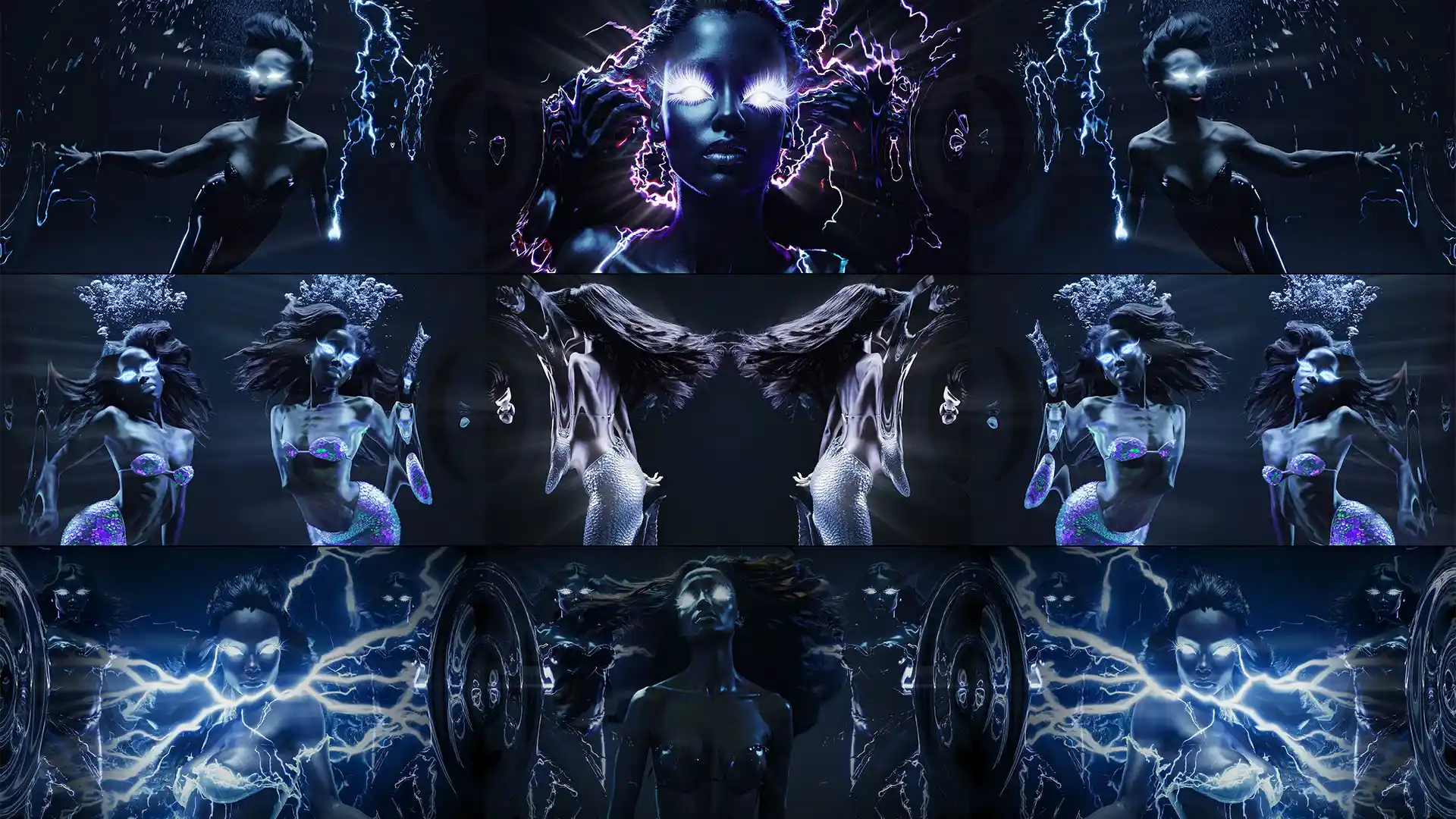
Deep Serenas – Immersive Visuals Vol.2
149€ -
Sale!
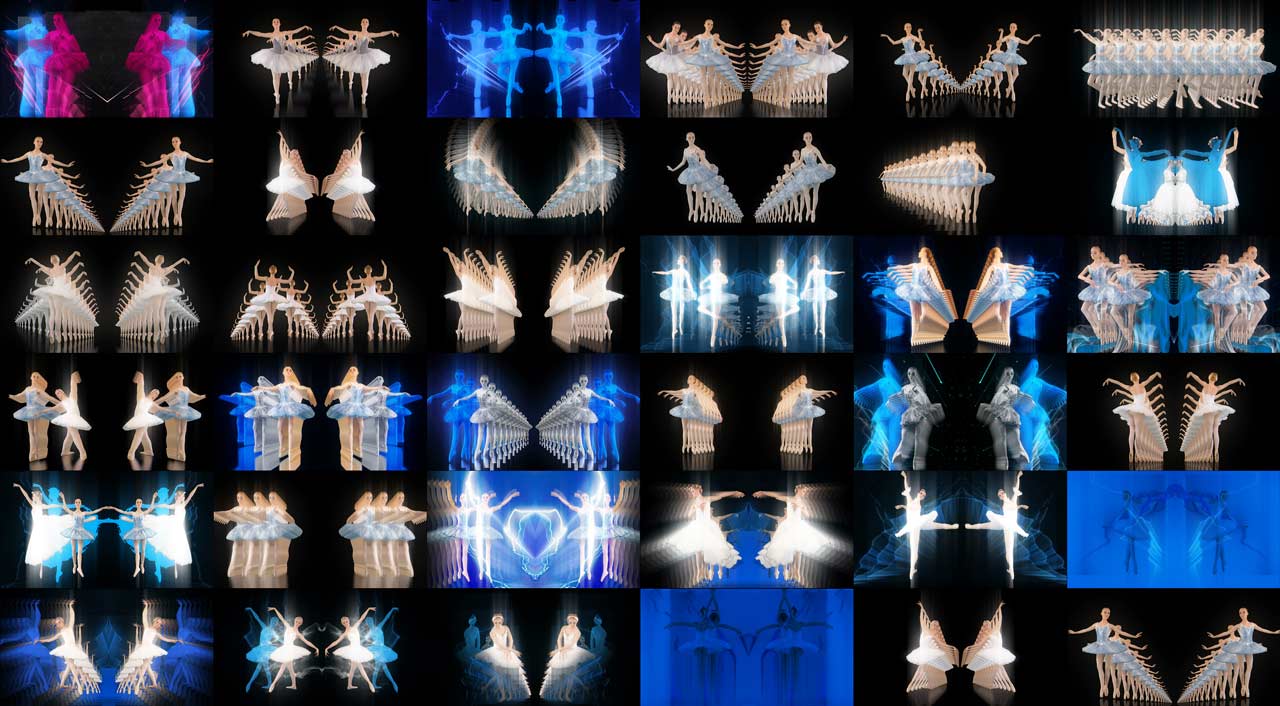
VJ Loops Pack Vol.73 – Mirror Ballet
Original price was: 129€.99€Current price is: 99€. -
VJ Loops Pack Vol.18 – Abstract Background Textures
89€ -
VJ Loops Pack Vol.19 – Lovely Red
79€ -
VJ Loops Pack Vol.11 – Really Madonna
89€ -
Sale!
Interior Patterns – Immersive Visuals Vol.1
Original price was: 249€.199€Current price is: 199€. -
VJ Loops Pack Vol.85 – Gnosis Lightning
99€ -
VJ Visuals Starter Pack
99€ -
Sale!

 Select options This product has multiple variants. The options may be chosen on the product page
Immersive Projection Business Guide
Original price was: 19€.12€Current price is: 12€.







Best wishes from Vienna,
Thanks for your attention, faithfully yours,
Alexander Kuiava – Founder & CEO LIME ART GROUP
https://alexanderkuiava.com/
